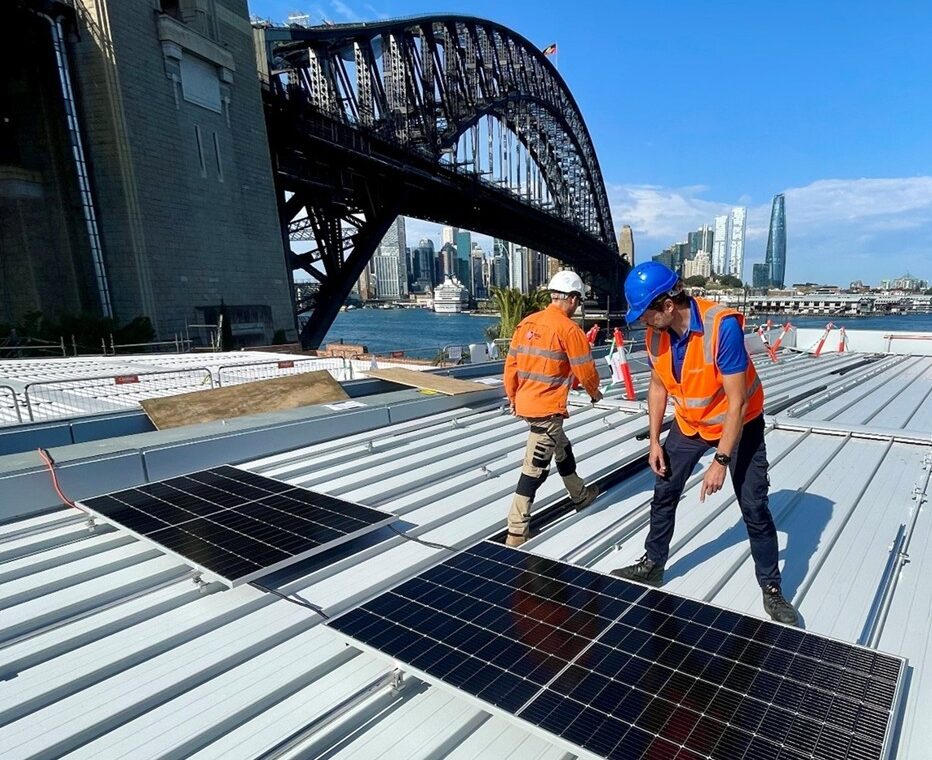





Sydney-headquartered climate-technology startup Coolsheet has begun a commercial-scale pilot of its Australian-made photovoltaic-thermal (PVT) system, a patented aluminium heat exchange panel that converts a standard solar module into a PVT hybrid for new installations as well as retrofits.
The pilot installation is being conducted at the landmark North Sydney Olympic Pool and is maximising the on-site renewable energy generation from a limited rooftop area, mating Coolsheet’s aluminium heat-exchange panel to the rear of 206 × 550 W PV modules.
The integrated system capacity has a dual output of 114 kWe electrical and 2-3 times that figure for thermal energy capacity, simultaneously from the same footprint, a company statement says.
The PVT array forms a small but highly energy-efficient part of the all-electric pool heating system, which will maintain year-round temperatures for over 3 million litres of water across five pools.
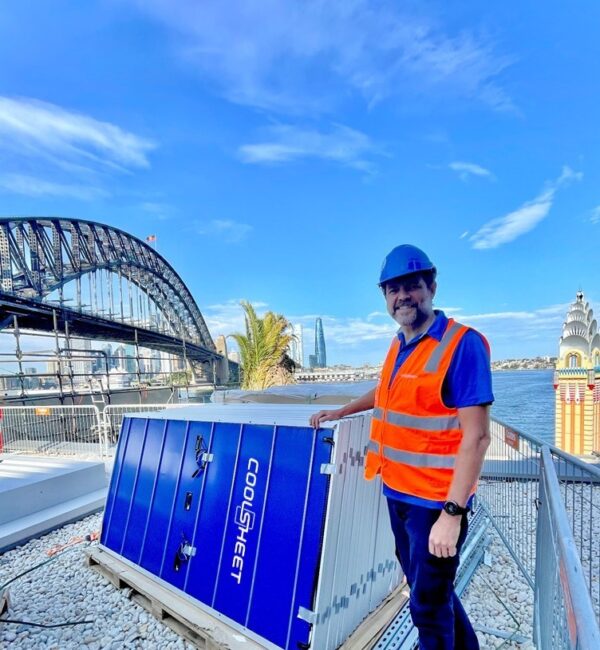
Image: Coolsheet
Coolsheet Founder and Chief Technology Officer Tom Hoole said it has been a complex construction program.
“As the site now nears completion it’s clear it will be a world-class facility showcasing how renewable heat can be built into public infrastructure,” Hoole said.
Aligned with North Sydney Council’s goal of achieving carbon neutrality across its operations by 2035, the Coolsheet system is carbon neutral, generating enough additional electricity from panel cooling to offset its own circulation pump load, Hoole added.
The Coolsheet system is compatible with businesses using low-grade thermal process to heat water to around 60-90°C such as food processing plants, beverage manufacturers, dairies, commercial greenhouses, industrial laundries, hotels and resorts, low-carbon industrial precincts, as well as aquatic centres.
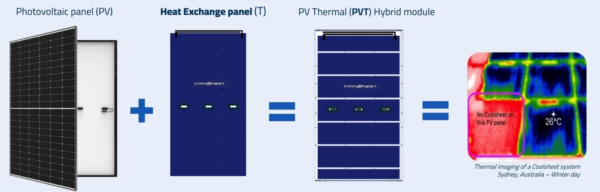
Image: Coolsheet
Research and development
Coolsheet has been working with the University of NSW (UNSW) for five years to validate the design and test components on the university’s rooftop labs.
Development of the Coolsheet was born from the fact 23-26% efficiency rates of current commercial solar panels leave around 75% to be absorbed or emitted as waste heat.
Coolsheet’s PV thermal technology harnesses the waste heat through a lightweight ‘water jacket’ attached to the back of the solar panel, storing it in hot water tanks as a thermal battery or using it as a pre-heat loop for heat pumps.
PVT can also cool solar cells, which increases electrical output by up to 4% for every 10°C reduction in cell temperature, and in Australia where panel temperatures can exceed 65°C, a Coolsheet can improve performance by up to 15%, while also reducing solar cell thermal stress and extending solar panel lifespan, the company says.
Helping commercial customers get off gas
Coolsheet Chairman Doug Smith said the economics of gas no longer stacks up for heating water, even before you factor in its outsized impact on emissions,.
“With structural supply shortages forecast for Australia and New Zealand from 2027/28 and process heat accounting for nearly 50% of industry energy use, our mission at Coolsheet has sharpened to helping commercial customers get off gas,” Smith said.
“Our pricing is around 35% less than our European competitors based on our Sydney 5MW pilot line, but that is pre-automation, so we see a competitive future with scale even as the new market entrants arrive.”
Backed by $2 million (USD 1.3 million) in founder capital and grants, with patents secured in Australia and around the world, Coolsheet is raising capital to expand the team and scale local manufacturing.

Image: Coolsheet
This content is protected by copyright and may not be reused. If you want to cooperate with us and would like to reuse some of our content, please contact: editors@pv-magazine.com.




By submitting this form you agree to pv magazine using your data for the purposes of publishing your comment.
Your personal data will only be disclosed or otherwise transmitted to third parties for the purposes of spam filtering or if this is necessary for technical maintenance of the website. Any other transfer to third parties will not take place unless this is justified on the basis of applicable data protection regulations or if pv magazine is legally obliged to do so.
You may revoke this consent at any time with effect for the future, in which case your personal data will be deleted immediately. Otherwise, your data will be deleted if pv magazine has processed your request or the purpose of data storage is fulfilled.
Further information on data privacy can be found in our Data Protection Policy.