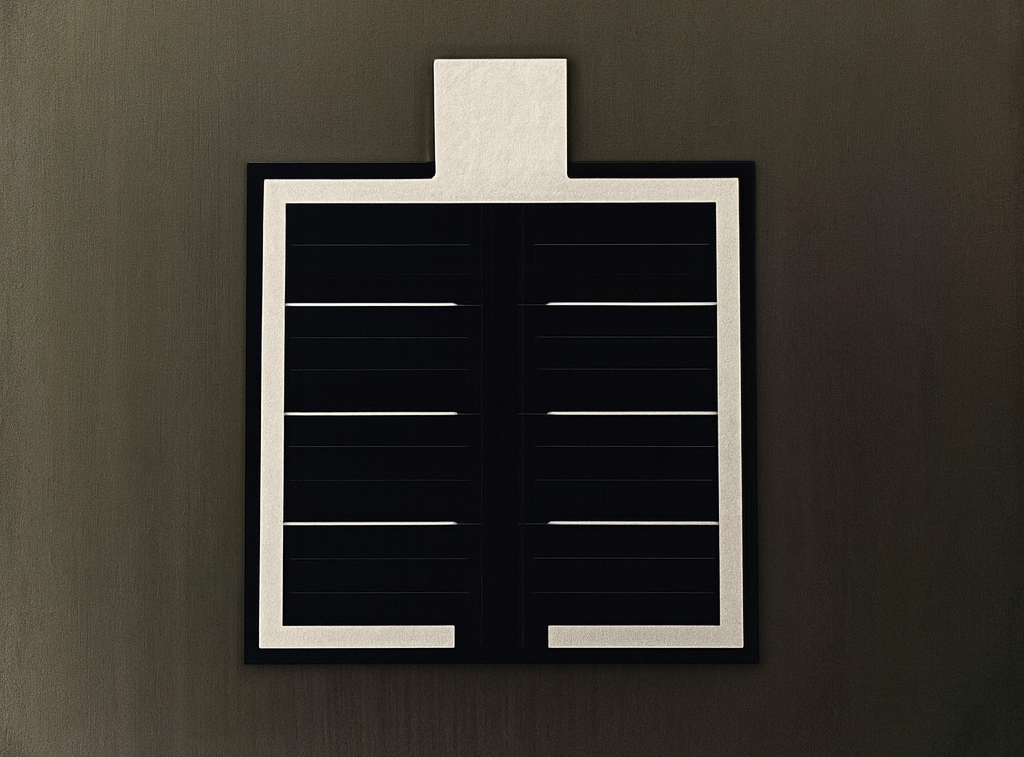





A group of researchers led by China’s Soochow University has fabricated a monolithic perovskite-silicon tandem solar cell with an interface design based on steric complementarity, aiming to improve device efficiency and reliability.
Steric complementarity defines how well the three-dimensional shapes of two molecules fit together without causing steric clashes, which are spatial overlaps that are physically impossible due to the atoms’ sizes. In perovskite solar cells, steric complementarity is key to the efficiency and stability of the material, which depends on how well the components fit together in the perovskite lattice.
“We introduced a new molecular-level strategy that moves beyond simply combining different molecules,” the research’s lead author, Wenhao Li, told pv magazine. “By deliberately selecting a pair of molecules with a significant size difference – a small, flexible piperazinium (PipI) cation and a large, rigid phenethyl ammonium (PEAI) cation – we created a synergistic effect.”
Li explained that the small PipI infiltrates deep into the perovskite surface to neutralize atomic-scale defects that are inaccessible to larger molecules, while the bulky PEAI simultaneously self-assembles into a robust, hydrophobic “canopy” on top, providing excellent protection against environmental stressors.
Through their Steric-Complementary Synergistic Strategy (SCSS), which reportedly resolves the structural trade-off between deep-level chemical passivation and the physical shielding needed by the perovskite absorber, the researchers built the top perovskite cell of the tandem device.
It was fabricated with a susbtrate made of indium tin oxide (ITO), a hole transport layer (HTL) made with a self-assembled monolayer known as 4PADCB, a perovskite absorber, the PMEAI passivation layer,a electron transport layer (ETL) relying on buckminsterfullerene (C60), a tin oxide (SnOx) buffer layer, and a silver (Ag) metal contact.
Tested under standard illumination conditions, the device achieved a power conversion efficiency of 22.26%, an open-circuit voltage of 1.270 V, a short circuit current density of 21.50 mA/cm2 , and a fill factor of 81.52%. “This result demonstrates that SCSS can simultaneously suppress non-radiative recombination and optimise charge transport,” the academics emphasised.
The tandem cell, which was built with the perovskite device and a bottom heterojunction (HJT) silicon cell, achieved a maximum power conversion efficiency of 32.3% and a certified efficiency of 32.12%.
“This performance is among the highest reported for this technology, demonstrating the potency of our approach,” Li said. “The devices also exhibited outstanding long-term durability, retaining over 80% of their initial efficiency after 1,000 hours of continuous operation under maximum power point tracking. This demonstrates that our strategy not only boosts efficiency but also critically enhances device longevity.”
The new cell design was introduced in “Steric-Complementary Synergistic Strategy for High-Efficiency Monolithic Perovskite/Silicon Tandem Solar Cells,” published in Advanced Functional Materials.
“In summary, our study establishes a generalizable interface design principle based on steric complementarity, providing a promising pathway toward highly efficient and operationally stable perovskite-based tandem photovoltaics,” Li said.
This content is protected by copyright and may not be reused. If you want to cooperate with us and would like to reuse some of our content, please contact: editors@pv-magazine.com.




By submitting this form you agree to pv magazine using your data for the purposes of publishing your comment.
Your personal data will only be disclosed or otherwise transmitted to third parties for the purposes of spam filtering or if this is necessary for technical maintenance of the website. Any other transfer to third parties will not take place unless this is justified on the basis of applicable data protection regulations or if pv magazine is legally obliged to do so.
You may revoke this consent at any time with effect for the future, in which case your personal data will be deleted immediately. Otherwise, your data will be deleted if pv magazine has processed your request or the purpose of data storage is fulfilled.
Further information on data privacy can be found in our Data Protection Policy.