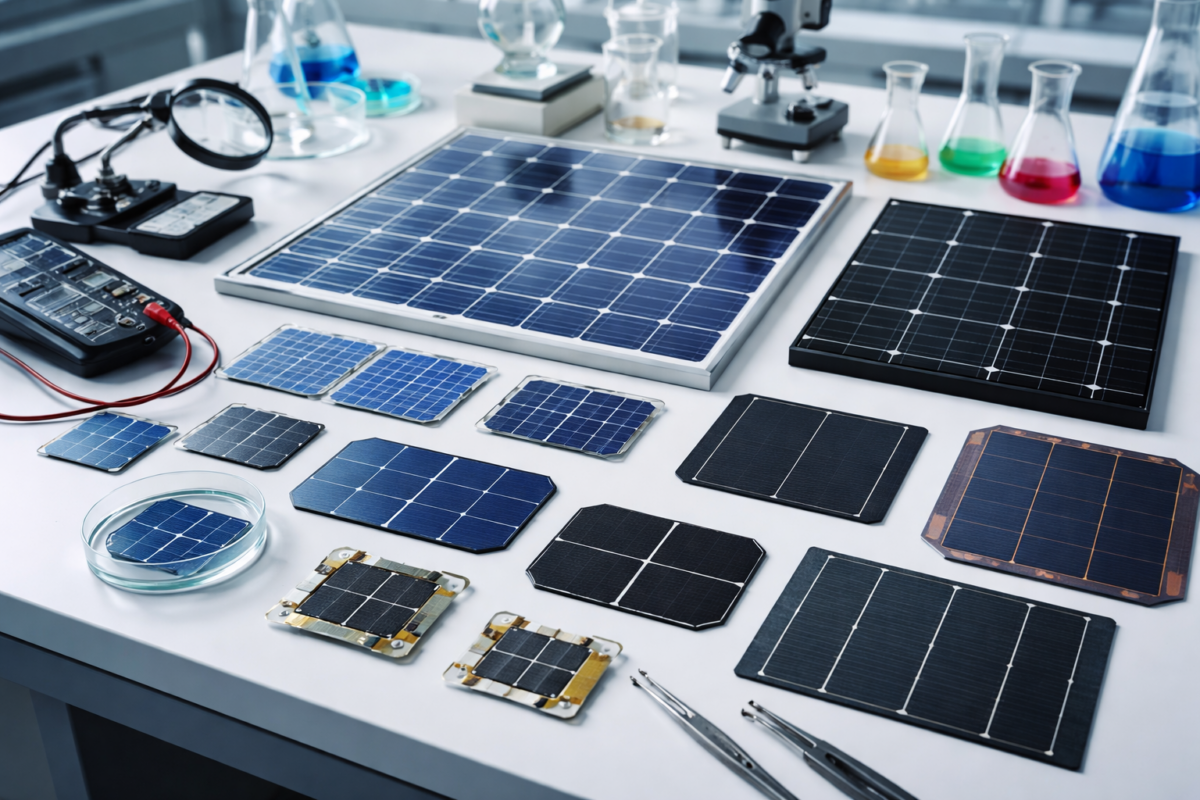





Professor Martin Green from the University of New South Wales (UNSW) has revealed that Version 67 of the “Solar Cell Efficiency Tables” will not be published in January in Progress in Photovoltaics as planned.
“The change is due to production delays preventing it from making the January edition of the journal,” Green told pv magazine. “The tables, however, are completed and include several interesting results and we hope to publish them in the February issue.”
The group presented 17 new efficiency results.
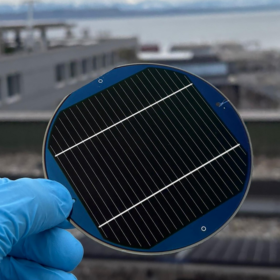
One of the standouts is a 27.9%-efficient interdigitated-back-contact (IBC) device developed by Chinese manufacturer Longi, which received validation by Germany’s Institute für Solarenergieforschung (ISFH).
“This is a new record for a silicon cell. Although measured with cell edges masked, the efficiency drops only marginally to 27.7% when unmasked and measured based on the total cell area,” Green said.
The list also includes a 12.9%-efficient kesterite minimodule fabricated by the Institute of Physics, Chinese Academy of Sciences and verified by the Chinese National Photovoltaic Industry Measurement and Testing Center (NPVM).
“This documents the steady progress being made with this technology,” Green said.
The research team also included a 22.9%-efficient 756-cm2 perovskite submodule involving 45 cells in series fabricated by Mellow Energy in conjunction with Jinan University, which was also certified by NPVM.
“Other results include two new results for silicon/perovskite tandem cells with Longi producing cells in the 34-35% efficiency range for both small and large area devices,” Green said.
In Version 66 of the tables, the team presented 21 new results, including the then record efficiency of 27.81% achieved by Chinese manufacturer Longi for its hybrid interdigitated back contact (HIBC) crystalline silicon solar cell.
In Version 65, the researchers added 17 new results. The group has seen major improvements in all cell categories since 1993, when the tables were first published.
The research group includes scientists from the European Commission Joint Research Centre, Germany’s Fraunhofer Institute for Solar Energy Systems and the Institute for Solar Energy Research (ISFH), Japan’s National Institute of Advanced Industrial Science and Technology, and the US National Renewable Energy Laboratory.
This content is protected by copyright and may not be reused. If you want to cooperate with us and would like to reuse some of our content, please contact: editors@pv-magazine.com.


By submitting this form you agree to pv magazine using your data for the purposes of publishing your comment.
Your personal data will only be disclosed or otherwise transmitted to third parties for the purposes of spam filtering or if this is necessary for technical maintenance of the website. Any other transfer to third parties will not take place unless this is justified on the basis of applicable data protection regulations or if pv magazine is legally obliged to do so.
You may revoke this consent at any time with effect for the future, in which case your personal data will be deleted immediately. Otherwise, your data will be deleted if pv magazine has processed your request or the purpose of data storage is fulfilled.
Further information on data privacy can be found in our Data Protection Policy.