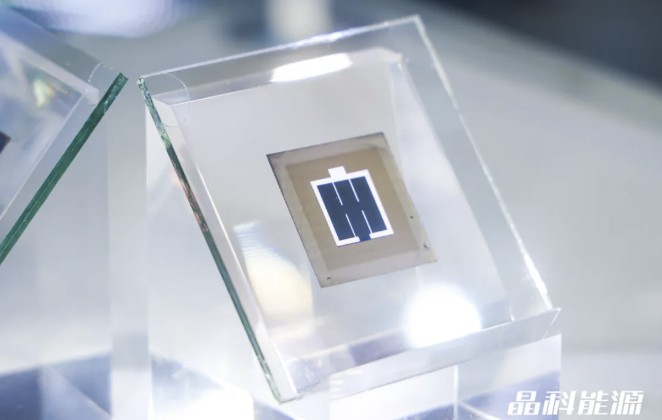





Chinese PV module manufacturer JinkoSolar has entered into a strategic partnership with XtalPi, an “AI for Science” platform company, to advance high-throughput research and development of perovskite-crystalline-silicon tandem solar cells through the use of an AI platform combined with quantum physics-based models.
Under the terms of the deal, the companies plan to establish a joint venture and develop what they describe as the first fully closed-loop tandem development line combining “AI decision-making, robotic execution and data feedback.” The stated goal is to accelerate the discovery and optimisation of tandem device stacks for higher efficiency and improved stability, replacing traditional trial-and-error workflows with automated experimentation and iterative model training.
XtalPi said it will contribute its materials R&D stack spanning literature and data mining, quantum-physics algorithms, AI prediction models and automated, modular robotics capable of running around the clock. In its description of the collaboration, the company highlighted an automated experimental setup with more than 200 robots and an end-to-end workflow that can cover precursor synthesis, device fabrication, in-situ characterisation, laser processing, vacuum deposition and ageing tests, feeding results back into models to refine subsequent experiments.
JinkoSolar is positioning the partnership as an extension of its “next-gen” cell roadmap. In December 2025, the manufacturer achieved a 34.76% power conversion efficiency for a perovskite-silicon tandem solar cell based on tunnel oxide passivated contact (TOPCon) n-type wafers.
The company said the results have been certified by China’s National PV Metric & Testing Center (NPVM). In its previous attempts, JinkoSolar achieved a cell efficiency of 34.22% for the same device configuration.
“This latest breakthrough is attributed to JinkoSolar’s systematic innovation in perovskite and tandem technologies. Key advancements include the company’s self-developed high-efficiency n-type TOPCon bottom cell, perovskite bottom interface defect passivation, novel perovskite crystallisation techniques, and optimised charge vertical transport strategies,” the manufacturer said in a statement, without providing further details.
This content is protected by copyright and may not be reused. If you want to cooperate with us and would like to reuse some of our content, please contact: editors@pv-magazine.com.





By submitting this form you agree to pv magazine using your data for the purposes of publishing your comment.
Your personal data will only be disclosed or otherwise transmitted to third parties for the purposes of spam filtering or if this is necessary for technical maintenance of the website. Any other transfer to third parties will not take place unless this is justified on the basis of applicable data protection regulations or if pv magazine is legally obliged to do so.
You may revoke this consent at any time with effect for the future, in which case your personal data will be deleted immediately. Otherwise, your data will be deleted if pv magazine has processed your request or the purpose of data storage is fulfilled.
Further information on data privacy can be found in our Data Protection Policy.