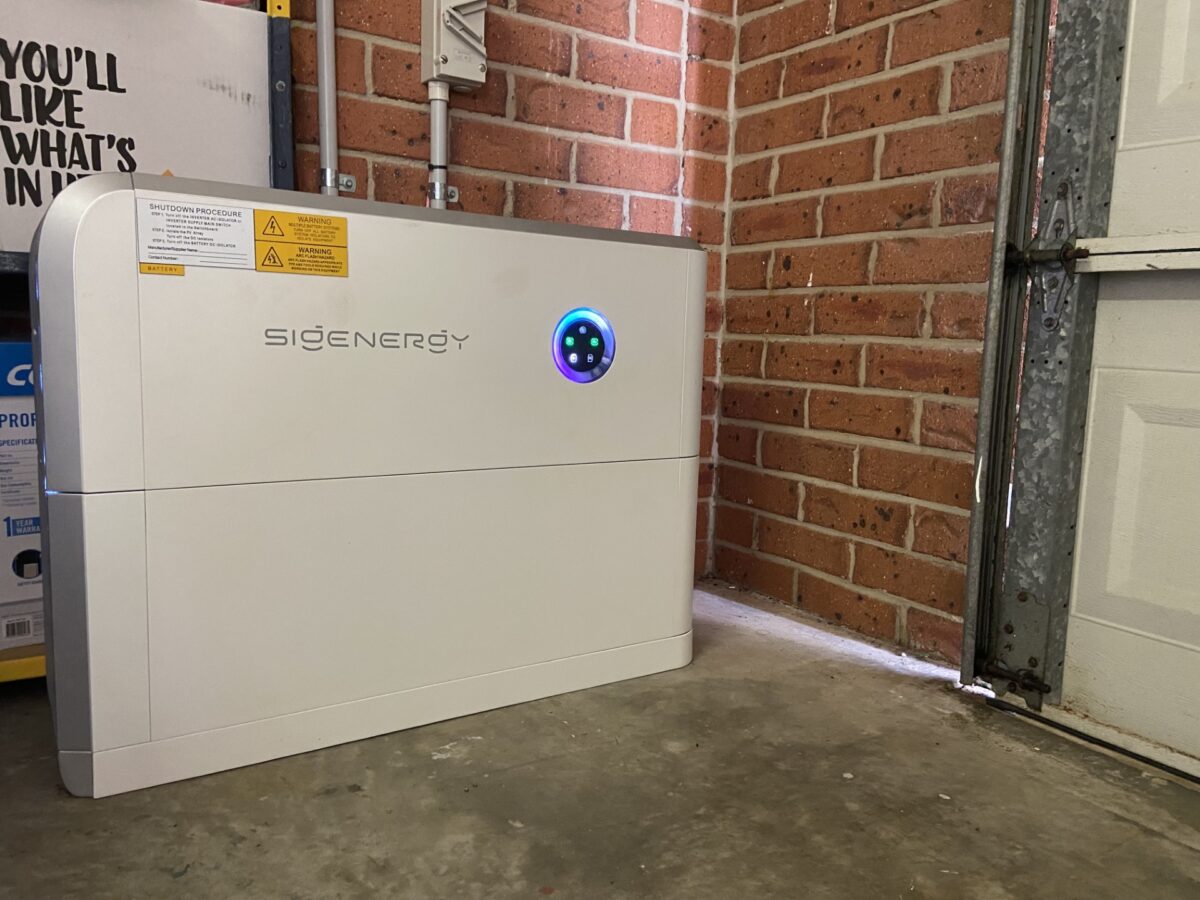





The federal government is celebrating the success of its Cheaper Home Batteries program with new figures showing the initiative has already supported 200,000 battery installations across Australia with 50,000 of the installs in homes that deployed solar for the first time.
Figures released by federal Energy Minister Chris Bowen show more than 4.7 GWh of small-scale battery capacity has been added across the country since the program launched on 1 July 2025, doubling Australia’s battery energy storage capacity.
To the end of 2024 approximately 320,000 residential batteries had been installed across Australia with a capacity of about 3.6 GWh.
Bowen said the Cheaper Home Batteries program “has exceeded even the most optimistic expectations,” adding that the uptake is helping deliver a more secure and stable grid by shifting renewable energy use from the middle of the day to peak times.
“Australians are taking control of their power bills and using their own clean, cheap energy when they need it,” he said.
“Home batteries deliver real, lasting cost-of-living relief for Aussie households, while working to make the energy grid fairer and more reliable during peak demand times.”
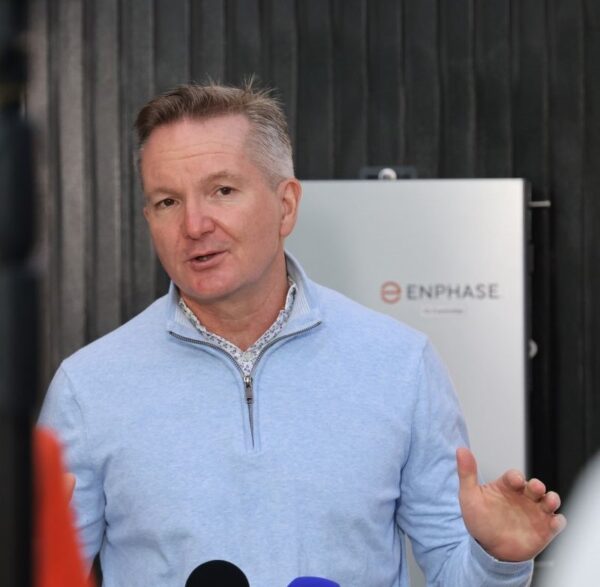
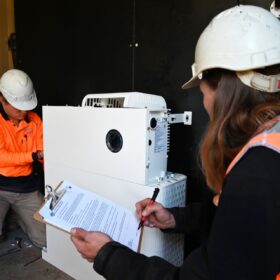
Image: Australian Government
The Cheaper Home Battery scheme is available to all homes, businesses and community facilities and provides a 30% discount on a home battery when installed alongside new or existing rooftop solar. Subsidies are available on batteries with capacities of between 5 kWh and 100 kWh, with the rebate applied to the first 50 kWh.
Changes to the scheme were announced last month amid concerns the original $2.3 billion (USD 1.54 billion) funding allocation would be exhausted inside 12 months.
The funding has now been boosted to $7.2 billion over four years while a tiered rebate scheme will be introduced from 1 May 2026. Systems up to 14kWh will still be able to claim the full rebate, but that subsidy will get progressively smaller as batteries get larger.
These changes are expected to see more than 2 million Australians install a battery by 2030, delivering around 40 GWh of capacity, doubling initial estimates of 1 million batteries and increasing the expected capacity by almost four times.
This content is protected by copyright and may not be reused. If you want to cooperate with us and would like to reuse some of our content, please contact: editors@pv-magazine.com.



2 comments
By submitting this form you agree to pv magazine using your data for the purposes of publishing your comment.
Your personal data will only be disclosed or otherwise transmitted to third parties for the purposes of spam filtering or if this is necessary for technical maintenance of the website. Any other transfer to third parties will not take place unless this is justified on the basis of applicable data protection regulations or if pv magazine is legally obliged to do so.
You may revoke this consent at any time with effect for the future, in which case your personal data will be deleted immediately. Otherwise, your data will be deleted if pv magazine has processed your request or the purpose of data storage is fulfilled.
Further information on data privacy can be found in our Data Protection Policy.