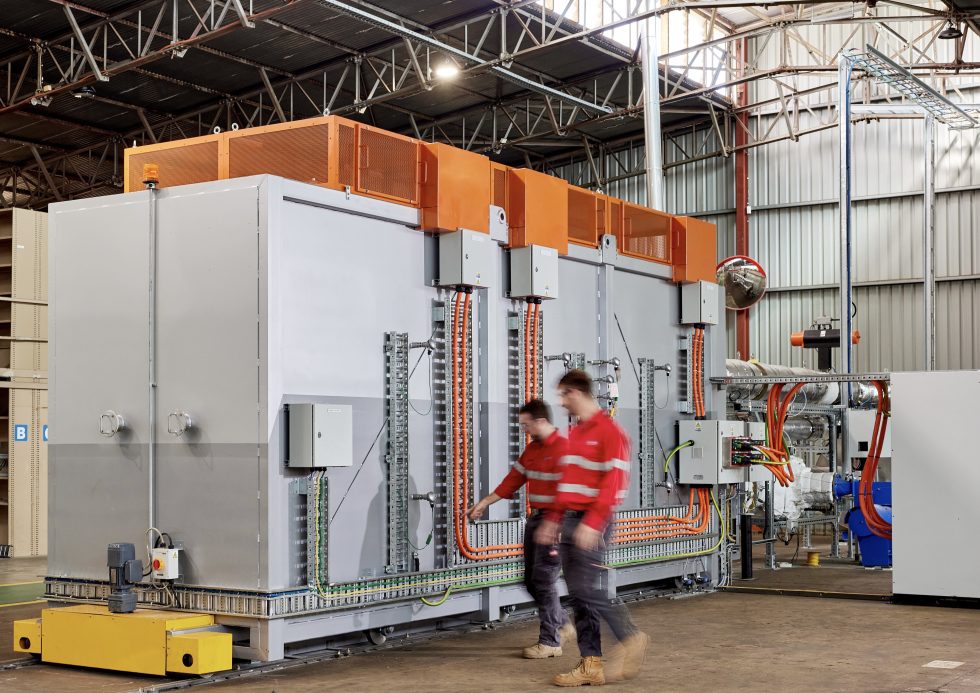





Adelaide-based 1414 Degrees, which was originally founded as a long-duration thermal energy storage (TES) company, has announced its Aurora battery energy storage system (BESS), part of its planned Aurora Energy Precinct, has received approval key regulatory approvals from the Australian Energy Market Operator (AEMO) and ElectraNet, South Australia’s transmission network service provider.
The Precinct, planned for South Australia’s upper Spencer Gulf area, is owned by SiliconAurora, a joint venture between 1414 Degrees and Vast Renewables.
The fine details include acceptance of the Generator Performance Standards for the proposed 140 MW Aurora BESS in accordance with clauses 5.3.4A(d) and 5.3.4B under the National Electricity Rules.
The BESS can now continue towards a Transmission Connection Agreement along with potential power purchase agreements (PPAs) with customers in the goal to reach commencement in 2026.
Publicly listed 1414 Degrees earlier this month issued a stock market announcement noting that Aurora Precinct – that has secured development approval for up to 140 MW / 280 MWh battery energy storage, 70 MW of solar, 150 MW of concentrated solar power – has been identified as “having potential to support” future data centres, “subject to commercial arrangements.”
This may be supported by 1414 Degrees’ own thermal energy storage technology, which focused on using a silicon brick and the melting point of silicon at 1,414°C to store energy, and the company has been independently developing a TES facility.
Kevin Moriarty, Executive Chairman of the company, said: “This milestone represents a critical regulatory step forward and allows the Aurora Precinct to move toward commencement in 2026. In addition to revenue from the BESS, it supports broader development opportunities, including data centre potential previously outlined by the company.”
1414 Degrees has had an unclear path towards commercialisation of its thermal energy storage technology. It had been running a pilot that the company calls a SiBox Demonstration Module, using its SiBrick thermal energy storage medium from 2023 to 2024, in partnership with energy major Woodside. It continues to work on finding commercial clients.
This content is protected by copyright and may not be reused. If you want to cooperate with us and would like to reuse some of our content, please contact: editors@pv-magazine.com.



By submitting this form you agree to pv magazine using your data for the purposes of publishing your comment.
Your personal data will only be disclosed or otherwise transmitted to third parties for the purposes of spam filtering or if this is necessary for technical maintenance of the website. Any other transfer to third parties will not take place unless this is justified on the basis of applicable data protection regulations or if pv magazine is legally obliged to do so.
You may revoke this consent at any time with effect for the future, in which case your personal data will be deleted immediately. Otherwise, your data will be deleted if pv magazine has processed your request or the purpose of data storage is fulfilled.
Further information on data privacy can be found in our Data Protection Policy.