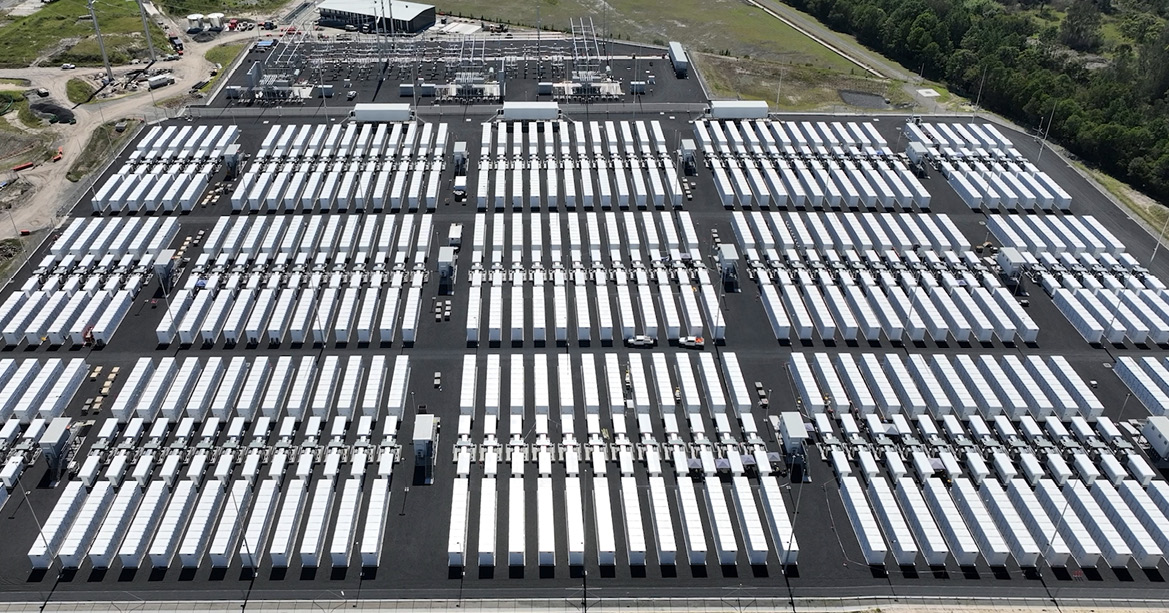





The flip side is that there’s now also a lot more noise around batteries — plenty of commentary and confident, recycled narratives that aren’t always anchored in the detail of market realities. So, once a year, we step back to ground the story in what actually happened and set those outcomes against the long-term trend.
This article is the third in our annual series (following the 2023 and 2024 editions). As in prior years, we’ll start with a fleet-wide view, then draw out notable outcomes for individual assets and the specific market events that shaped those outcomes. We’ll lean heavily on the unit-level dataset compiled in our recently released GSD2025 to look at more detailed metrics such as price capture, price setting involvement, FPP revenue and network curtailment.
Understanding the difference between market value and commercial performance
To begin, it’s important to state that battery economics are commercially complex — and because individual projects can sit under very different contracting and operating arrangements, it’s rarely possible to infer true profitability from public data. But there are still consistent proxies that help reveal the market value being created (and captured) by individual projects, and by the fleet as a whole.
Many batteries operate under tolling agreements, capacity swaps, network service arrangements, and other structures that can reallocate a material share of risk (and reward) to a counter-party. As a result, the cash outcome for an asset owner can look quite different from what spot-market settlements alone would suggest. Those same arrangements can also make behaviour harder to interpret from the outside (and complicate real-world operations from the inside).
In this article, we’ll mainly focus on three sources of cash flow in the physical market: (1) energy (aka arbitrage), (2) FCAS, and (3) Frequency Performance Payments — which together provide a useful proxy for market value.
The state of the market’s battery fleet
For non-market watchers, it’s often tricky to separate what’s happening in the development pipeline from what’s happening in the market. As David Leitch recently noted on WattClarity, there is currently 15.2 GW / 39.7 GWh of battery capacity in the NEM either operating, in commissioning, or under construction.
In this article, though, we’re focused on observed market behaviour — so we’ll start with the map below, which plots all utility-scale battery units registered in the AEMO’s market systems at the beginning of 2026. At that point, there were 53 registered utility-scale battery units with a total of 7.5 GW / 16.6 GWh of capacity, with 19 new units energised in 2025 alone.

As you might expect, the battery systems with the highest power capacity have tended to be sited near load centres or in parts of the grid with strong transmission capability. Source: AEMO
In the past 12 months, the market has begun to see its first wave of longer duration batteries energised — almost all batteries in the market before then were either one or two hours in duration. That included the energisation of x3 four-hour projects, plus the eight-hour Limondale BESS, which reached energisation in the final months of 2025.

The battery fleet’s capacity has ramped up faster than the wind or solar fleet did at a comparable size. With a further 7.7 GW of batteries still under construction, that growth trajectory is set to stay steep. Source: NEMreview
Lumpy returns remain key theme of market revenues
A key theme from last year’s edition of this series was the emergence of a noticeably lumpier annual revenue profile, with month-to-month outcomes swinging more wildly than in earlier years. Many would argue that’s a natural consequence of the fleet leaning more heavily on energy-market revenues (which tend to be more volatile), particularly as FCAS prices have generally softened in recent years. In 2025, that ‘peaks and troughs’ pattern persisted, and we saw significant swings in both directions:
- March 2025 delivered the fleet’s weakest total monthly market revenue outcome (energy + FCAS) since March 2022 — despite there being three times as many batteries connected since then.
- June 2025 was a standout month, with stronger prices delivering the fleet’s highest monthly market revenue on record. Matt Grover from Fluence has examined the fleet’s performance across three specific high-return days in June in a guest piece for WattClarity. As I highlighted in my review of Q2 prices, there were a range of underlying drivers that contributed to price volatility over this period, including high winter demand, transmission outages and some extreme lows in wind production. July and August also saw elevated FCAS outcomes — especially for South Australian batteries — as I’ll touch on later.
As shown in the chart below (which we’ve also published in each of the past two instalments of this article series), aggregate monthly revenue has become noticeably more variable from month to month compared with the pre-2024 pattern.

Since 2024, aggregate monthly market revenue for the battery fleet has become noticeably more variable/seasonal, with larger month-to-month swings than in earlier years. Source: GSD2025 Data Extract
While the chart above shows the fleet’s month-to-month results have become more uneven as energy arbitrage has taken a larger role in returns. The animation below zooms in on that energy component, showing the volume-weighted average price (VWAP) for charging and discharging (energy only, excluding FCAS) for all units through 2025, month by month.
What stands out is that energy outcomes don’t always move in lockstep — even within the same region. In months with more favourable price conditions, the spread in results tends to widen, reflecting the mix of objectives, risk appetites and operating approaches across units.
During higher-priced months, there was a meaningful spread of price capture outcomes in 2025 — even for units within the same region.
Source: GSD2025 Data Extract
Of particular interest for returns is how well batteries capture “high-high” prices — at or near the Market Price Cap. In the chart below we show, for each scheduled battery, the capacity factor (how much it actually discharged) and availability factor (how much capacity was available to the market to discharge) during intervals when its regional price was above $10,000/MWh in 2025. These extreme price spikes are often short and sharp, which makes them harder to “catch” cleanly: as units are obliged to follow dispatch targets, and if a battery begins an interval at (or near) 0 MW it can only ramp to its target over the interval — meaning it can typically capture only a portion (often roughly half) of the interval’s volume even when it responds immediately. By contrast, extended runs of high prices are more favourable, because once a unit is up and discharging, it is much more likely to capture a higher absolute amount of volume.
That context helps explain why the spread across units is so wide: it’s not just whether a region sees $10,000/MWh prices, but whether those high prices are isolated — and whether each unit is available, positioned, and dispatched in a way that allows it to convert those moments into meaningful volume. Notably, NSW recorded the most time above $10,000/MWh in 2025 (more than 9 hours across the year), but even there, the chart shows that high-price exposure does not translate uniformly into high capture.

Short-lived price spikes, network constraints and other factors mean units often captured only a fraction of the available high-priced intervals in 2025. Source: GSD2025 Data Extract
Don’t forget that FCAS still has some bite in some regions
As many analysts have noted, including ourselves, FCAS prices (and the revenues batteries earn from them) have been trending down across much of the NEM for some time.
Mid-2025 was a useful reminder, though, that these services still have bite when they can’t be sourced ‘globally’ across regions. In regions that don’t have multiple interconnections — particularly South Australia (although Project Energy Connect might change the picture) and Queensland — outages can force procurement to become far more local, and prices can respond quickly. The chart below shows the longer-run softening of FCAS revenues, alongside the mid-2025 spike.

Energy is taking a larger share over time — but mid-2025 shows FCAS can still dominate, particularly when local procurement requirements are in place. Source: GSD2025
In July and August, two separate outage-related constraint sets affecting the Heywood interconnector reduced South Australia’s ability to source contingency FCAS from outside a subsection of the region. That forced procurement — especially Lower 1-Second — onto a much thinner local supply stack, and prices ran hard enough for the region’s Cumulative Price Threshold to be hit.

While many had written off FCAS as a revenue source for batteries, the NEM’s oldest utility-scale battery — the Hornsdale Power Reserve — recorded its third-highest monthly market revenue on record last August, driven by elevated SA Lower Contingency FCAS prices. Source: GSD2025
Price setting is being shared between more operators, as batteries cut each other’s lunch dinner
Each year in the GSD we process the AEMO’s price setter files and summarise ‘price setting involvement’ on a unit-by-unit basis across a handful of price buckets. While some others in the industry equate price-setting with market power — I’d caution that there are plenty of wrinkles in how prices land in any dispatch interval — including the way the ‘marginal unit’ interacts with constraints, losses and FCAS co-optimisation — and Allan O’Neil has previously walked readers through why price setting is rarely as simple as it looks. So please take this as a note to say that price setter data is indicative, rather than definitive.
Using GSD2025 data for South Australia, the chart below shows a clear lift in the number of high-price intervals in which batteries were involved in local price outcomes. Over time, that involvement has also become less concentrated in a handful of units, as more battery capacity has entered the region.


While batteries in SA and VIC are increasingly involved in price setting in > $300-priced intervals, that role is being split by more and more batteries over time. Source: GSD2025 Data Extract
In Victoria, the same broad pattern is emerging: batteries are setting prices more often than they were a couple of years ago — but that influence is now spread across a wider cast of units and operators.
That shift matters because it changes how batteries compete. With several large and mid-sized gentailers now owning battery assets outright (or controlling them via tolling arrangements), bidding behaviour is slowly becoming more strategic and more crowded. Operators — and their auto-bidders — are increasingly needing to manage the classic price–volume trade-off: i.e. the decision to bid lower to secure dispatch, or to bid higher and risk being partially dispatched (or not dispatched at all).
However, there may be a second layer to this story emerging behind the meter. Earlier in this article I noted that around 219,000 home batteries have been installed since July 1st 2025, totalling roughly 4.7 GWh of storage. It was way back in 2014 when we first observed that rooftop solar appeared to be “eating the market’s midday lunch.” With so much behind-the-meter storage added in only eight months, it’s reasonable to ask when we’ll start seeing obvious signs that behind-the-meter storage is eating into the market’s dinner.
Early signs of network curtailment are starting to emerge
Network curtailment is a concept most readers will associate with wind and solar farms, because that’s where it has shown up most commonly in recent years.
In 2025 there were some early signs that the same phenomenon may be beginning to show up for batteries as well. Across all NEM regions, the data in our GSD showed that an estimated 90,929 MWh of network curtailment occurred within the battery fleet — not yet a dominant driver of fleet outcomes, but enough worth noting.
One of the clearest examples in our numbers was the Blyth BESS, which experienced an estimated 14,180 MWh of network curtailment across June and July, linked to three particular constraint equations (and not just outage constraints) that bound during periods of high wind output in Northern SA. In some parts of the NEM, the output — and curtailment outcomes — for batteries and wind units can be linked when they share similar operational profiles, for instance when high wind output coincides with an evening peak.
On the flip side, we also saw rare instances where batteries were constrained on — effectively instructed to charge (consume) during very high-priced intervals. I wrote a case study into one such example — at the Capital BESS — on 27 November in NSW. In practice, most auto-bidders are configured to re-bid the unit as unavailable in the next interval to stem losses — but it’s also a reminder that human oversight still matters on such occasions.
Keep an eye on FPP
The Frequency Performance Payments (FPP) mechanism is a new income source for batteries, with the scheme commencing on 8 June 2025. This PFR-related scheme rewards (and penalises) participants based on how their units help (or hinder) power-system frequency. In aggregate, the scheme is two-sided and zero-sum within each interval (penalties fund incentives), and importantly the dollar value of the payment is scaled using the prevailing Regulation FCAS value in that trading interval — so it is tightly coupled to Regulation FCAS outcomes even though FPP is not itself an FCAS market.
For the battery fleet, FPP was a net revenue source in 2025 — totalling $2.14m across June to December — with revenue peaking in October ($460,000 for the month). Notably, and as we observed on WattClarity at the time, October included several frequency dips, caused by a mix of VRE-driven conditions and coal unit trips.
$2.14m is still small compared to the main energy-and-FCAS revenue streams for batteries. However, because FPP is explicitly priced off Regulation FCAS within each interval, it has an embedded sensitivity: if Regulation FCAS prices (or the FCAS requirement driving those prices) rise materially, the magnitude of both positive and negative FPP outcomes can scale as well.
Key takeaways
The last twelve months have reinforced that batteries are now a central part of the NEM’s operating fabric — but the drivers of value for battery operators are changing as the fleet scales. The takeaways below summarise what stood out from this analysis:
- The extremes still matter most. 2025 reinforced that fleet outcomes are increasingly shaped by a relatively small number of high-impact intervals and local system conditions — whether that’s short, sharp energy price spikes (and the uneven price capture we see across units) or periods of extreme FCAS conditions.
- Battery operators will increasingly need to pay attention to how the wind blows. In terms of short-run marginal cost, batteries tend to out-compete gas peakers (as their fuel costs are lower), but they don’t tend to out-compete wind farms (as their opportunity cost is higher). And since the daily operating periods for batteries and wind farms can overlap (e.g. when the wind blows during an evening peak), a meaningful share of the battery fleet’s price and volume risk can be tied to how the wind behaves. In 2025 we saw both sides of that coin: periods when low wind coincided with sharper price outcomes, and periods when high wind aligned with network curtailment.
- Incumbents are facing more competition as more utility-scale batteries enter the market; but it is worth watching whether behind-the-meter storage begins to eat the market’s dinner. Price-setting involvement is being split by more operators, but at the same time, the rapid growth of home batteries suggests a second competitive pressure may be building outside the market itself.
With the battery fleet expanding rapidly (and more capacity still to come), these dynamics, challenges and open questions will be worth monitoring closely — and are likely to show up in operational and commercial outcomes sooner than they did in earlier technology rollouts.
Further reading
The data used in this analysis was drawn from the Generator Statistical Digest 2025 (GSD2025), released in late last month. The GSD provides a consistent, unit-level summary of operational and financial performance across all operating units in the NEM, enabling analysts, investors, developers and other stakeholders to assess outcomes such as spot market revenue, constraint impacts, bidding behaviour, FCAS costs, etc. across the NEM. The GSD2025 is available to purchase here.
Author: Dan Lee, energy market analyst, Global-Roam
The views and opinions expressed in this article are the author’s own, and do not necessarily reflect those held by pv magazine.
This content is protected by copyright and may not be reused. If you want to cooperate with us and would like to reuse some of our content, please contact: editors@pv-magazine.com.



By submitting this form you agree to pv magazine using your data for the purposes of publishing your comment.
Your personal data will only be disclosed or otherwise transmitted to third parties for the purposes of spam filtering or if this is necessary for technical maintenance of the website. Any other transfer to third parties will not take place unless this is justified on the basis of applicable data protection regulations or if pv magazine is legally obliged to do so.
You may revoke this consent at any time with effect for the future, in which case your personal data will be deleted immediately. Otherwise, your data will be deleted if pv magazine has processed your request or the purpose of data storage is fulfilled.
Further information on data privacy can be found in our Data Protection Policy.