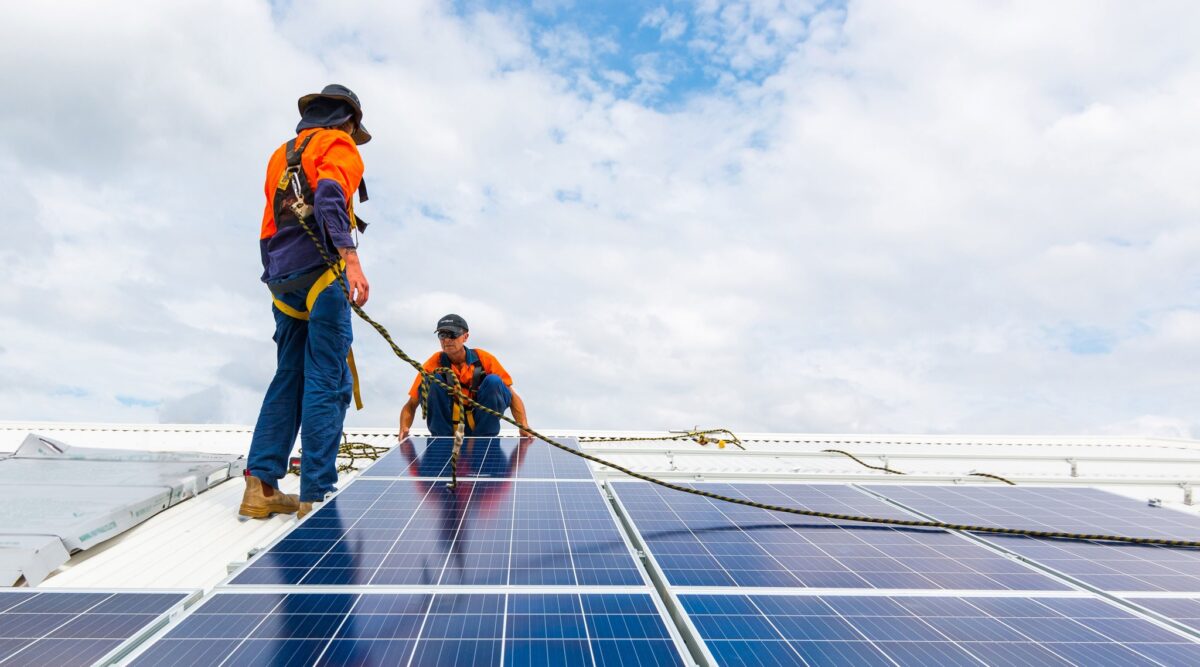





The draft Solar Sharer Offer (SSO) reform, kicking in 1 July 2026, has been released with the Australian Energy Regulator (AER) draft Default Market Offer (DMO) but consumer energy advocates question the benefits.
The SSO promises free electricity usage for consumers up to 24 kWh between 11am and 2pm in New South Wales (NSW) and South East Queensland (SEQ), and 12pm to 3pm in South Australia (SA).
While cutting consumer costs, it has the added benefit of reducing curtailment of rooftop solar during these time frames to sponge up excess generation and keep wholesale prices from falling into the negative.
The SSO also promises to give consumers such as renters and apartment dwellers a stake in the solar transition without owning rooftop solar panels.
However, independent organisation Solar Citizens Chief Executive Officer Heidi Lee Douglas said beyond Solar Sharer, more needs to be done to ensure all Australians, regardless of whether they rent or live in apartments, can get access to cheap clean rooftop solar power.
“We need to see a dedicated Solar for Renters policy to overcome the barriers that lock millions of renters – one third of our homes – out of solar savings,” Douglas said.
“A major barrier is the ‘split incentive’ dilemma – landlords need to pay for upgrades on their property and tenants receive the bill savings.”
“Our research finds that a suite of solutions that would be supported by renters and landlords should include a tax incentive to help landlords pay for energy efficiency and solar upgrades – like accelerated depreciation, which would be cost neutral in the long term, and a nationally coordinated implementation of state-based Minimum Energy Efficiency Standards for rental properties,” Douglas said.
Excess solar
Australia has more than 4.3 million rooftop solar systems installed, with more than 28.3 GW of capacity, which equates to more than the entire remaining coal-fired power fleet.
Federal Minister for Climate Change and Energy Chris Bowen said Solar Sharer is about sharing the benefits of Australia’s solar success.
“If the grid has abundant cheap power in the middle of the day, more households should be able to benefit from it,” Bowen said.
Energy Consumers Australia (ECA) Chief Executive Officer Dr Brendan French said however, not everyone will be better off on the SSO.
“It is important that retailers clearly explain to consumers the best offer for their circumstances,” French said.
“Targeted support measures such as energy efficiency or appliance upgrades, as well as the increased acceleration of the smart meter rollout are needed to ensure renters, people in apartments and low-income households can benefit from the transition.”
“ECA calls on all governments and the AER to ensure that the SSO’s promise is backed by other supporting reforms,” French said.
The federal government is working with non-DMO states, Western Australia (WA) and Victoria, to extend the SSO nationally by 2027.
The AER will publish the final DMO in May 2026 following a period of consultation with industry and further market observations.
This content is protected by copyright and may not be reused. If you want to cooperate with us and would like to reuse some of our content, please contact: editors@pv-magazine.com.



By submitting this form you agree to pv magazine using your data for the purposes of publishing your comment.
Your personal data will only be disclosed or otherwise transmitted to third parties for the purposes of spam filtering or if this is necessary for technical maintenance of the website. Any other transfer to third parties will not take place unless this is justified on the basis of applicable data protection regulations or if pv magazine is legally obliged to do so.
You may revoke this consent at any time with effect for the future, in which case your personal data will be deleted immediately. Otherwise, your data will be deleted if pv magazine has processed your request or the purpose of data storage is fulfilled.
Further information on data privacy can be found in our Data Protection Policy.