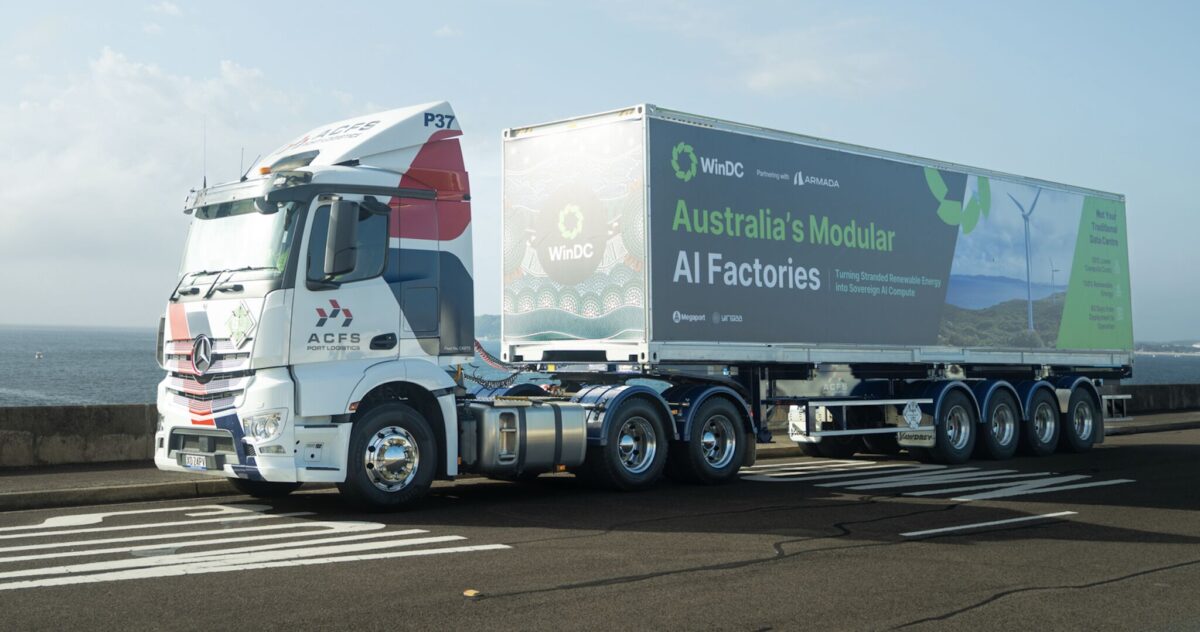





WinDC has teamed with American computing company Armada to deploy a network of modular data centres at renewable energy generation sites across Australia, helping satisfy increasing demand for computing infrastructure and rising levels of curtailment across the country’s solar and wind fleet.
Utility-scale solar and wind curtailment in Australia’s National Electricity Market (NEM) reached a record high of more than 7 TWh in 2025, up more than 60% year-on-year, according to analyst Rystad Energy. This is forecast to grow to more than 10 TWh in 2026.
At the same time, Australia’s data centre sector is booming, driven by global growth in artificial intelligence and digital services. This growth is energy intensive – data centres already account for about 5% of Australia’s electricity and that share is forecast to reach 8% by 2030, with some analyses warning it could even hit 15% under high-demand scenarios.
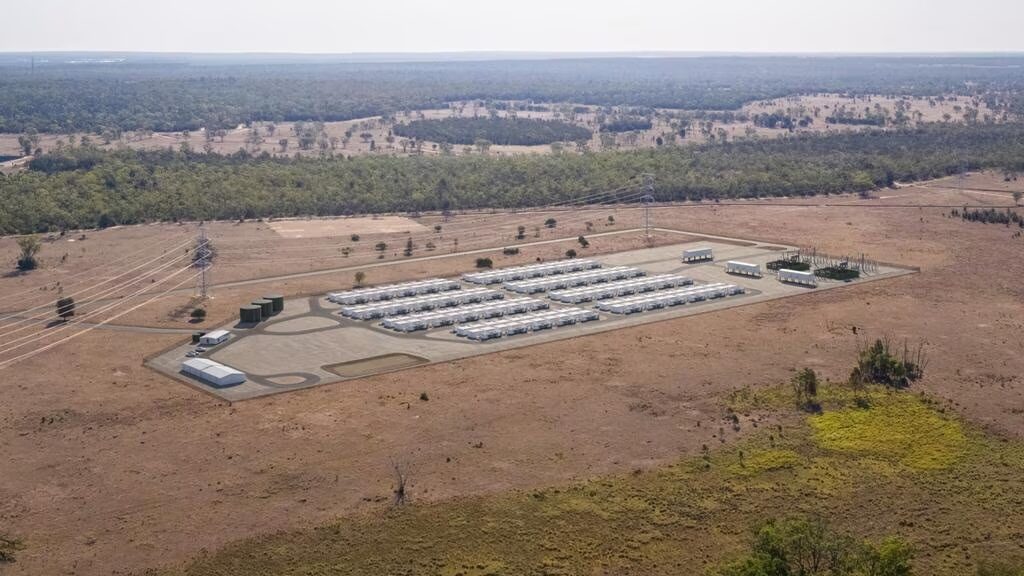
WinDC said its model addresses these challenges directly, suggesting that locating energy-intensive data centres at regional renewable generation sites will help prevent energy from being lost in transmission lines or curtailed due to oversupply in the wider network and also mitigate the impact of data centres on the grid.
“For renewable asset owners, hosting a WinDC unit converts curtailed generation into a commercial opportunity, thereby improving the yield of their generation asset,” the company said.
“For the broader energy market, the localised consumption of electricity, as opposed to transmitting it long distances to metropolitan city-based data centres, reduces the demand and therefore investment required in electricity transmission networks.”
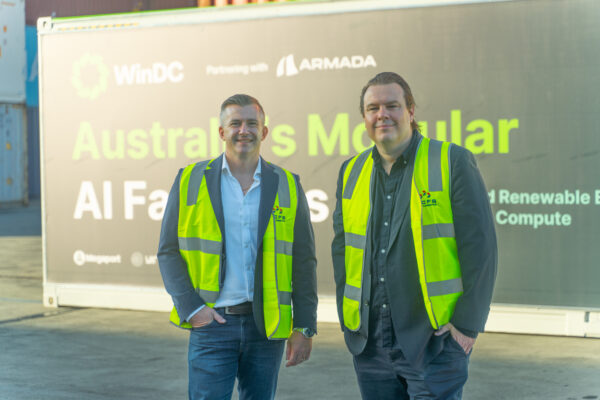
Image: WinDC
WinDC Chief Executive Officer Andrew Sjoquist said Australia has the potential to be a destination for global technology investment.
“Australia has the wind, the sun, and the land to be a genuine force in global AI infrastructure,” he said.
“What has been holding us back is the grid.”
“We identified that problem 10 years ago working alongside renewable energy providers on the east coast, and this is the solution we built.”
Armada co-founder and Chief Executive Office Dan Wright said as electricity demand from data centres increases, ensuring these facilities integrate effectively into the grid will be increasingly important.
“The demand for real-time data processing and AI inference is growing faster than centralised infrastructure can support,” he said. “This partnership with WinDC enables sovereign AI factories to be built where energy is produced, delivering resilient, scalable compute without waiting on grid expansion in Australia.”
Under the agreement, WinDC will deploy 11 MW of modular data centres built by Amada and its partners across solar, wind and battery sites throughout Australia, including initial locations in New South Wales and Western Australia.
The portable centres are housed in standard shipping-container sized units and are fully relocatable by truck. Each unit deploys in approximately 90 days and is powered by 100% renewable energy.
The units are currently built in the United States and Europe but both Armada and WinDC said they planned to shift production to Australia “once WinDC reaches a defined number of units in-country.”
“WinDC’s partnership with Armada reflects a clear Made in Australia commitment,” Sjoquist said, adding this will “ensure that the next generation of AI-ready infrastructure is not only deployed here, but increasingly built, integrated, and scaled from Australia itself.”
This content is protected by copyright and may not be reused. If you want to cooperate with us and would like to reuse some of our content, please contact: editors@pv-magazine.com.




By submitting this form you agree to pv magazine using your data for the purposes of publishing your comment.
Your personal data will only be disclosed or otherwise transmitted to third parties for the purposes of spam filtering or if this is necessary for technical maintenance of the website. Any other transfer to third parties will not take place unless this is justified on the basis of applicable data protection regulations or if pv magazine is legally obliged to do so.
You may revoke this consent at any time with effect for the future, in which case your personal data will be deleted immediately. Otherwise, your data will be deleted if pv magazine has processed your request or the purpose of data storage is fulfilled.
Further information on data privacy can be found in our Data Protection Policy.