Emiliano Bellini

Why go solar? We can think of at least 333 reasons
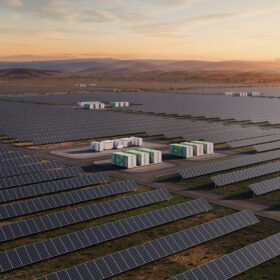
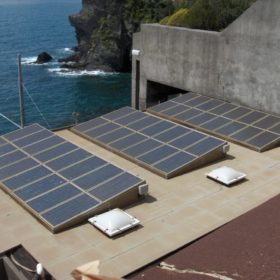
Australian researchers have compiled data from 173 studies which examined homeowner behavior when buying rooftop PV and identified 333 predictors related to the attitude, knowledge, tendency, awareness, willingness and intent of householders.
QUT: A titanium solar cell with 24% efficiency
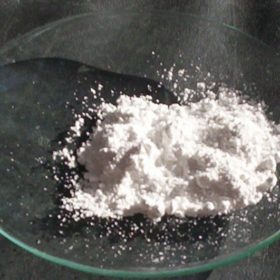
The Australian research team which developed the device said the higher efficiency was achieved through a nanowire design which eliminates the interface inside the titanium dioxide band.
UNSW Sydney: Preventing LID in a 23.83% efficient Longi PERC cell
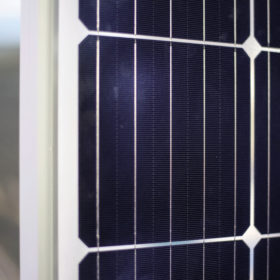
Australian researchers have unveiled hydrogenation technology to reduce light and elevated temperature-induced degradation in Czochralski silicon PERC solar cells. The developers say the process can minimize degradation without sacrificing performance in cells and modules.

South African mining sector wants solar
The Minerals Council South Africa has urged the government to solve the country’s energy crisis by adding more power generation capacity from both distributed and large-scale renewables. Meanwhile, several mining companies operating in South Africa are planning their own big solar parks, including two 200 MW facilities under development by Sibanye-Stillwater and Vedanta.
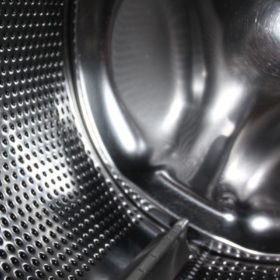
How much can you wash a wearable PV device?
UK researchers claim to have proved the viability wearable photovoltaic devices as an integral part of regular clothing. A solar-powered fabric textile was created by embedding micro crystalline silicon solar cells within the fibers of a textile through very thin copper wires. The scientists claim that the novel device can maintain its performance even after 15 domestic machine wash cycles, 25 hand wash cycles, and 6000 abrasion cycles.
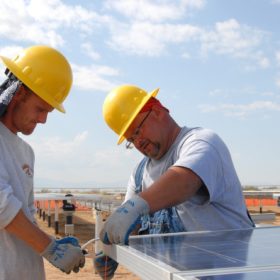
A clean energy world would support millions of new jobs
A study from Finland’s Lappeenranta University of Technology has predicted solar and other renewables can provide a global energy jobs revolution – just as four European operations revealed recent struggles.
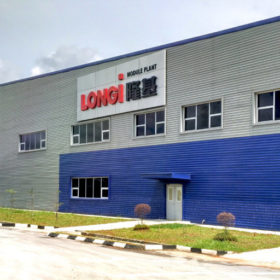
Longi claims 22.38% efficiency world record for PERC mono panel
The Chinese manufacturer said the result was confirmed by Germany’s TÜV Rheinland. The achievement beats the company’s previous record of 21.65%, set last month.

All-inorganic perovskite solar cell hits 16.1% efficiency
Researchers from the City University of Hong Kong have developed an all-inorganic perovskite cell with an electron-pair donor which offers a pair of non-bonding electrons. The cell was developed by applying that ‘Lewis base’ small molecule to passivate the inorganic perovskite film.
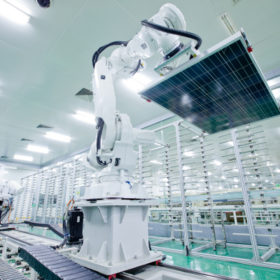
Jinko claims two more efficiency records for bifacial panels
The Chinese manufacturer has achieved conversion efficiencies of 21.82% and 22.49% for its p-type PERC and n-type HOT bifacial panels, respectively. The results were confirmed by Germany’s TÜV Rheinland.

Solar park taking shape along 40 km of road in the Netherlands
The Dutch water management agency plans to install solar panels along both sides of the A37 highway in Drenthe province, as well as on the median strip, to cover 300 hectares in total. The project is part of a plan to build projects on state land, as the domestic PV industry continues to search for alternative surfaces on which to deploy solar.