Marija Maisch

FRV achieves financial close on 68 MW solar project in NSW
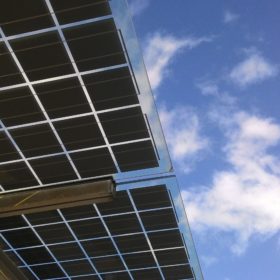
Fotowatio Renewable Ventures (FRV) has secured financing for the 67.8 MW Goonumbla Solar Farm in New South Wales. The Spanish developer inked a power purchase agreement for the project with Snowy Hydro last year.

Australian airports turn to emissions-linked financing amid growing appetite for sustainable lending
As sustainability-linked debt financing continues to gather momentum, Australian airports are turning to innovative funding mechanisms. In the latest such deal, the operator of Gold Coast Airport will be incentivised to reduce carbon emissions under a loan agreement with Commonwealth Bank and Westpac.
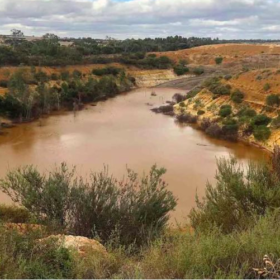
Australia’s first compressed air energy storage facility gets go-ahead
The South Australian government has given its tick of approval for the development of a 5 MW/10 MWh compressed air energy storage facility, which will store excess solar and wind power at a closed underground mine.

ClearVue inks solar strip module supply deal with BeyondPV
Western Australia-based solar glass developer ClearVue has signed a deal with Taiwanese thin-film solar module manufacturer BeyondPV to set up a dedicated production line for solar strip modules at its production facility in Tainan.

Batteries well-suited to play valuable role in grid management in New Zealand’s energy transition
A report published by New Zealand’s state-owned transmission grid operator Transpower finds the widespread uptake of distributed battery storage could play an important role in supporting the power system as rooftop PV and electric vehicles are increasingly adopted.
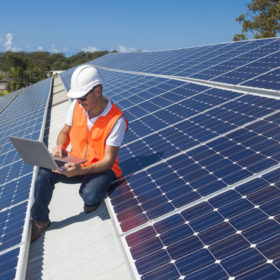
More calls for review of Victoria’s Solar Homes Program
Following similar calls from other industry bodies, the Clean Energy Council has urged the Victorian government to review its landmark Solar Homes Program and warned about the serious effects its dynamics has on the industry.
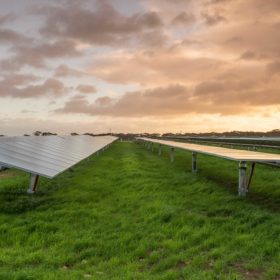
Terregra switches on its first merchant solar farm in South Australia
The 5 MW Mobilong Solar Farm will run on a fully merchant offtake arrangement over its 30-year lifetime.
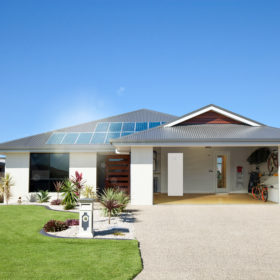
Smart meter time of use pricing to drive up household energy costs without the help of solar and batteries
New research released this week by The Australia Institute shows that ‘time of use pricing’ (ToU) facilitated by smart meters is likely to drive up household energy costs by $429 a year on top of already high prices. Analysis of national electricity market data suggests that demand for electricity in Australia is very inelastic, which makes ToU more likely to increase the profits of electricity companies than to assist consumers. Households with solar PV and batteries, however, are best suited to cope with this type of pricing.
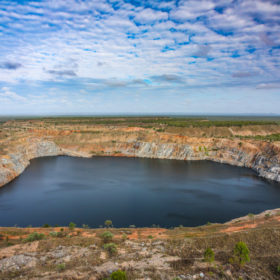
Genex’s Kidston pumped hydro project lands $610 million federal loan
Australia’s first large-scale project to use pumped hydro to store solar generated power, the Kidston facility in north Queensland, has landed a $610 million loan from the Federal Government’s the Northern Australia Infrastructure Facility (NAIF).
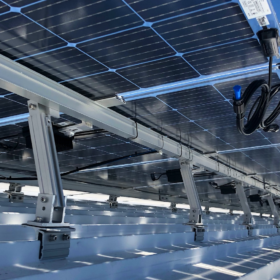
Vicinity sets net zero carbon target by 2030, as $73 million solar program nears completion
On the back of a combination of its industry-leading solar program and energy efficiencies, Vicinity Centers has announced a zero net carbon target by 2030 for its 34 shopping centers.