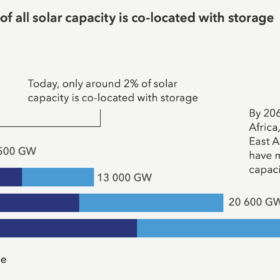
Nearly half of solar capacity will be co-located with storage by 2060: DNV report
Norwegian risk managment company DNV’s Energy Transition Outlook 2025 report also predicts that distributed generation solar should begin outpacing utility-scale installations in some parts of the world by 2060.

Singapore approves 1 GW hydropower import project from Malaysia
Singapore has conditionally approved a 1 GW hydropower import project from Malaysia’s Sarawak state, with first deliveries expected around 2035.
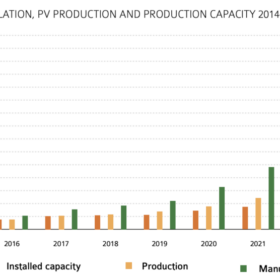
Thirty-five countries now operate GW-scale annual PV markets
The latest report from the International Energy Agency’s Photovoltaic Power Systems Program highlights that 2024 was another record year for solar installations globally but large overcapacities of solar cell, module and wafer manufacturing continued.
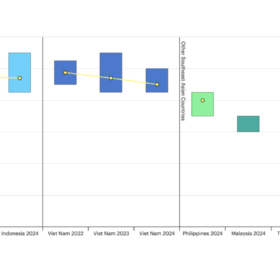
IEA says cost of capital for solar remains high in Southeast Asia
The International Energy Agency says the cost of capital for solar remains higher in Southeast Asian countries than it does in other emerging and developing economies.

Vanuatu runs tender for supply, installation of solar systems
A tender is open in Vanuatu to deliver eight solar water pump systems and 24 standalone solar PV systems. The deadline to submit expressions of interest is October 27.
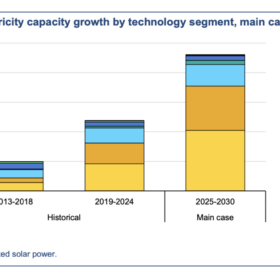
IEA lowers 2025-30 forecast for solar growth
The International Energy Agency has cut its 2025–30 renewables forecast by 5%, citing lower solar additions, though PV still represents nearly 80% of 4.6 TW expected growth.
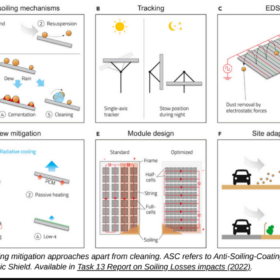
IEA-PVPS warns soiling costs solar industry billions per year
The International Energy Agency’s Photovoltaic Power Systems Programme says dust, pollution, and debris on solar panels reduce output by 4% to 7% worldwide, costing the industry billions of dollars annually and making tailored mitigation increasingly urgent.
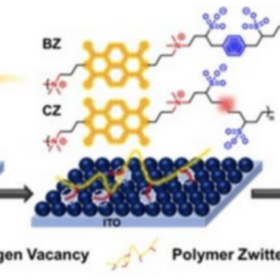
Scientists boost organic solar cell efficiency using polymer zwitterions
Chinese and US researchers have together developed electroactive polymer zwitterions to modify zinc oxide interlayers in organic solar cells. Their work was found to passivate defects in organic solar cells, helping to improve device performance and stability.

Malaysian partners to develop 1.5 GW of solar
Subsidiaries of Gentari and Gamuda will develop 1.5 GW of solar with battery storage in Malaysia to supply hyperscale data centres under the Corporate Renewable Energy Supply Scheme, supporting the country’s push to expand clean energy and meet rising tech-sector demand.

Indonesia announces 100 GW solar, storage minigrid plan
The new initiative features plans for 1 MW solar minigrids tied with 4 MWh of accompanying battery energy storage, to be deployed across 80,000 villages, alongside 20 GW of centralised solar power plants.