Compressed-air storage for commercial applications
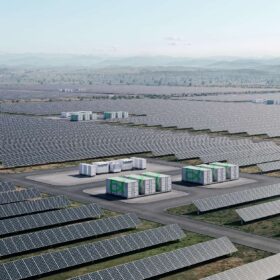
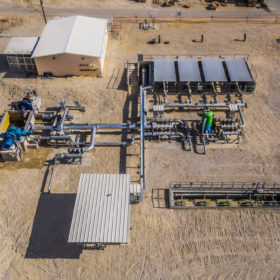
Israel-based Augwind has built its first 250 kW/1 MWh compressed air storage system for the collective community of Yahel, in the southern, desert part of the country. The commercial scale facility will be connected to a PV system and will be used for behind-the-meter services.
Innovative Australian battery materials projects gain momentum at home and abroad
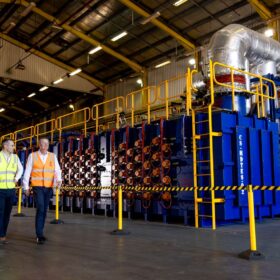
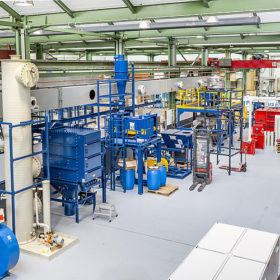
A number of Australian battery material recovery projects got off the ground this week, including the completion of Western Australian outfit Neometal’s battery recycling demonstration plant, a Queensland-Japanese joint venture studying the extraction of cobalt from copper tailings as well as the funding of Sydney-based startup Novalith.

Will China’s ‘double carbon’ and ‘dual control’ policies drive demand for solar?
Factories suffering from rationed grid electricity could help drive a boom in on-site solar systems, and recent moves to mandate the retrofitting of PV on existing buildings could also lift the market, as analyst Frank Haugwitz explains.
Monetising the power to switch off: Australia’s new demand-response market opened today!
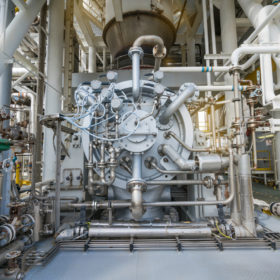
Over recent years, the energy industry has been working hard to provide the structure and a regulatory framework for a market that recognises the value of coordinated demand response. Today marked the second wave — after the opening of the FCAS market in 2017 — of opportunity for organisations to trade their flexible electricity loads on the wholesale electricity market. The resulting efficiency gains are an important piece of the energy transition puzzle.
Made-in-WA cathode precursor plant gets underway
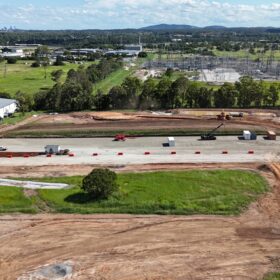
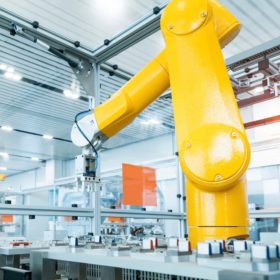
Construction has begun on a manufacturing pilot project to see battery-grade nickel, cobalt and manganese for precursor battery cathode materials (PCAM) in Perth. The facility is expected to be completed in early 2022 and is one of a number of developments that will look to establish Western Australia (WA) as a materials supplier to the growing battery manufacturing industry.

Report finds co-located hubs key to battery industry competitiveness
A report from Australia’s Future Battery Industries Cooperative Research Centre which analysed the development of battery hubs in the U.S., Germany and Japan, has found that co-location and cooperation between industry and government were key to hub success. For Australia to play the same game, it will have to leverage its wealth of resources, and clean up its act along the way.
Umicore to purchase 42,000 tons of Australian lithium battery material
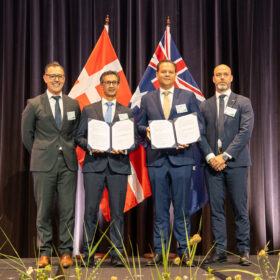
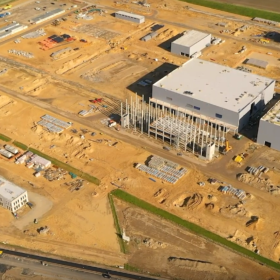
Belgian materials company Umicore has signed a contract with Australia headquartered Vulcan Energy Resources to purchase up to 42,000 tons of lithium hydroxide over a five year period beginning in 2025. The material will be used in Umicore’s production of cathode materials for lithium-ion cell manufacturers.

Insight Australia 2021, fully charged
Insight Australia 2021 took place on October 12th. Its wide range of speakers and Australian focus attracted many to watch the event live and participate in the insightful Q&As. For those that weren’t able to join us but are at all interested in the performance and safety of battery energy storage in the energy transition, the recording is now available.
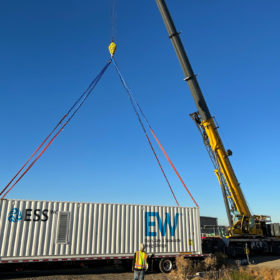
Iron flow battery tech shows promise for mid-duration energy storage
The ESS battery systems have a prescribed design life of 25 years, but the battery modules, electrolyte, plumbing, and other components may well last for decades longer with proper maintenance.
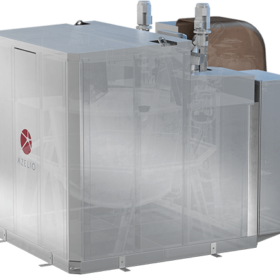
Electro-thermal storage system for commercial applications launched
Developed by Swedish manufacturer Azelio, the system stores renewable energy in recycled aluminium and has an electrical and thermal energy output, with a total efficiency of 90 %. One unit’s storage capacity reaches 165 kWh of electrical output and on top of that thermal energy between 55-65 degrees Celsius. Its modular configuration allows the deployment of projects with a capacity of up to 100 MW.