Contract for FFI’s Gladstone electrolyser substation announced
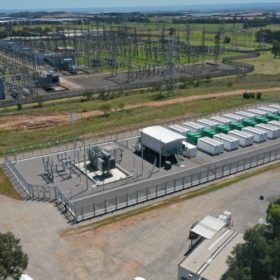
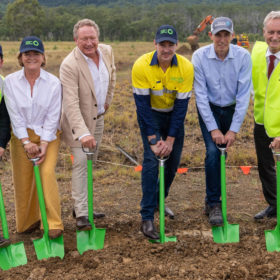
Australian company GenusPlus Group has been awarded a $15 million (USD 9.9 million) contract with Fortescue Future Industries (FFI) to design and construct a 275 kV substation at FFI’s Green Energy Manufacturing Centre in Gladstone, Queensland.
Danish developer grabs major stake in 3.6 GW Queensland project
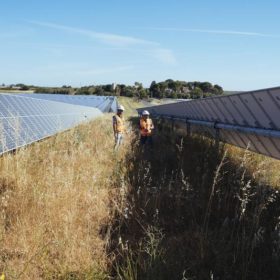
Danish renewable energy developer European Energy has acquired a majority stake in a 3.6 GW integrated solar and battery energy storage facility and green hydrogen production plant being developed near Gladstone on the central Queensland coast.
SA calls for proposals to build $593 million green hydrogen power plant
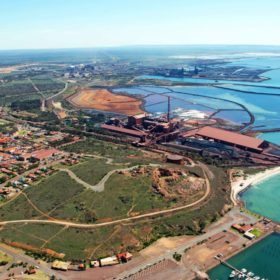
The South Australia government has called for proposals from industry partners to build a $593 million (USD 398 million) green hydrogen power plant, including 250 MW of hydrogen electrolyser facilities and fit-for-purpose hydrogen storage infrastructure at Whyalla on the east coast of the Eyre Peninsula.
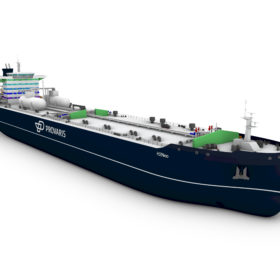
Australian compressed H2 carrier ship approved by ABS
Perth-based Provaris Energy said it is moving forward with its compressed H2 carrier, while Princeton University researchers have published a study on how the transition to hydrogen-based energy systems would affect the tropospheric burdens of methane and hydrogen.
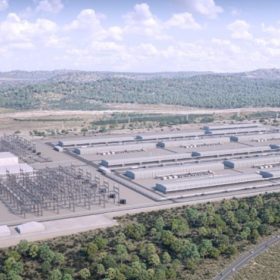
Stanwell pushes ahead with 3 GW green hydrogen project
Queensland government-owned generator Stanwell Energy and Japan’s largest hydrogen supplier Iwatani Corporation are preparing to commence a Front-End Engineering Design study as they drive towards a final investment decision on a 3 GW green hydrogen project being developed near Gladstone on the central Queensland coast.
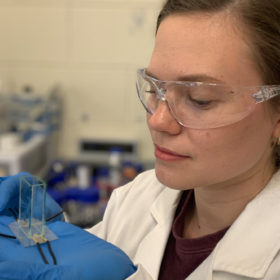
Melbourne researchers use sound waves to boost green hydrogen production 14-fold
Researchers from RMIT and the University of Melbourne have discovered high-frequency vibrations can release 14 times more hydrogen compared with standard electrolysis techniques. The discovery also has ramifications for the expensive, rare materials currently used in electrolysers. “With sound waves making it much easier to extract hydrogen from water, it eliminates the need to use corrosive electrolytes and expensive electrodes such as platinum or iridium,” research lead Amgad Rezk said.
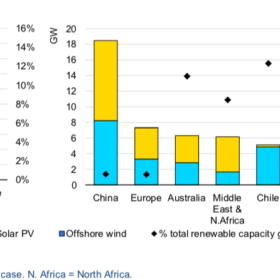
Global renewables capacity for hydrogen to surge by 2027, says IEA
The International Energy Agency says that it expects the use of renewables to support global hydrogen production to surge over the next five years. The Netherlands and Denmark, meanwhile, have revealed plans to expand electrolysis capacity.
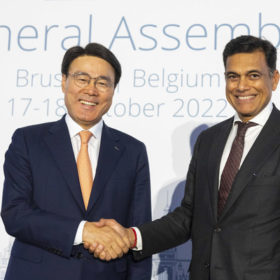
South Korean steelmaker to invest $60 billion in Australian green steel ventures
South Korean steel producer Posco Group will invest $60 billion (USD 40b) in Australia by 2040 across the green steel supply chain, including in renewable generation, electrolysis and steel making processes.
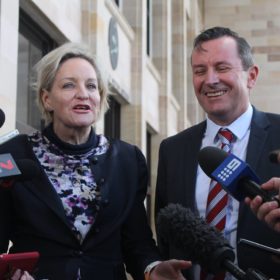
WA gov to streamline energy project approvals, progress 1% renewable hydrogen target
The Western Australian government has made a number of announcements at a hydrogen conference held in its capital on Tuesday, December 6, including a commitment to streamline project approvals, releasing new policy and guidance for Crown land use, and an update to the state target of having green hydrogen comprise 1% of the generation in the state’s main grid.
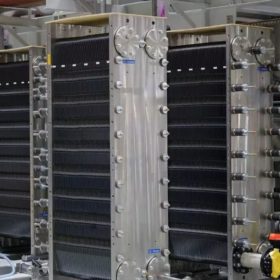
Xodus announces 1 GW green hydrogen project for WA
Energy consultancy Xodus Group has announced plans to develop an export-scale green hydrogen project in the Mid-West region of Western Australia which will scale up to 1 GW of electrolyser capacity.