Aussie parents pester PM to fund solar for every school and childhood centre
Australian Parents for Climate Action have proposed an initiative called Solar our Schools and published open letter to Prime Minister Morrison calling for large-scale federal investment in solar and energy storage for every school and early childhood centre as part of Covid-19 recovery.
Green Peak Energy and Energy Ease partner up to make green energy PPAs easy
Solar PPAs are now easier than ever to acquire for large companies and enterprise thanks to the partnership of Green Peak Energy and Energy Ease. The duo have joined forces to offer the Energy Ease PPA, a one stop shop for large solar PPAs and financing.
Ah McCain…you’ve done it again! McCain to build Australia’s largest ‘behind-the-meter’ system
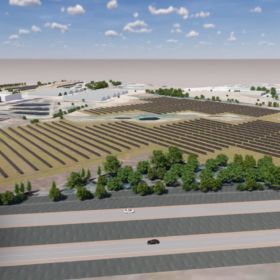
It’s crunch time for renewables and McCain Foods is chipping in with what is being called Australia’s largest ‘behind-the-meter’ renewable energy system at its production facility in Ballarat. The 8.2 MW system will feature 17, 000 solar panels and a co-generation technology feeding on scrap potato skins.
Printed Solar catches the light in first public display, foreshadows new manufacturing industry
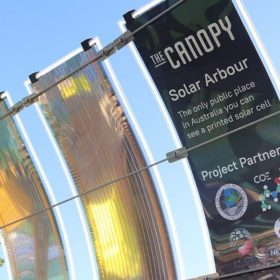
The University of Newcastle’s development of world-leading printed solar technology has taken a massive step toward rapid commercialisation with its first public display. Due to the technology’s panoramic applicability, this day may very well be looked back upon as the day the very world as we know it changed, and changed for the better.
WA community battery rollout continues: Tesla battery launched in Margaret River
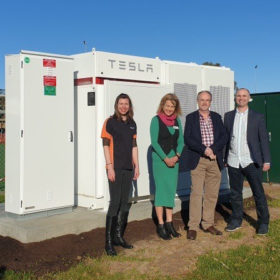
The highly successful Western Australian community battery rollout has caught another wave and poured another glass of fine Cab Sav with its newest launch in Margaret River. This particular installation is part of a five-year trial to identify even more prime locations for community energy storage.
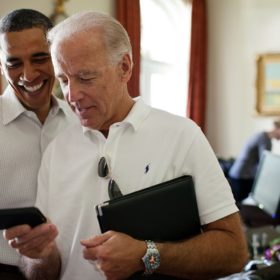
Biden-Sanders task force calls for 500m solar panels in five years
A wide-ranging joint report published by the Democratic presidential candidate and his former rival includes the section: ‘Undoing the harms of the Trump administration and righting the wrongs.’
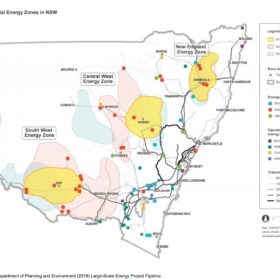
REZzing up the renewable future of NSW
A couple of years ago NSW was pilloried as the laggard state in Australia’s renewable energy transition. Today it is the only state to have acted on the concentrated benefits of renewable energy zones as outlined in AEMO’s Integrated System Plan. Matt Kean’s latest announcement capitalises on developer enthusiasm for NSW’s first wildly successful REZ proposal.
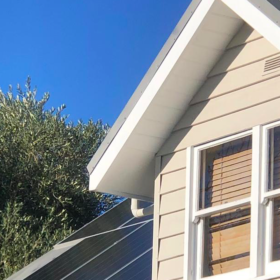
Up to 50% rooftop segment decline likely
While the solar industry has shown great resilience in the face of Covid-19 shutdown, installations are set to decline sharply over the next year. While the residential segment looks set to bounce back, the small-commercial segment will be slow to recover.
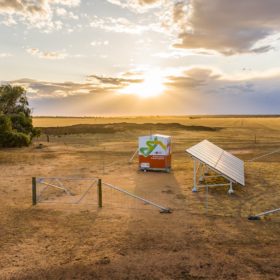
Western Power delivers first community SPS
The Nowanup property is a keystone in south-west Western Australia’s biodiversity regeneration, and now, with the installation of a stand-alone power system (SPS) from Western Power, the spur of the line property is no longer subject to routine outages from storm and bushfire interruptions. With self-sufficiency, Curtin University can now expand its Bush Campus into the property to better facilitate Noongar education.
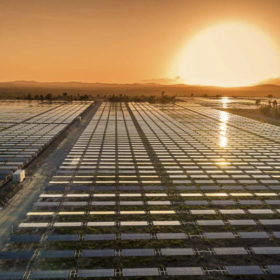
QLD attracts United Green “majority” stake investment in Rodds Bay Solar Farm despite “wet blanket” federal policy
A “majority” stake of the 300 MW shovel-ready Rodds Bay Solar Farm in Queensland has been purchased by UK investment firm United Green. The announcement comes as state government energy ministers come together to reinforce their renewable energy ambitions in this time of economic recovery, despite “the difficulty” of the federal policy vacuum.