Malaysian utility to build 2.5 GW of hybrid hydro-floating solar
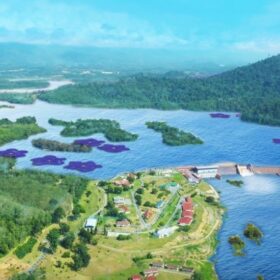
Tenaga Nasional Berhad, a Kuala Lumpur-based utility, says it plans to install floating solar farms at its hydropower facilities. It’s targeting 2.5 GW of capacity to support Malaysia’s National Energy Transition Roadmap.
GFG signs green hydrogen deal for Whyalla steelworks
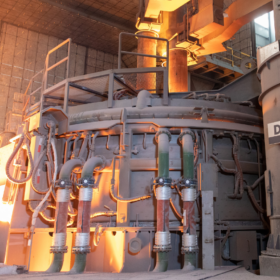
The South Australian government has struck a deal with GFG Alliance to explore a green hydrogen offtake agreement as the company seeks to phase out coal-based steelmaking at its Whyalla iron and steel plant in the state’s Upper Spencer Gulf.
Renewed push on agrivoltaics could help resolve conflict in rural communities
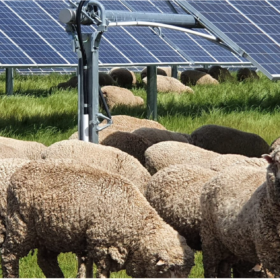
With opposition to large-scale renewables transmission projects being expressed in some rural and regional communities, solar’s ability to be coupled with agriculture could present opportunities for collaboration rather than conflict.

Philippines gives green light to 65 MW of solar
The Philippines Board of Investments (BOI) has granted a green lane certificate to a 65 MW ground-mount solar power plant, set to become operational in September 2026.

The path beyond 5 TW
With the COP28 climate summit in Dubai resulting in a pledge of at least 11 TW of renewables generation capacity by 2030, Bruce Douglas, chief executive officer (CEO) of the Global Renewables Alliance (GRA), examines the outcomes of the conference and their likely impact on the solar industry.

AirTrunk, ib vogt sign virtual PPA for 29.9 MW of solar in Malaysia
Data center specialist AirTrunk has signed a virtual power purchase agreement (VPPA) under which it will procure energy from a 29.99 MW solar farm that ib vogt is now developing. Construction on the project is set to begin later this year.
Australian-backed solar farms completed in Papua New Guinea
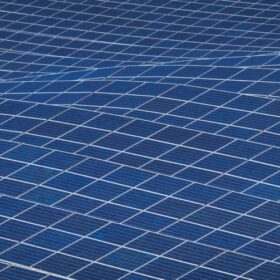
During a state visit with Prime Minister Anthony Albanese in Canberra on Feb 8, Papua New Guinea (PNG) Prime Minister James Marape welcomed Australia’s recent completion of the construction of two new solar farms in West Sepik and the Autonomous Region of Bougainville.
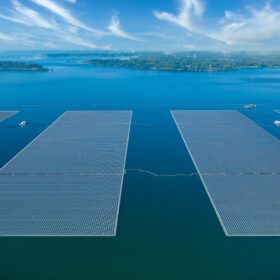
Southeast Asia turns to floating PV to solve land limits, Rystad finds
While facilitating utility-scale solar farms co-existence with agricultural land near transmission networks is an ongoing challenge in Australia, in Southeast Asia similar problems is resulting in the growth of floating PV (FPV) installations.
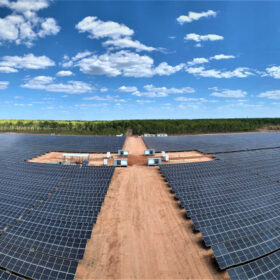
New NT Defence solar projects deploy forecasting, managing technology to achieve GPS
Energy forecasting and managing company Proa is rolling out its technology at two Northern Territory (NT) defence facility solar farms, with positive implications for scheduling solar energy commitments with certainty.
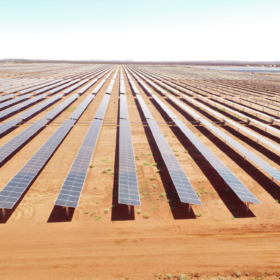
Rooftop solar’s success results in “struggling” large-scale segment
As Australia’s rooftop solar wracks up records, price cannibalisation has resulted in a “struggling” large scale market segment. Victoria University’s Energy Policy Centre head Bruce Mountain says that increasingly depressed wholesale electricity prices during the day is squeezing out big PV.