Victoria gives 90 MW solar farm go-ahead
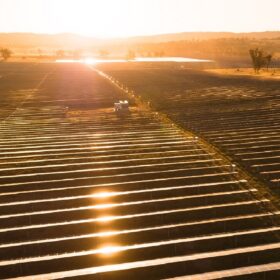
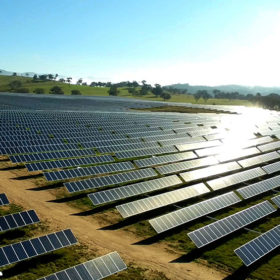
The Central Goldfields Shire Council has given its tick of approval for the construction of the Carisbrook Solar Farm, proposed by Germany’s ib vogt.
EGP highlights local value creation, as 95 MW Susan River project completion
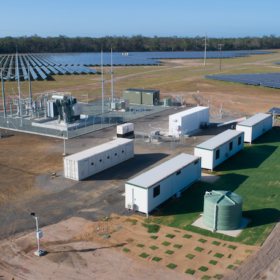
Elliott Green Power (EGP) has completed the construction and grid connection of its 95 MW Susan River Solar Farm in South East Queensland. The utility scale array is part of a three-project, 300 MW portfolio EGP is developing in Queensland and New South Wales.
Eni enters Aussie renewables market with acquisition of NT largest solar farm
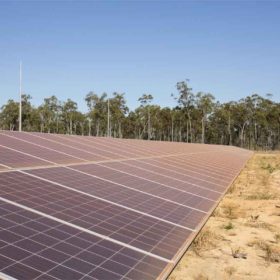
Diversifying its gas-focused portfolio Down Under, the Italian oil group has acquired the Northern Territory’s largest solar project – the 33.7 MWp Katherine Solar Farm.
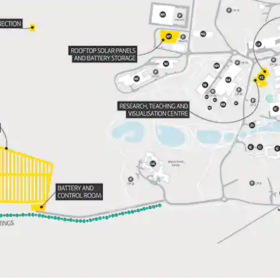
Deakin University breaks ground on 7.25 MW solar-powered microgrid
The first sod has been turned on a $30 million smart microgrid which is to power Deakin University’s Waurn Ponds Campus. The project, featuring a 7 MW solar farm and a 1 MW battery, is delivered in partnership with AusNet Services and its subsidiary Mondo with the goal to provide an integrated research and education platform, and contribute to the university’s sustainability goals.
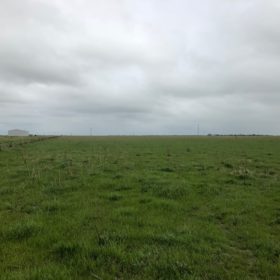
Indonesia’s Terregra readies to break ground on its second SA solar farm
After it launched construction on its first solar project in Australia last month, Indonesia’s Terregra Renewables is all set to break ground on another 5 MW solar farm in South Australia.
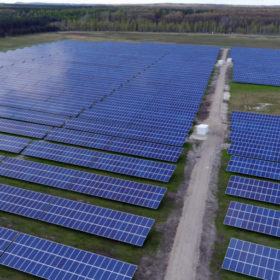
Germany installed almost 3 GW of solar in 2018
PV demand grew 68% year-on-year from the level seen in 2017 as Germany’s cumulative installed solar generation capacity reached 45.92 GW.
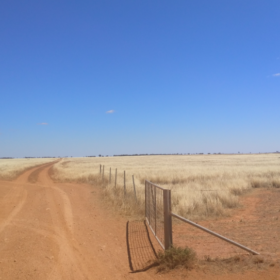
Massive solar+storage projects move forward in South Australia
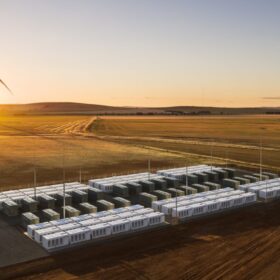
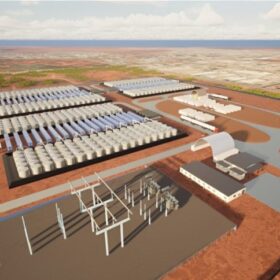
The Robertstown region could host two massive renewable energy projects – a proposed 500 MW solar farm collocated with 250 MW/1000 MWh of battery storage, and a construction-ready 200 MW solar PV farm and 120 MWh energy storage component that form part of the Solar River Project, the size of which could double at a later stage.

Solar+wind+storage project waved through in Western Australia
A major project featuring 120 MW wind and 50 MW solar PV in Western Australia has secured all state and federal approvals and is scheduled to start construction later this year. An energy storage facility is to be included at a later stage.
Flow Power inks solar PPA with BayWa r.e. amid growing corporate demand for clean energy
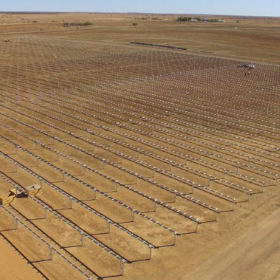
Commercial electricity retailer Flow Power has signed an offtake deal with Germany’s BayWa r.e. for 48 MW of clean electricity generated at two of northern Victoria’s largest solar farms – the 112 MW Karadoc Solar Farm and 106 MW Yatpool Solar Farm.
Renewables turn emissions tide and rooftop solar shoulders heatwave load
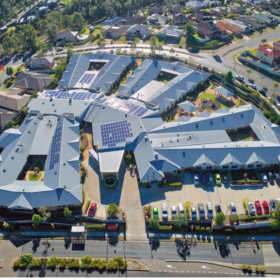
The Australia Institute’s first emissions audit of 2019 shows renewables pushing coal aside to reduce Australia’s emissions 20% below the peak recorded in 2008; and the load that January’s high temperatures would normally exert on the grid has been mitigated by high uptake of rooftop solar.