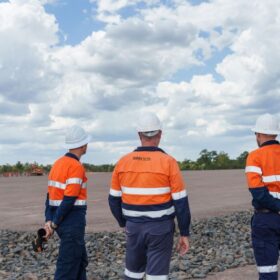
Australian airports turn to emissions-linked financing amid growing appetite for sustainable lending
As sustainability-linked debt financing continues to gather momentum, Australian airports are turning to innovative funding mechanisms. In the latest such deal, the operator of Gold Coast Airport will be incentivised to reduce carbon emissions under a loan agreement with Commonwealth Bank and Westpac.
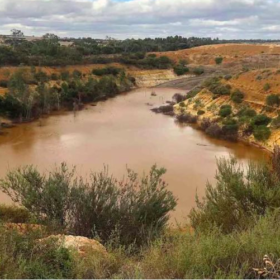
Australia’s first compressed air energy storage facility gets go-ahead
The South Australian government has given its tick of approval for the development of a 5 MW/10 MWh compressed air energy storage facility, which will store excess solar and wind power at a closed underground mine.
Wind and solar cut rather than boost Australia’s wholesale electricity prices
Wholesale prices in the National Electricity Market have climbed significantly in recent years. The increase has coincided with a rapid increase in the proportion of electricity supplied by wind and solar generators. But that needn’t mean the increase in wind and solar generation caused the increase in prices. It might have been caused by other things.
Future Super to invest $200,000 in RateSetter P2P solar, storage loans
Retail super fund Future Super is backing peer-to-peer (P2P) solar loans to the tune of $200,000. While only small change, the move is claimed to be the first investment of a retail super fund in P2P clean technology lending.
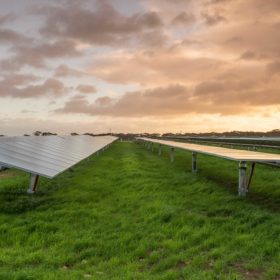
Terregra switches on its first merchant solar farm in South Australia
The 5 MW Mobilong Solar Farm will run on a fully merchant offtake arrangement over its 30-year lifetime.

Smart meter time of use pricing to drive up household energy costs without the help of solar and batteries
New research released this week by The Australia Institute shows that ‘time of use pricing’ (ToU) facilitated by smart meters is likely to drive up household energy costs by $429 a year on top of already high prices. Analysis of national electricity market data suggests that demand for electricity in Australia is very inelastic, which makes ToU more likely to increase the profits of electricity companies than to assist consumers. Households with solar PV and batteries, however, are best suited to cope with this type of pricing.
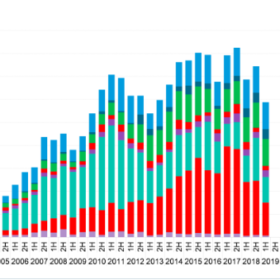
Global renewables investment fell in the first half of this year
While Spain, Sweden, Ukraine and Brazil attracted more funds than last year, China’s transition to an auction-based procurement system and slow performance overall in Europe saw worldwide backing decrease. BloombergNEF does expect investments to ramp up in the second half, however.
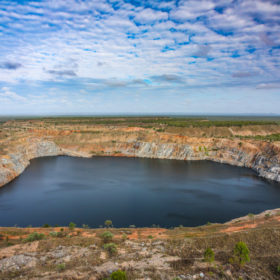
Genex’s Kidston pumped hydro project lands $610 million federal loan
Australia’s first large-scale project to use pumped hydro to store solar generated power, the Kidston facility in north Queensland, has landed a $610 million loan from the Federal Government’s the Northern Australia Infrastructure Facility (NAIF).
Vicinity sets net zero carbon target by 2030, as $73 million solar program nears completion
On the back of a combination of its industry-leading solar program and energy efficiencies, Vicinity Centers has announced a zero net carbon target by 2030 for its 34 shopping centers.

Grid data transparency vital to making the case for renewables in Vietnam
With a glut of solar capacity having come online this year, cheaper financing would help keep some of that momentum but policymakers cannot be persuaded of the economic benefits of clean energy unless state-owned utility EVN opens up.