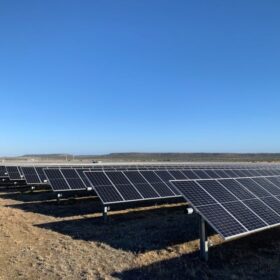
Troubled solar-wind-storage park finally reaches full potential
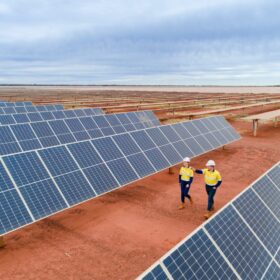
After a near six-year delay, the 60 MW Kennedy Energy Park in north Queensland, hailed as Australia’s first fully integrated utility scale solar, wind, and battery project, has finally achieved full commercial operations.
Project Symphony virtual power plant pilot hits right notes for future markets
A West Australian government virtual power plant technology pilot, Project Symphony, has successfully proven rooftop solar, batteries and major appliances can play an integral role in the state’s energy transition and create $920 million in value over the next decade.
Queensland budget to gift a record $26 billion to accelerate energy transition
The Queensland state budget will deliver the nation’s largest yet green energy investment with a record $26 billion outlay over the next four years, with $8.6 billion ready to go in the next financial year.
3D digital site lifts lid on clean energy projects landscape
Self-described wizards behind the curtain, immersive tech company, Spatial Media, have paved the way for better clean energy community engagement with its 3D interactive map, and a birds-eye view of Australia’s energy transition projects.
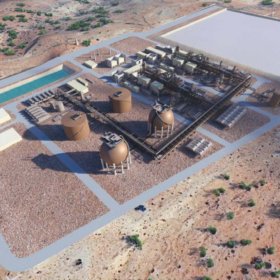
Long-duration storage key to firm renewables: report
The Clean Energy Council has launched a new report, The Future of Long-Duration Energy Storage, exploring emerging technologies capable of firming renewables in the wake of coal-fired power generation closures.
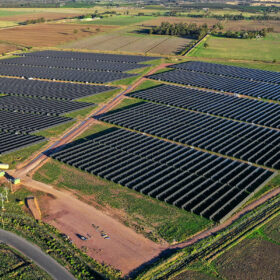
Sydney property giant signs first-ever matched energy supply agreement
Clean energy technology company Enosi Energy has entered into a first of its kind initiative with real estate investment business EG Funds using a matched energy supply agreement to bulk up renewable energy used by Sydney commercial properties.
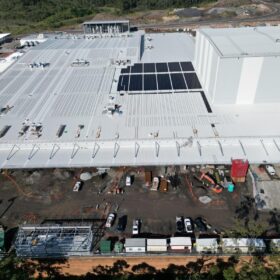
Drinks manufacturer to harness solar power at Queensland facility
International beverage company Suntory Oceania has started work on a 3.2 MW rooftop solar install that will help power its new $400 million manufacturing and distribution facility in Queensland.
National renewables tender design emphasises social licence factors
Social licence commitments have been prioritised over commercial operation dates in the guidelines for Australia’s first national renewable electricity generation tender that is seeking to deliver 6 GW of renewable capacity across the National Electricity Market.
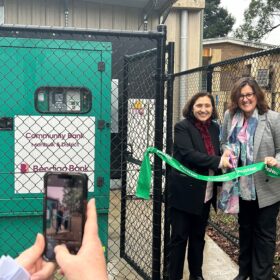
Victorian town turns to solar and storage for energy security
A solar-powered microgrid has been launched in the Victorian town of Monbulk as part of a $7.5 million state government program designed to better protect communities in fire and storm-prone areas against prolonged blackouts caused by extreme weather events.
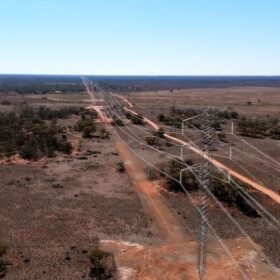
Transgrid reaches milestone on $2.3 billion interstate transmission project
Construction of Australia’s largest energy transmission project is progressing with Transgrid announcing that the first of four lines has been completed as part of the 900-kilometre EnergyConnect infrastructure project that will link power grids across three states.