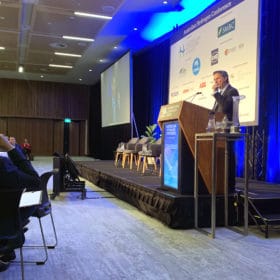
CSIRO allocated $5 million for hydrogen research program
The federal government has awarded $5 million to the CSIRO to deliver a hydrogen research, development and demonstration program aimed at strengthening hydrogen knowledge both domestically and in cooperation with our international partners.

Transparent solar panels for agrivoltaics
Romande Energie and Swiss research institute Agroscope are testing startup Insolight’s transparent PV panels in an agrivoltaic project. The modules are replacing the plastic covers used to grow strawberries and raspberries.
Do engineers dream of solar panel efficiency?
A true next generation of solar cell technology is upon us. It is time to contemplate the benefits.

Solar beach umbrella cools you… and your gelato
An MIT-spawned company has teamed up with architects and an Italian frozen-desserts brand to design an origami-inspired umbrella to power fridges.
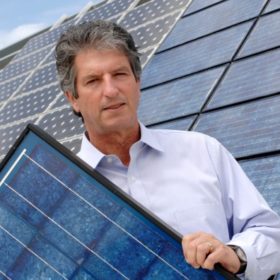
All solar cell efficiencies at a glance
The research group led by Professor Martin Green has published Version 58 of the Solar cell efficiency tables. He spoke with pv magazine about the criteria with which these tables are compiled and the importance of result certification by independent third parties.
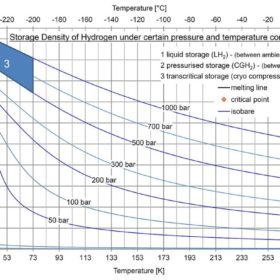
New tool to evaluate economic benefits of hydrogen storage
Developed by U.S. scientists, the Hydrogen Energy Storage Evaluation Tool (HESET) can assess the economic and technical characteristics of individual system components and the modelling of each hydrogen pathway. Furthermore, it can help understand how hydrogen storage can be used for various grid and end-user services.

Luceo Energy offers software solution for DER influx
As the search for solutions to integrate increasing levels of energy technologies like solar PV and batteries into the electricity grid continues, Queensland-based energy data specialist Luceo Energy has revealed a new software platform designed to help electricity distributors manage consumer-owned devices across low-voltage networks.
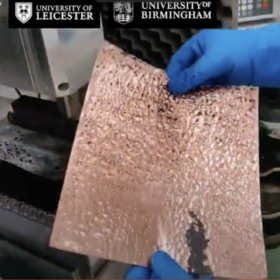
From toothbrushes to saving the planet: How ultrasonic delamination could hold the key to battery recycling
The use of ultrasonic sound waves has been applied to battery recovery. Researchers from the ReLiB project at the U.K.’s Faraday Institution say the process has already proven to be 100 times faster than conventional approaches. It is also much more sustainable and less energy intensive.
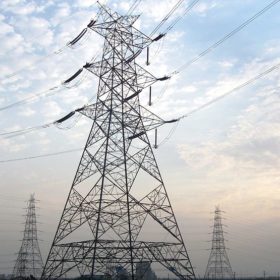
AusNet reveals preferred route for proposed $300 transmission line
Victorian network operator AusNet has revealed the preferred route for a proposed $300 million electricity transmission line which is expected to unlock thousands of megawatts of new solar and wind resources in the state’s western region.
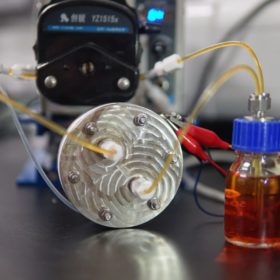
Sulphur-based redox flow battery with 15 consecutive hours of runtime
Researchers from Hong Kong have applied a novel charge-reinforced, ion-selective (CRIS) membrane to a polysulfide-iodide redox flow battery they had built in 2016. The redox flow battery showed a capacity decay rate of just 0.005% per day for 1,200 cycles, and a lifetime with over 2,000 hours’ cycling, which the academics said corresponds to approximately three months.