‘Turbocharging’ silicon PV: MIT scientists scratch the surface of singlet exciton fission
Scientists at the Massachusetts Institute of Technology have developed a device they say could “turbocharge” a single-junction silicon PV cell, pushing the technology beyond its theoretical limit to efficiencies of 35% and higher.

ZEN Energy readies to build 2.3 MW rooftop solar array at Tonsley
The first phase of a 6 MW solar array planned to power a former car manufacturing site at Tonsley in Adelaide will be delivered by ZEN Energy. The solar installation will ultimately work in conjunction with on-site battery storage and smart technologies as part of Enwave Australia’s Tonsley District Energy Scheme.

Vietnam overtakes Australia in commissioned utility PV following June FiT rush
Norwegian consultancy Rystad Energy has placed Australian and Vietnamese solar markets side by side and found the Southeast Asian country has left Australia behind in terms of commissioned utility-scale PV capacity. A staggering 4,460 MW of connected PV capacity in Vietnam at the end of June came as a surprise to many.

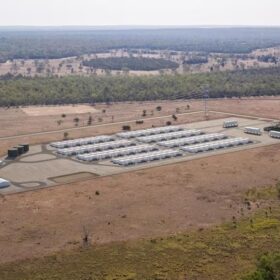
South Australia gives 500 MW solar farm coupled with 250 MW battery go-ahead
One of Australia’s largest utility-scale solar arrays and the biggest energy storage facilities was given a tick of approval.
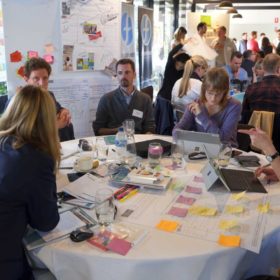
ARENA opens admissions for Incubate 2019
Applications for ARENA’s A-Lab Incubate 2019, a three-day innovation lab where teams are invited to develop high-impact projects looking to forward Australia’s transition to renewable energies, officially opened this month. Participants receive intensive expert assistance and access to potential investors including ARENA, CEFC and private investment funds.
States take over on climate change, but NSW and Queensland make patchy progress
With no new measures to the reduce emissions in the electricity sector and no renewable energy target beyond 2020, federal government leaves little room for hope for policy driven renewables expansion. At a state level, ambitious renewable energy targets could help fill the policy void to a certain extent, but some states are falling short of their self-imposed targets for either renewable energy or emissions reductions.
Australia edges closer to national hydrogen strategy
Nine issues papers have been developed following national and international consultation as Australia seeks to tap the global transition to lower emissions sources of energy.
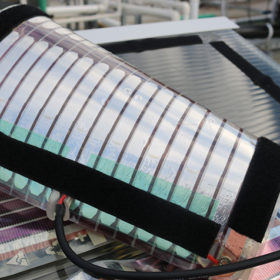
Flinders Uni steps up viability of next-generation solar cells
Researchers at Flinders University have been experimenting with producing phosphorene, a nanomaterial that could increase the efficiency of ultra-cheap solar cells by 10-20%.
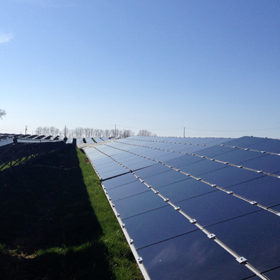
Virtual power plant maximizes performance of renewables assets during periods of energy oversupply
Using a VPP to regulate thousands of data points according to price signals can enable generation asset owners to take care of their systems within seconds and with very high granularity.

Energy sector gets first open-source, tailor-made blockchain
A public enterprise grade energy blockchain has powered up with the promise to accelerate a low-carbon, distributed electricity future. For the first time, energy sector companies are hosting validator nodes on a decentralized network as they seek to adapt to a more digitalized and decentralized energy system.