For renewables to claim a more sizable share of the global energy mix, the adoption of energy storage would need to pick up pace and the rapidly increasing size of the EV fleet will offer a scalable way to ramp up such access, says Fitch Solutions.
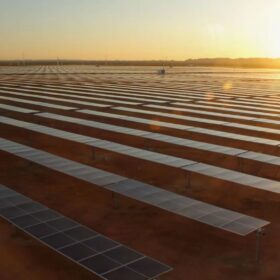
After addressing grid connection challenges, the French renewables giant has launched construction on the 256.5 MWp Kiamal Solar Farm. It is now looking to add a second stage of up to 194 MWp, and is exploring commercial options for the approved 380 MWh of energy storage.
The Australian Renewable Energy Agency announced it was partnering with Monash University and software provider Indra Australia to trial a microgrid on Monash’s Clayton campus in Melbourne. The microgrid will cover 100% of the campuses’ electricity needs with renewable energy.
The All-Energy Australia 2018 exhibition & conference kicked off in Melbourne today. Safety of products and quality assurance was prominent in discussions at the country’s largest PV conference and trade show in its early hours. Big funding announcements at the opening plenary made headlines.
At first glance, the European PV conference last week has confirmed the widespread view that the upswing of monocrystalline technology will accelerate. But a closer look reveals that multicrystalline solar cells are still in the game.
The University of New South Wales has unveiled a 500 kWh Tesla Powerpack battery at its campus as part of a ten-year energy research trial in partnership with NSW’s electricity transmission network operator TransGrid.
The Chinese-Canadian module manufacturer says its P4-based BiHiKu panel, for large commercial and utility-scale solar projects, is able to provide up to 30 per cent additional output from the rear side.
Researchers at Western Australia’s Curtin University have developed a low-cost and environmentally friendly method to capture solar power and produce clean fuels such as hydrogen.
The Dunsborough Community Energy Project is announced as Australia’s first privately funded virtual power plant.
Four years ago a viral campaign wooed the world with a promise of fighting climate change and jump-starting the economy by replacing tarmac on the world’s roads with solar panels. The bold idea has undergone some road testing since then. The first results from preliminary studies have recently come out, and they’re a bit underwhelming.
This website uses cookies to anonymously count visitor numbers. To find out more, please see our Data Protection Policy.
The cookie settings on this website are set to "allow cookies" to give you the best browsing experience possible. If you continue to use this website without changing your cookie settings or you click "Accept" below then you are consenting to this.