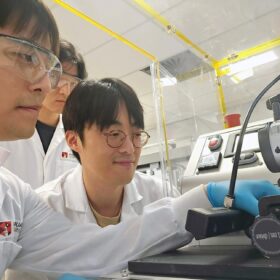
Researchers make green perovskite manufacturing breakthrough
Scientists at Macquarie University and the University of New South Wales have broken through significant barriers to perovskite solar cell industrial adoption with the discovery of ground breaking green manufacturing processes and materials.
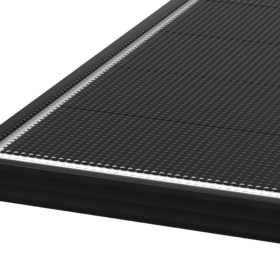
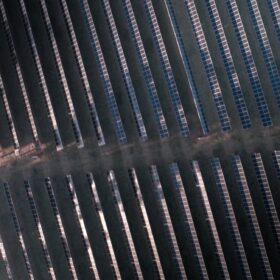
AIKO’s ultra-light solar panel answers structural load limit problem
Pilot shipments of AIKO’s ultra-light 8.6 kilogram solar panel have arrived in Australia offering a solution to structural load limits common in old warehouses, cold stores and lightweight rooftops.
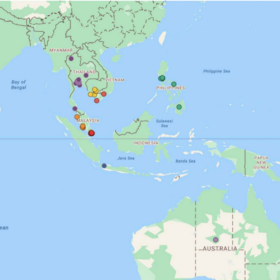
SERIS launches solar asset management spinoff
The Solar Energy Research Institute of Singapore has launched PV Doctor, a startup that provides real-time monitoring and diagnostics to help solar installation owners maintain long-term asset value.

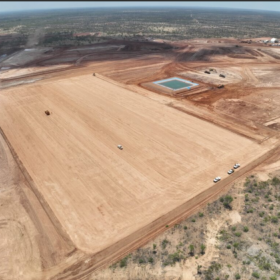
ClearVue inks South Korean distribution and deployment agreements
Western Australia-headquartered smart building materials company ClearVue Technologies has established a partnership with South Korean solar energy company Sinrok Solar Energy to distribute and deploy ClearVue’s solar glazing products, including rights for fencing and road barrier applications.
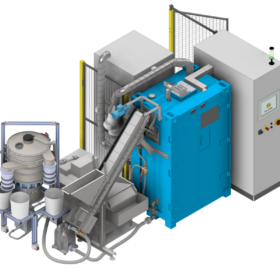
PV module recycling tech based on electrohydraulic shockwave fragmentation
An international research team has developed a new machine that utilises shockwaves to separate the different materials of a PV module. Chemical processes can be further used to extract silicon and silver. Results show the recovery of more than 99.5% of the original weight of the panels.
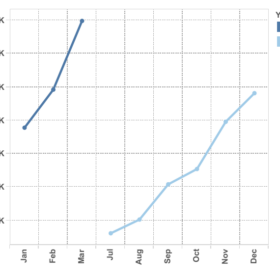
IEA blames slowdown in energy innovation on market uncertainty
The International Energy Agency warns that energy innovation is slowing as shifting priorities and financing changes hinder progress, despite past investments driving economic and security gains.

Scientists propose novel Moon perovskite cell manufacturing strategy
German scientists have proposed power generation for future habitats on the moon could be achieved by manufacturing halide perovskite cells locally, using regolith-based moonglass.

Potential of chalcogenide pervoskite for next generation solar cells: study
Researchers from the Australian Centre for Advanced Photovoltaics and the University of New South Wales have published findings on the potential for next generation solar cells of chalcogenide pervoskite BaZrS3.

Battery energy storage systems support Samoa’s month-long power crisis
Tesla specialists are on the ground assisting Samoa’s electric power corporation engineers to ensure its battery energy storage systems are operating to support Samoa’s energy needs during the current power crisis.
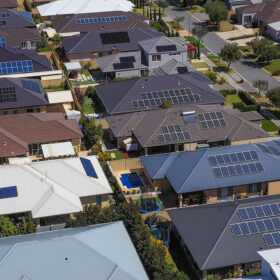
Senate inquiry recommends households install rooftop solar and batteries
The Australian senate inquiry into residential electrification final report gives bipartisan support to leverage rooftop solar and recommends federal, state and territory governments promote the uptake of consumer energy resources.