Viologen redox flow battery for renewables storage
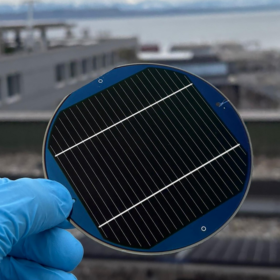
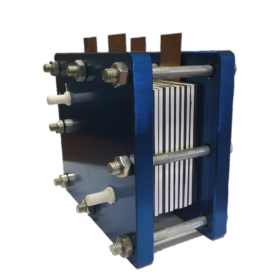
Conceived for the storage of residential and large scale renewable energy, the device has a rated power of over 150mW/cm2, an energy density exceeding 40Wh/L, and a power density of 72.5mW/cm2. The battery was built with an anode made of inexpensive viologen and its cost, according to its creators, may be lower than US$100/kWh (AU$140).

Home battery subsidisation proposal garners widespread support
A bill which would make home batteries up to $3,000 cheaper nationwide has been tabled by Independent MP Helen Haines. Haines proposes making home batteries eligible for Small-scale Technology Certificates, the same scheme behind Australia’s thriving rooftop solar sector.

Victoria’s Solar Homes program extends with six VPPs offering ‘guaranteed benefits’ and extra protections
The Victorian government will be expanding its Solar Homes rebate program into the world of Virtual Power Plants (VPPs), announcing on Tuesday that households who install a battery and sign up to the pilot before July 2022 will receive a rebate of over $4000.
TOPCon vs PERC – a battle between fast learning curves
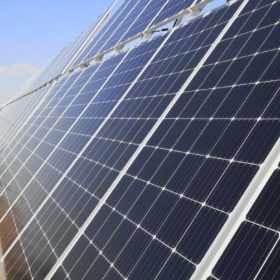
TOPCon solar modules will gain more market share if their average efficiency, already higher than that of PERC panels, continues to improve, according to Stefan Glunz, PV research chief at Germany’s Fraunhofer Institute for Solar Energy Systems ISE. In an upcoming pv magazine webinar on the potential of TOPCon tech, Glunz will show how to reduce costs and increase efficiency.
New PV module recycling tech
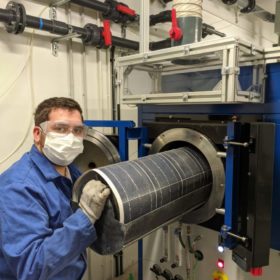
French start-up Rosi Solar has developed an industrial solution claimed to be capable of recovering high purity silicon, silver and copper contained in end-of-life PV modules. The company’s technology is based on a pyrolysis process that makes it possible to isolate the different metals from the cells.
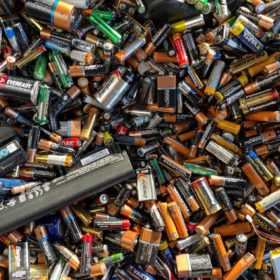
Australia launches its first national household battery recycling scheme
Australia’s first national battery recycling scheme, B-cycle, launched today giving Australians the opportunity to drop their spent household batteries at a collections bins in supermarkets, stores and community clubs across the country.
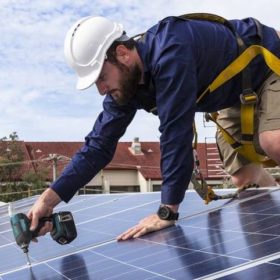
Program ‘switching’ concession payments for solar systems to be expanded
South Australia will extend its ‘Switch for Solar’ program in which eligible low-income residents can opt to have a solar system installed in exchange for their next ten years of government concession payments.

Lithium-ion home battery blaze in Adelaide reignites safety concerns
A fire caused by a lithium-ion home battery system in northern Adelaide over the weekend has led authorities to urge solar and battery owners to be vigilant with maintaining their systems.
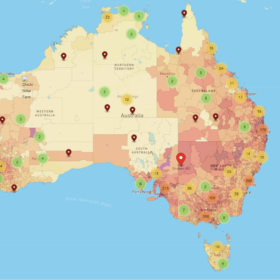
Australia passes 25GW of installed pv capacity, leading world with almost 1kW per person
Australia has hit a historic milestone, reaching 25GW of installed solar. As the Australian PV Institute noted on Monday, that’s more solar per capita than anywhere else in the world.
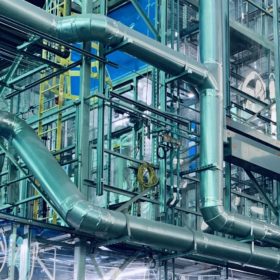
Water-based electrolyser for green hydrogen production
U.S. company Verdagy has secured a US$25 million (AU$35 million) investment for its new electrolyser technology, which provides hydrogen fuel for heavy industrial applications. The membrane-based technology uses large active area cells, high current densities, and broad operating ranges to deliver hydrogen at scale.