Victorian government doles out over $7 million toward green hydrogen applications in heavy transport
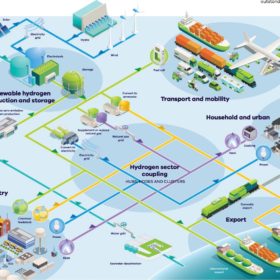
Transport accounts for approximately 20% of the Victoria’s emissions while also being one of the more hard to decarbonise sectors. Due to its commitment to halve its emissions by 2030, the Victorian government has announced over $7 million in grands for a number of projects seeking to commercialise real world applications in the transport sector powered by renewable hydrogen.
Fortescue partners with German raw materials giant Covestro in landmark green hydrogen supply deal
Fortescue Future Industries has taken another step toward its global green hydrogen ambitions with the signing of a Memorandum of Understanding with Germany polymer company Covestro for the equivalent of 100,000 tonnes of solar-sourced green hydrogen and its derivatives annually, starting as early as 2024.

Green hydrogen could disrupt global trade, bilateral energy relations
While there are still many uncertainties as to the way in which hydrogen trade might evolve and change economic ties and political dynamics between countries, experts agree that green hydrogen can bring winds of change to the global energy arena. According to the International Renewable Energy Agency, significant geoeconomic and geopolitical shifts are just around the corner.
BayWa r.e. adds another solar project to development portfolio
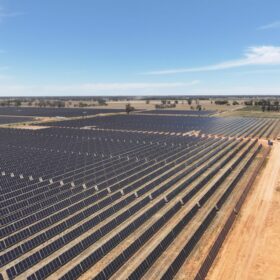
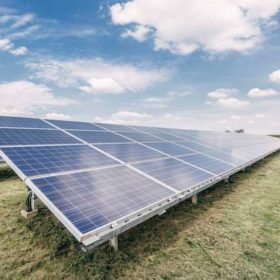
The Australian arm of German-headquartered renewable energy developer BayWa r.e has added to its growing portfolio of solar PV projects with state and local governments providing the tick of approval for a proposed $18.9 million solar farm to be constructed near Wagga Wagga in New South Wales.
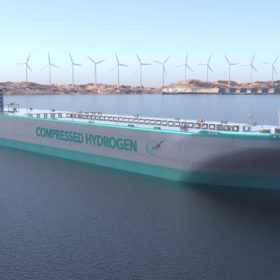
GEV launches development strategy for proposed 2.8 GW green hydrogen project
Western Australian renewables company Global Energy Ventures is steaming ahead with its plan to establish a massive 2.8 GW green hydrogen production and export facility on the Tiwi Islands off the coast of the Northern Territory, announcing it has already commenced the development program.
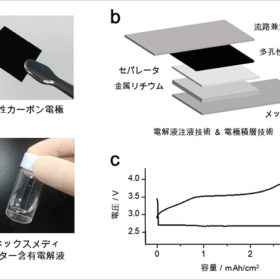
Japanese consortium builds lithium-air battery with energy density of 500 Wh/kg
A Japanese group has developed a storage system with potential applications in residential storage, electric vehicles, drones and Internet-of-Things devices.
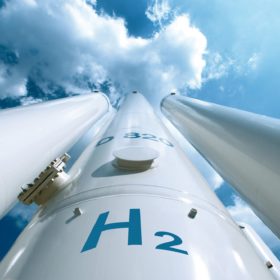
Green hydrogen is coming – and these Australian regions are well placed to build our new export industry
Australian green hydrogen production for export and domestic use could generate more than $50 billion in 2050 but how close are we really to a green hydrogen industry? And which states are best placed to host it? Swinburne University of Technology senior research fellow Steven Percy examines Australia’s green hydrogen marketplace.
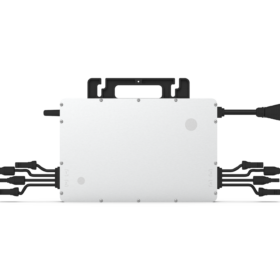
Micro-inverter for high-power solar panels from Hoymiles
The device has a 4-in-1 design, which means it can be connected with four solar panels with a power output of up to 625 W each, through four independent connections. The output of each panel is tracked and converted individually. According to the Chinese manufacturer, the micro-inverter can ensure savings of up to 50% due to the lower number of devices and cables needed.
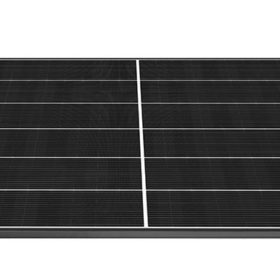
Panasonic unveils 410 W solar panel with 22.2% efficiency
The new heterojunction module series is compatible with Panasonic’s Evervolt battery and has a power output ranging from 400 to 410 W. It also features a temperature coefficient of -0.26% per degree Celsius.
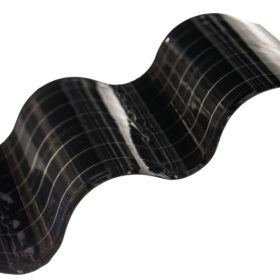
Weekend read: Indium – sustainability, not supply
The supply of indium, both for layers in silicon solar cells and some thin-film PV technologies, is increasingly seen as a future potential bottleneck that solar and other industries relying on the material will have to manage. Resolving indium supply concerns may be a case of rethinking mining waste and recycling, reports Ian Morse.