Vic Solar cops $3 million fine after thousands targeted with ‘predatory’ tactics
A Victorian solar PV company which swindled thousands of customers out of millions of dollars has been fined a massive $3 million while its sole director has been slapped with a $450,000 penalty and disqualified from being a director of any company for five years.
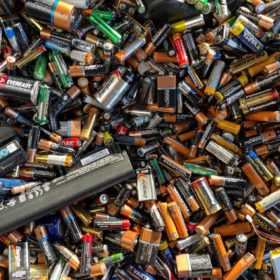
$3.1 billion recycling opportunity emerges as batteries boom
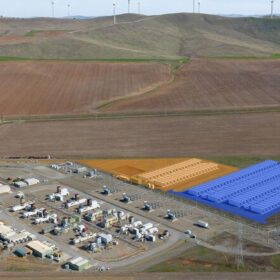
Australia’s national science agency has identified a potential $3.1 billion industry that is there for the taking with the increasing penetration of renewables in grids nationwide sparking substantial growth in the battery energy storage sector.
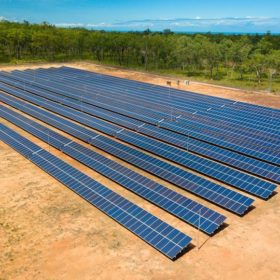
Northern Territory targets renewable energy schemes with budget spending
While Treasurer Josh Frydenberg is putting the finishing touches on the Federal Budget, the Northern Territory Government has already rolled out its 2021-22 Budget and solar PV and battery storage are among its spending priorities with an extra $4.8 million invested in existing renewable energy schemes.
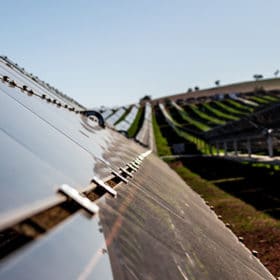
New England Solar says end in sight for Australian asset sale
Solar infrastructure business New Energy Solar remains committed to offloading its Australian assets, confirming the sale of its 87 MW Beryl and 47 MW Manildra solar farms in central west New South Wales is “progressing well”.
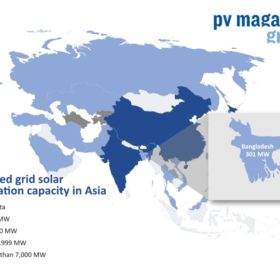
India to finance 100 MW Bangladeshi solar plant
The federal government will provide $131 million of soft loans for a $177 million, 100 MW solar park near the Jamuna river in Bangladesh’s Jamalpur district, where a second park of a similar size is being planned by Dhaka and a Chinese partner.
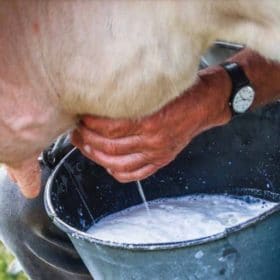
Land of milk and honey, Hycel set to work on hydrogen opportunities for dairy industry
It has been said that it is no use crying over spilt milk, and similarly there is no use crying over emissions already spilt by the dairy industry, there is only to curb those emissions and Deakin University’s Hycel Technology Hub is looking to do that for the dairy industries in both Australia and Uruguay.
A different angle on perovskite defects
Scientists in China took a closer look at the role of defects in limiting the performance of perovskite solar cells, demonstrating a screening effect that could be tuned to make material defects “invisible” to charge carriers, greatly improving cell performance. Using this approach they demonstrate a 22% efficient inverted perovskite solar cell, and theorise several new pathways to even higher performance.
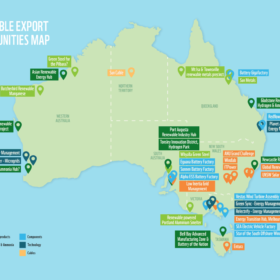
100+ businesses band together to demand 1% of GDP be allocated to clean energy in May budget
More than 100 Australian businesses, including some of the country’s largest, have banded together to put pressure on government to commit at least 1% of GDP to a green energy recovery in the May budget and to ensure a more equitable transition to renewables for marginalised Australians.
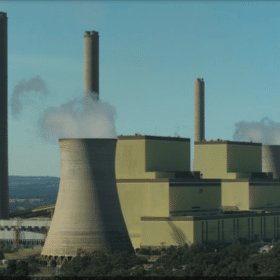
Outgoing AGL boss singled out by Greenpeace for company’s shockingly late embrace of coal
When Brett Redman, Chief Executive and Managing Director of Australia’s biggest energy generator and retailer, unexpectedly quit last month, the news promised intrigue. AGL, a giant in the Australian landscape, had recently announced it would split in two – a strange move which confused markets. Greenpeace today published an extensive report on the company, detailing how in the midst of global momentum away from fossil fuels in 2009, AGL actually divested from its renewable portfolio to turn toward coal, directed by Redman at the company helm.
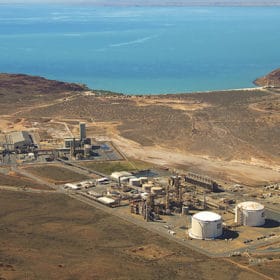
$103 million flows from ARENA to commercial ‘green’ hydrogen projects, despite concern around gas couplings
Three commercial-scale hydrogen projects have been conditionally approved for $103.3 million in funding from the government’s Australian Renewable Energy Agency, including Western Australian green ammonia project from Engie, as well two hydrogen + gas blend projects from ATCO and Australian Gas Networks respectively.