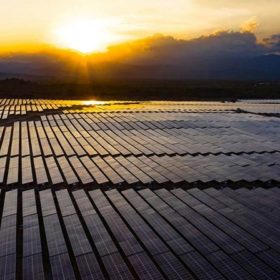
Vietnam opens 450 MW solar plant as utility-scale solar era dawns in SE Asia
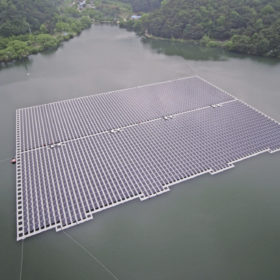
Ho Chi Minh City-based construction company Trungnam Group said its army of labourers took just 45 days to perform site clearance for a project which took shape within 102 days. The 450 MW solar plant signals a new era in utility-scale solar for Vietnam, which is already seeing significant growth in its rooftop solar markets.
Hanwha Q-Cells moves to enforce recall of products found to infringe IP in Germany
The Korean manufacturer has announced that it wants to enforce the recall of products made by rivals Jinko Solar, Longi Solar and REC Group that were deemed by the regional court of Düsseldorf in June to have infringed a passivation technology patent. The recall applies to products sold since January last year in Germany.
Power play under way Down Under
Economics and common sense have to win out over a climate-denying, pro-fossil fuel government, says John Grimes, the chief executive of Australia’s Smart Energy Council. And in the absence of renewable energy targets, he argues that the power of the people seems to be leading the way.
Australia a key player in new Global Power System Transformation team of 6
This week will see the official launch of a global taskforce that aims to support worldwide uptake and integration of renewables and achieve at least 50% reduction in emissions over the coming decade.
No-flow zinc-bro batteries set USyd campus aglow with solar energy
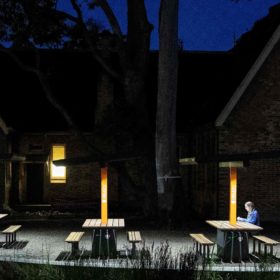
Professor Thomas Maschmeyer has taken his reimagining of zinc-bromine battery chemistry to the point of commercial launch; a new installation at the University of Sydney demonstrates the Gelion battery’s utility and appeal.
Solpod-engineered, Australian-manufactured solar rooftop mounts launched under the Schletter brand
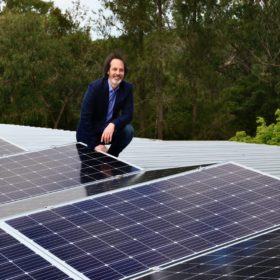
A locally designed and made range of versatile solar mounting products offers Australian installers of commercial and industrial rooftop systems smart solutions backed by global company Schletter’s sales and support network.
The weekend read: The plan to REZurrect Australia’s large-scale segment
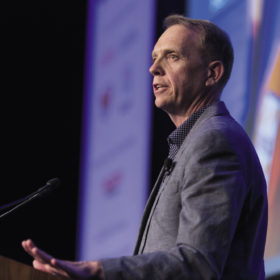
Investment in large-scale solar appears to be faltering in Australia. The technology with the lowest cost, with no emissions and the fastest time to delivery, has often found itself dangling at the oversubscribed end of a limp transmission line, with additional, expensive requirements to connect, or earnings-slashing curtailments when operational. Investors have found no reassurance in the federal government’s winking at coal, courting of gas, and undermining of agencies established to support innovation and investment in renewables. In short, the Australian prime minister is showing a complete lack of urgency to act on climate change. Enter the Renewable Energy Zone.

WA Govt approves 15 GW Asian Renewable Energy Hub, whole project now expanded to 26 GW
The Western Australian Government has given environmental approval to the first stage of the Asian Renewable Energy Hub, a 15 GW hybrid solar and wind plant. The approval is a massive step forward for the project, which will eventually reach 26 GW, and an even larger step forward for green hydrogen development in Australia for domestic use and export.
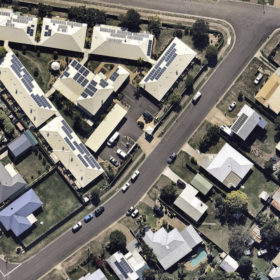
Constraints loom for booming Aussie rooftops
Within this decade, the capacity of solar systems on rooftops in Australia will likely exceed the generating capacity of coal. It is now evident that solar in conjunction with other customer-side technologies of batteries and demand management will become the dominant factor in the evolution of Australia’s energy system, writes Tristan Edis, the director of analysis for Green Energy Markets. He adds one caveat, however: For this to occur, batteries must become cost competitive.
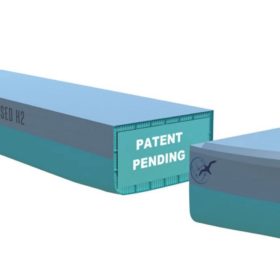
GEV to develop compressed hydrogen ship for Australia’s green hydrogen exports
Global Energy Ventures announced to the ASX yesterday its design for the H2 Ship, a compressed hydrogen ship capable of transporting 2,000 tonnes of hydrogen from green hydrogen hubs in northern Australia to trading partners such as Singapore, Korea, China, and Japan.