Weekend read: Puerto Rican resilience
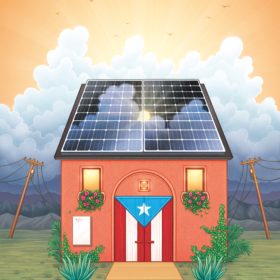
Before Puerto Rico had a chance to recover from Hurricane Maria, in 2017, it was rocked by earthquakes and then, in September 2022, the island was struck again – this time by Hurricane Fiona. These disasters severely impacted Puerto Rico’s infamously fragile power grid, but have emboldened local communities to take power into their own hands through solar and battery storage, and increasingly in the form of microgrids. Compelled by catastrophic circumstances, Puerto Rico must now push toward energy resilience and in the process may see itself become a model not just for other islands, but mainland grids as well.
ARENA funds development of national standards for harmonic compliance
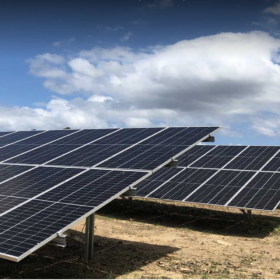
The Australian Renewable Energy Agency’s recent funding spree has continued after it awarded a further $1.04 million (USD 700,000) to the University of Wollongong for a project that will look to develop national standards for harmonic compliance assessments. The current and rather ad hoc methodologies are proving incapable of addressing the challenges brought with increased renewable energy integration.
Pioneering solar researcher hails funding ‘turnaround’
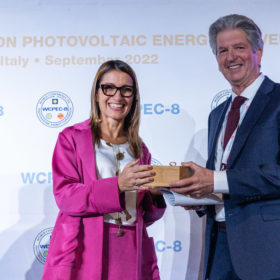
World-leading solar researcher UNSW Scientia Professor Martin Green says that PV research activities in Australia right across the value chain will be accelerated by the recent $41.5 million (USD 28.5 million) funding awards from the Australian Renewable Energy Agency. The funding will foster the development of ultra-low-cost solar by extending and expanding nine UNSW solar research programs.
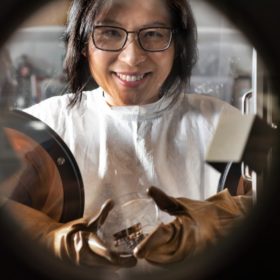
Ultra-low-cost solar research projects receive $41.5 million funding boost
The strength of applications for the Australian Renewable Energy Agency’s ultra-low-cost solar research funding round was so strong the agency had to add $1.5 million (USD 1.03 million) to its original allocation. The strength of competition pushed the process into 2023, but now the 13 research projects aiming to achieve ultra-low-cost solar have been awarded.
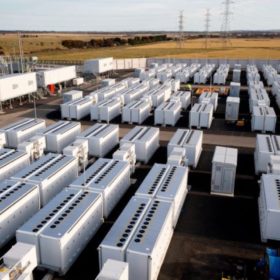
Neoen press ‘go’ on 400 MWh Western Downs big battery construction
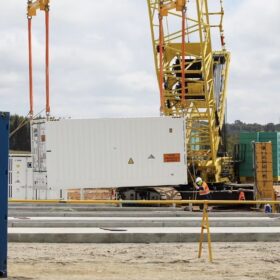
French renewable energy giant Neoen has begun construction on its 200 MW/400 MWh Western Downs Battery in Queensland, next to the developer’s 460 MWp Western Downs solar farm. The Western Downs Battery is Neoen’s fourth big battery in Australia and brings its storage portfolio to 776 MW/1,279 MWh in operation or under construction.
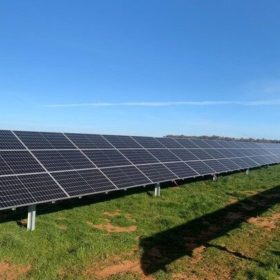
NSW turbocharges shift to renewables with new emissions target
The New South Wales government aims to “turbocharge” the state’s transition from coal and gas to a renewables-based grid with a commitment to reduce greenhouse gas emissions by 70% in little more than a decade on the pathway to net zero emissions by 2050.
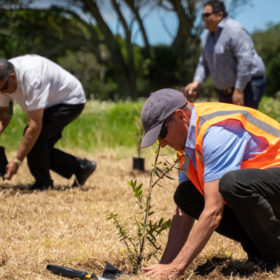
NZ developer starts work on first in suite of five large-scale solar farms
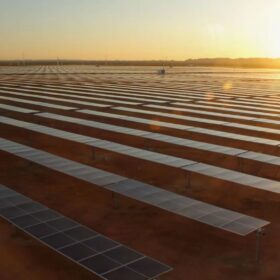
New Zealand generation company Lodestone Energy has commenced early construction works on the first of five utility-scale solar farms it intends to develop across the nation’s upper North Island at a cost of $285.5 million (USD 191.5 million).
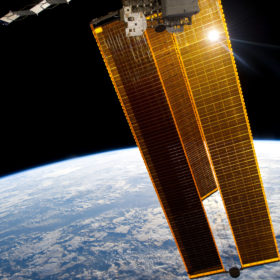
UNSW teams with Airbus to develop high-efficiency solar cells for space
Researchers from the University of New South Wales have been tapped to work with European space enterprise Airbus Defence and Space on a strategic research program to fast track the development of high-efficiency solar cells to be used in space.
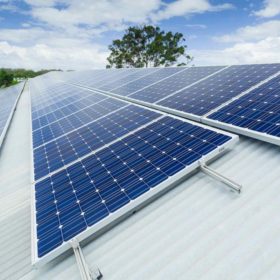
How closely monitoring households’ energy data can unleash solar outputs and (possibly) make them more money
Almost one in three Australian households have solar panels on their roofs. Most are motivated by rising electricity prices and environmental concerns. Households are paid a so-called feed-in tariff for surplus energy they export to the grid.
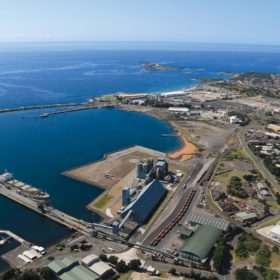
EnergyCo makes move to formalise Illawarra REZ
The New South Wales government has declared the Illawarra region on the state’s south coast is set to become a renewable energy and clean manufacturing powerhouse after outlining plans for a coordinated renewable energy zone that will deliver at least 1 GW of new network capacity as the state transitions from fossil fuels to renewable energy.