Aussie startup invents breakthrough non-toxic battery electrolyte that’s cheaper ‘by factor of 100’
It’s a breakthrough so staggeringly simple the patent office needed convincing it counted as an invention. In what Professor Thomas Nann jokingly told pv magazine Australia basically equates to adding dishwashing liquid and oil to water, he and two of his former PhD students have unlocked the potential of water-based electrolytes for batteries, promising a solution that is cheaper, easier to manufacture and non-toxic. The startup plans to initially use the formula in supercapacitors before exploring it in conjunction with redox flow batteries.
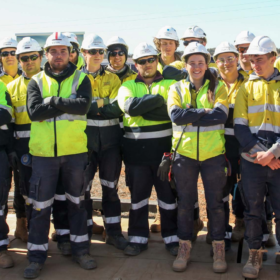
Queensland approves $23 million renewable energy training facility
The Queensland government has approved a new “state-of-the-art” renewable energy skills centre in Brisbane, which will provide training to prospective and current electrical workers to enter clean energy industries.
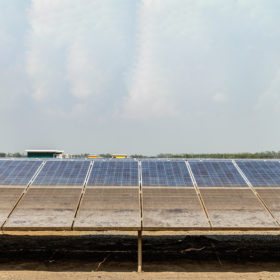
Why insurers are adjusting underwriting criteria for renewable assets
It’s no secret that extreme weather events are increasing, both in terms of severity and frequency. Australia is no exception. Despite historically seeing a relatively low occurrence of natural catastrophes, over the past 24 months the country has experienced cyclones, bushfires, large hail storms and numerous flooding events. This includes the recent floods in March of this year, in which New South Wales and parts of Queensland saw the worst flooding the region has experienced for six decades. Recent estimates predict the flooding to have caused between AU$919 million and AU$1.055 billion* in insured losses.
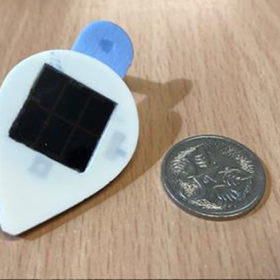
Coin-sized solar panels to protect koalas from bushfires
Solar panels the size of five cent pieces will be used to locate koalas and protect them from incoming bushfires as well as to care for the threatened species as their habitat regenerates.
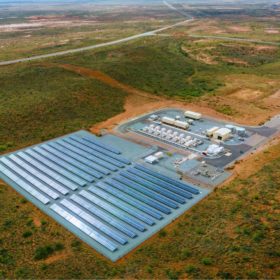
Bushfire affected and rural Indigenous communities among 20 projects funded to explore microgrid solutions
The federal government has allocated $25.6 million to support 20 microgrid feasibility studies, including in communities affected by the Black Summer bushfires, which left regions without power for weeks.

Queensland energy survey reveals shifts in battery and EV embrace coupled with continued love of solar
Households with residential batteries have doubled in Queensland in the last two years, though cost remains a barrier – as it has with electric vehicles. As prices fall, however, the state is likely to welcome the technology with open arms, as it has with solar. 37% of Queensland households now harvest the sun’s energy and a further 22% looking to install or upgrade their systems, according to the government’s Queensland Household Energy Survey. Of those with solar systems, 93% would would replace their panels with the same size or larger, if they were to fail.
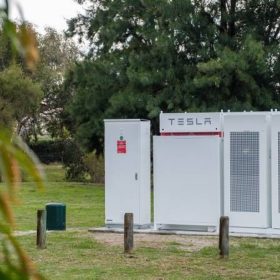
Melbourne council plans city-wide community battery network
The City of Melbourne is planning a network of co-ordinated community batteries to be installed at council sites across the city, aiming for a potential capacity of 5 MW by 2024.
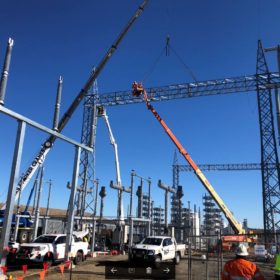
TransGrid on track with critical infrastructure upgrades
Transmission network operator TransGrid has confirmed works on two high priority electricity infrastructure projects which will allow for more renewable energy to be connected to the National Electricity Market have reached major milestones.
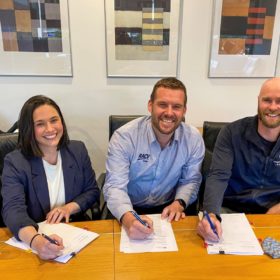
RACV Solar adds another installation company to its stable
Victorian solar company RACV Solar has continued its expansion strategy with the acquisition of Great Ocean Solar and Electrical, a solar and battery installation business based on the Bellarine Peninsula in the state’s southwest.
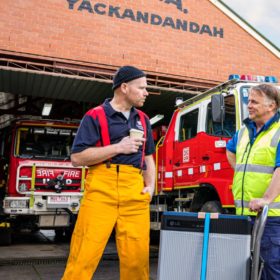
Clean energy ad campaign points to past as the way forward
A national advertising campaign will shine a light on the investment and job opportunities provided by Australia’s renewable energy industry as the Clean Energy Council seeks to counteract “misleading” information spread by “a minority of loud voices”.