Metlen refinances 420 MW Australian solar portfolio
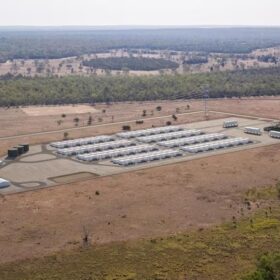
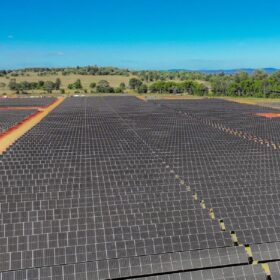
Greek renewables and resources company Metelen Energy and Metals has refinanced a portfolio of seven solar farms spread across New South Wales and Queensland in a $460 million deal.
Australian rooftop solar sharing pioneer eyes European expansion
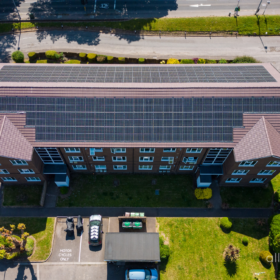
Australian rooftop solar sharing technology developer Allume Energy has closed a $10.4 million investment round, the proceeds of which will be used to accelerate the company’s international expansion into the United Kingdom and European markets.
Electric vehicle conspiracy theories challenge transport decarbonisation
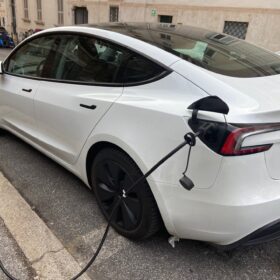
A Queensland university has led a global study into misinformation about electric vehicles, which it found is fuelled by conspiracy theories and mistrust, even among people who own them.
Battery and electric vehicle automation company gets $45 million capital raise
Victorian energy technology company Amber Electric is expanding its battery and electric vehicle automation technology globally after successfully securing $45 million in capital funding.
Meyer Burger’s German subsidiaries file for insolvency
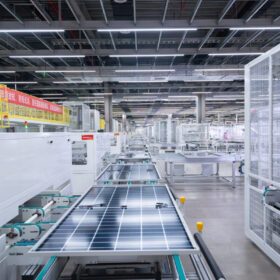
Swiss solar cell company Meyer Burger said it filed for insolvency for its German subsidiaries, following intensive efforts to keep Meyer Burger Industries GmbH and Meyer Burger Germany GmbH operational.
RedEarth teams with global partners to build microgrid-in-a-box system
Queensland battery solutions provider RedEarth Energy Storage has announced an international partnership that will see it jointly develop a ‘world first’ integrated hardware and energy management system that combines solar, storage, and bidirectional electric vehicle charging capabilities in a single unit.
Local council gives green tick to 288 MW Tasmanian solar farm
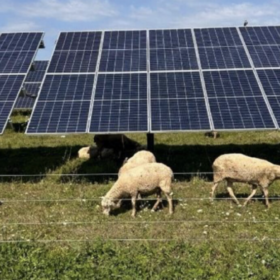
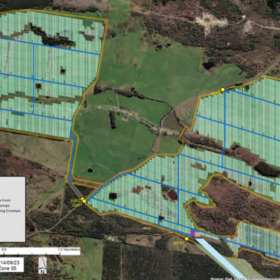
The George Town Council, Tasmania, has granted planning approval to the ib vogt 288 MW Cimitiere Plains Solar Farm north of Launceston, featuring two solar arrays made up of approximately 613,000 panels.
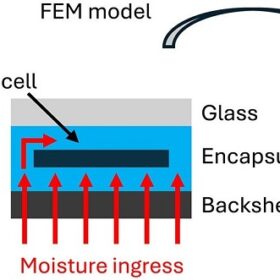
New model to predict moisture ingress in photovoltaic modules
Researchers in Netherlands and Belgium have created a numerical model to simulate the moisture ingress in PV modules. Their research work showed that climate in which a PV module is installed has a much higher impact on the moisture ingress than the choice of materials for the encapsulant of the backsheet.
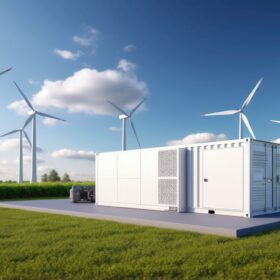
ABB launches battery storage subscription model to address capital constraints
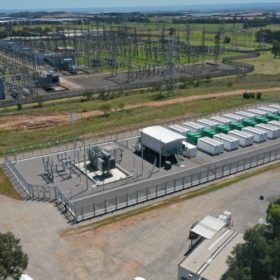
ABB has announced a “battery energy storage systems-as-a-service” model to add storage to commercial and industrial customers without upfront capex.
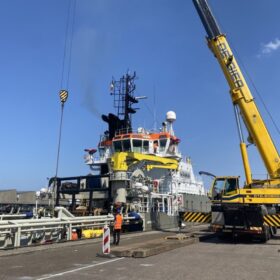
World’s first offshore solar-wind project moves forward
An offshore solar farm is being deployed close to an existing wind farm as part of a project in the Dutch North Sea. The developers have recently installed an anchoring system that will hold the solar farm in place while an electrical cable connects the array to a nearby wind turbine foundation.