Fortescue and South Korea’s Posco agree to green hydrogen future
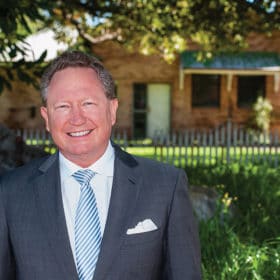
Fortescue Metals Group Chairman Andrew ‘Twiggy’ Forrest returned to Western Australia last week after a 4-month worldwide search for green energy projects and resources. One of the deals secured on the trip was a circular partnership with South Korean steelmaker Posco. The deal sees Fortescue supply Posco with iron ore, Posco use said ore to make steel, and Fortescue use said steel for renewable energy projects to make green hydrogen.
Engie and Yara partner to develop Pilbara Hydrogen Hub
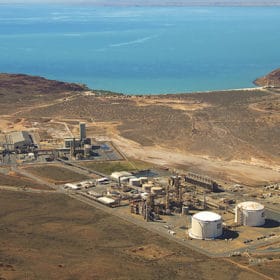
Engie and ammonia producer Yara have published findings from their long-awaited feasibility study into the development of renewable hydrogen and ammonia at Yara’s Pilbara Fertilisers plant. The study has led to development plans for large-scale renewable hydrogen and ammonia development with the first phase, a 10 MW solar farm and electrolyser, already instigated.

New WoodMac report forecasts renewables cheaper than coal by 2030 across Asia-Pacific
A new Wood Mackenzie report has forecasted a massive swing in the levelised cost of electricity across the Asia-Pacific over the course o the next decade. Before 2030, renewables will be cheaper than new coal and gas almost everywhere, and significantly cheaper in Australia.
Japanese owner of WA’s Bluewaters coal plant reports worst ever loss in face of energy transition
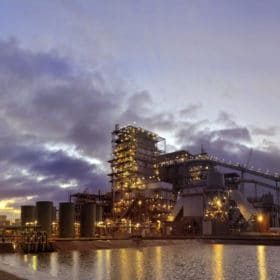
The Sumitomo Corporation has reported a stunning ¥26bn (US$251m) loss on its Western Australian Bluewaters coal fired power investment. The loss assures the company’s worst ever annual performance and comes as a result of international and financial pressure against coal funding.
NSW has joined China, South Korea and Japan as climate leaders. Now it’s time for the rest of Australia to follow
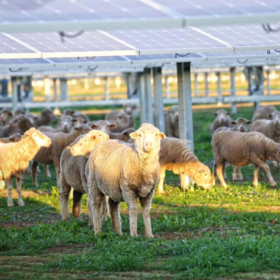
It’s been a busy couple of months in global energy and climate policy. Australia’s largest trading partners – China, South Korea and Japan – have all announced they will reach net-zero emissions by about mid-century. In the United States, the incoming Biden administration has committed to decarbonising its electricity system by 2035.
‘China must put EV battery reuse at heart of net-zero ambition’
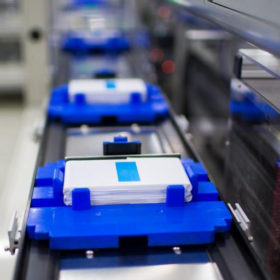
The centralised nature of policymaking in Beijing would enable component standardisation to ease the transition from EV to stationary energy storage use, according to Greenpeace East Asia.
South Korea follows Japan with net-zero 2050 pledge
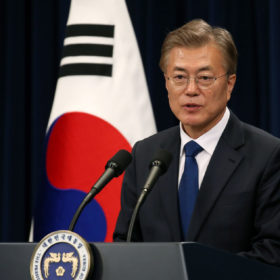
Re-elected South Korean president Moon Jae-in today declared he will follow-up on a campaign trail promise to eliminate carbon emissions by mid century. The announcement comes just two days after Japan’s new prime minister said he would accelerate his nation’s emissions target.
GEV to develop compressed hydrogen ship for Australia’s green hydrogen exports
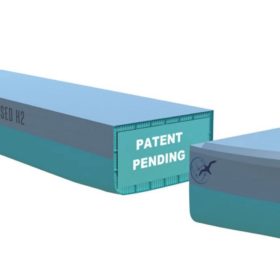
Global Energy Ventures announced to the ASX yesterday its design for the H2 Ship, a compressed hydrogen ship capable of transporting 2,000 tonnes of hydrogen from green hydrogen hubs in northern Australia to trading partners such as Singapore, Korea, China, and Japan.
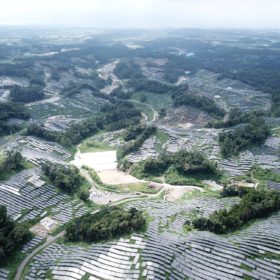
Japanese golf course becomes 100 MW solar park
A new 100 MWp solar power plant supplied with Kyocera solar modules has begun operation in Japan’s Kagoshima Prefecture. Operated by the Kyocera-backed Kanoya Osaki Solar Hills LLC joint venture, the plant is one of the largest PV facilities on the island of Kyushu. Venture partner Tokyo Century arranged financing for the project with 17 regional banks.
The solar highway to Australia’s renewable hydrogen economy
Modelling from a new report backed by ARENA has found that on-site solar electrolysis is not only the most cost-effective way of reaching Australia’s ambitions of both a domestic and export hydrogen economy, but perhaps the only way.