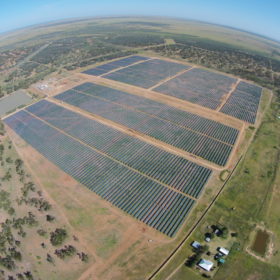
New coal doesn’t stack up – just look at Queensland’s renewable energy numbers
As the federal government aims to ink a deal with the states on the National Energy Guarantee in August, it appears still to be negotiating within its own ranks. The ANU’s Mathew Stocks and Andrew Blakers crunch the numbers to assess whether coal or renewables will pay off for costs and jobs in Queensland.
Enphase introduces new IQ 7 microinverters, almost 50% lighter than previous model
Enphase Energy has announced the release of the seventh generation of its microinverters to Australia and New Zealand. The IQ 7 and IQ 7+ replaces the S-Series. It is 47% lighter, offering easier handling on the roof.
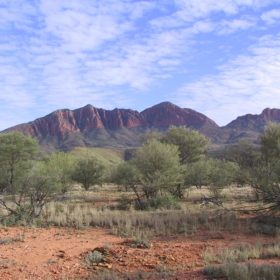
Suntech announces panel supply deal for Australia projects
Former manufacturing giant establishes a foothold in the promising Australian market, and says it is in talks with developer Biosar about supplying further modules for projects in the nation.
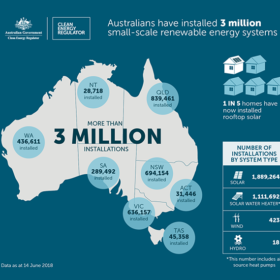
Australians install record 3 million small-scale renewable energy systems – CER
The Clean Energy Regulator (CER) has released figures showing that the number of small-scale renewable energy installs has passed the 3 million milestone, with rooftop solar accounting for 63% of the total.
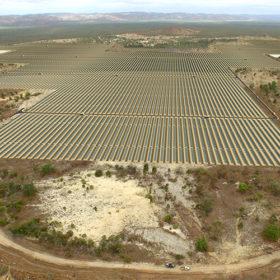
Genex Power offered $516 million funding for the Kidston renewables hub
Australia’s first large-scale project to use pumped hydro to store solar generated power, the Kidston facility in north Queensland, has landed more than half a billion dollars in concessional finance from the Northern Australia Infrastructure Facility.

Australian blockchain software to track EV carbon offsets in Silicon Valley
Perth-based blockchain startup Power Ledger has announced its first carbon credit project as part of its partnership with Chicago-based startup Clean Energy Blockchain Network and in collaboration with California’s municipal utility Silicon Valley Power. The company’s platform will manage credits generated by the use of solar energy in electric vehicle charging.
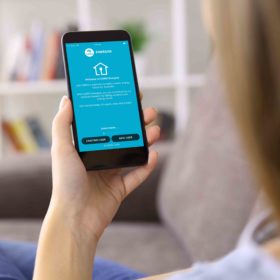
CSIRO calls on Australians to contribute to its energy use research
The national science agency has issued a call for “citizen scientists“ to help it understand the way households consume, generate and interact with energy. The data will be collected by means of the new CSIRO Energise app.
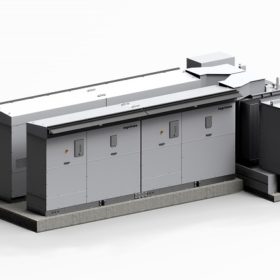
Ingeteam secures 620 MW order in Australia
On the back of the massive supply deal, the Spanish manufacturer has announced it has crossed the 1 GW threshold for photovoltaic inverter shipments to Australia.
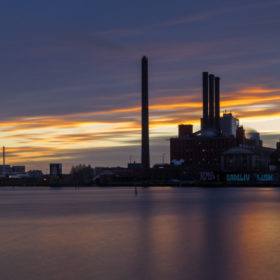
Falling battery costs to push solar, wind to 50% electricity generation by 2050, but electricity still failing CO₂ reduction targets – BNEF
Solar PV capacity is set to grow 17-fold, and wind six-fold, by 2050, to account for nearly half of global electricity generation, predicts BNEF, while investments will reach US$11.5 trillion. Cost reductions will drive this charge, particularly in the battery market, which will benefit from the EV manufacturing ramp up. Despite this, the electricity sector is still failing to bring CO₂ emissions down to the required levels, with its continued dependence on gas.
Smart Energy Council campaigns against NEG, latest government proposal “spells disaster’
Describing it as the “D-Day for renewables”, the Smart Energy Council is raising funds to campaign against the National Energy Guarantee – as currently proposed by the government. The solar and storage peak body has called for a 45%-by-2030 emissions reductions target as opposed to the current 26%.