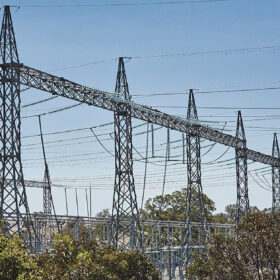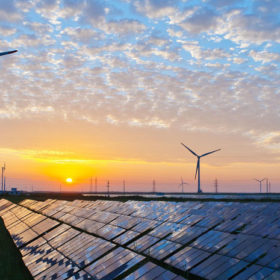
Investment in Australian renewables sank in 2019
Investment in Australian renewable energy capacity fell 40% in 2019 down from record-breaking levels seen in the year before, according to Bloomberg New Energy Finance (BNEF). Spending on large-scale renewables dropped dramatically due to network woes and long-term policy uncertainty but was ameliorated by the rooftop solar segment’s record growth.
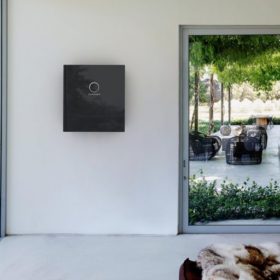
Australia to lead world in resi battery uptake in 2019, finds BNEF
Over 70,000 Australian households will install battery storage in 2019, according to the Bloomberg New Energy Finance (BNEF). With the nation’s storage demand set to triple, Australia is forecast to make up 30% of global demand this year.

Falling battery costs to push solar, wind to 50% electricity generation by 2050, but electricity still failing CO₂ reduction targets – BNEF
Solar PV capacity is set to grow 17-fold, and wind six-fold, by 2050, to account for nearly half of global electricity generation, predicts BNEF, while investments will reach US$11.5 trillion. Cost reductions will drive this charge, particularly in the battery market, which will benefit from the EV manufacturing ramp up. Despite this, the electricity sector is still failing to bring CO₂ emissions down to the required levels, with its continued dependence on gas.
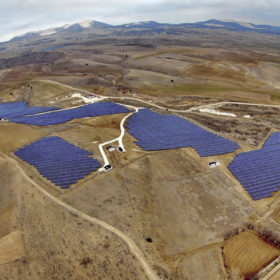
Fossil fuel global grip being loosened by holy trinity of affordable PV, wind and storage, finds BNEF
‘Unprecedented challenge’ for fossil fuels as low LCOE for solar and wind power, allied to tumbling storage costs, sees renewables claim larger share of bulk and dispatchable generation while adding vital flexibility to global energy mix.
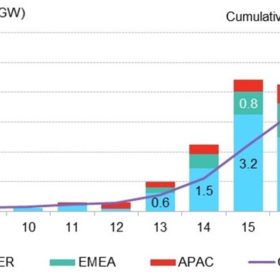
Private PPAs for renewables reach 5.4 GW in 2017, BNEF says
Last year’s result surpassed by more than 1 GW the results registered in 2015 and 2016, when the combined capacity of this market segment reached 4.4 GW and 4.3 GW, respectively.