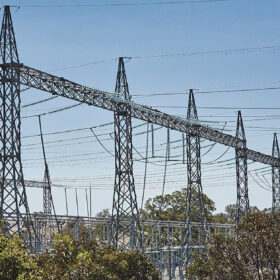
Australia’s state of virtual power play
With around 16 battery-based virtual-power-plant projects either in progress or planned across six states, Australia is demonstrating the potential of distributed energy resources to the world. An Australian Clean Energy Summit panel last week caught up on progress and potholes on the road to energy’s new two-way street.
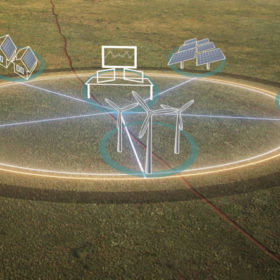
AEMO opens registrations for participation in VPP demonstration program
The program will test the potential of distributed energy resources, such as rooftop solar systems, battery storage and controllable load devices, aggregated into virtual power plants (VPPs), to provide scalable energy and network services traditionally performed by large-scale, conventional electricity generators. With registration open, the Australian Energy Market Operator wants VPPs to register to accelerate the shared learning on how to safely and efficiently integrate, operate and regulate these emerging technologies into the National Electricity Market.
Horizon Power taps SwitchDin to supply Secure Gateway Devices for solar, storage customers
WA’s regional utility Horizon Power will supply homes and businesses that install rooftop PV and batteries with Secure Gateway Devices (SGDs) to allow for higher penetration levels in the northwest town of Onslow. Newcastle-based SwitchIn has been selected by Horizon to supply the SGDs.
GreenSync to deliver digital marketplace for DER in UK
The Melbourne-based energy tech company will deploy its digital platform to connect and coordinate 500 MW of distributed energy resources across the network area of UK Power Networks.

Melbourne trial looks to beef up grid for rooftop solar boom
A $2.2 million trial run by Jemena, AusNet Services, and UNSW Sydney will explore how existing network infrastructure can better integrate with solar power, as Australia’s rooftop PV uptake goes from strength to strength.
Decentralized energy exchange opens for business
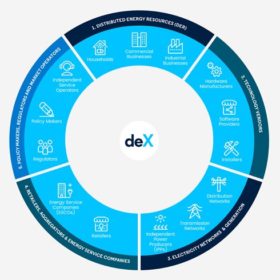
Melbourne-based energy tech startup GreenSync has officially launched the Decentralized Energy Exchange (deX), a digital marketplace for grid services provided by rooftop solar arrays, battery storage and EVs owned by Australian homes and businesses.
ARENA backs Monash University microgrid trial
The Australian Renewable Energy Agency announced it was partnering with Monash University and software provider Indra Australia to trial a microgrid on Monash’s Clayton campus in Melbourne. The microgrid will cover 100% of the campuses’ electricity needs with renewable energy.