Engineering trackers for Australia’s challenging environments


How do you view the Australian solar market today, and what is your long-term vision for this region?
Bansal: Australia is one of the most forward-looking solar markets globally. The scale of renewables, the quality of engineering talent, and the emerging pipeline from conventional utility-scale PV to large hydrogen projects to power export make it an important region for us. The government’s ambitious targets only reinforce this momentum.
For GameChange Solar, this is a priority market. We’ve always believed in taking a measured approach: understanding the market deeply, identifying where we can add value, and building a solid foundation before scaling. That’s how we’ve approached every region globally, and Australia is no different. Our vision is to be a reliable, long-term, technology-led partner for the market.
What are the key challenges for solar PV technologies in Australia, and what should developers consider when selecting tracker technologies for these environments?
Bansal: Australia brings together a unique mix of technical and economic challenges. High wind zones, hail exposure, difficult terrain, and expensive labor markets shape project decisions. For developers, tracker selection comes down to three practical considerations.
First is resilience, meaning proven performance in high wind and hail regions, backed by credible engineering and testing. Next is constructability, since labor makes up a much higher share of project cost, installation speed and simplicity matter enormously.
Finally, long-term reliability is not just about surviving wind events but performing consistently for decades.
How has GameChange Solar adapted its tracker design and engineering approach to address these Australia-specific challenges?
Bansal: We work with independent experts like CPP, VDE, and DNV on wind tunnel testing and design validation, and our trackers are certified for operation across wind regions A through D, with performance validated up to 69 m/s. That capability is important in a country where many projects sit in high-wind corridors.
Because installation costs are high, we emphasize preassembled components and simplified installation workflows. Reducing labor hours without compromising quality has been a major design priority.
Most importantly, our engineering team continuously evaluates Australian load cases and field learnings. It’s an ongoing process of refinement rather than a static global product being pushed into the market.
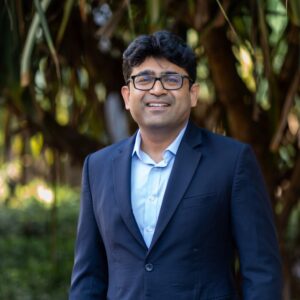
Image: GameChange Solar
What technical innovations differentiate GameChange Solar from other competitors in the Australian market?
Bansal: First, we engineer our trackers for extreme conditions. Our resilience to high winds and hail has been independently validated, enabling us to serve regions where many trackers cannot. Second, our systems emphasize speed, simplicity, and ease of deployment with installation-first design.
And finally, our partnerships with CPP, VDE, and DNV are ongoing, not one-off certifications, ensuring our technology keeps improving.
Many tracker suppliers have entered and exited the Australian market over the past decade. How is GameChange Solar addressing supplier continuity and long-term bankability?
Bansal: Ultimately, customers want confidence that their partner will be present and accountable over the life of the project. Australia has seen multiple tracker suppliers enter aggressively and then exit after facing challenges around wind events, product reliability, or local service support. Our approach is fundamentally different.
GameChange Solar doesn’t rush into markets. Our model has always been to understand local requirements and build the right foundation before scaling. That reduces the failures that cause exits. To foster long-term capability in the country, we have a training center in Newcastle that equips EPCs and installers with hands-on knowledge to ensure installation quality and build confidence.
On top of that, our warehouse and service support structures ensure responsiveness during construction and operations. As a result, we have grown sustainably across regions and stayed invested. That consistency matters to developers looking for multi-decade support.
The questions and responses in this sponsored interview article were provided by GameChange Solar.
This content is protected by copyright and may not be reused. If you want to cooperate with us and would like to reuse some of our content, please contact: [email protected].

Please login to comment