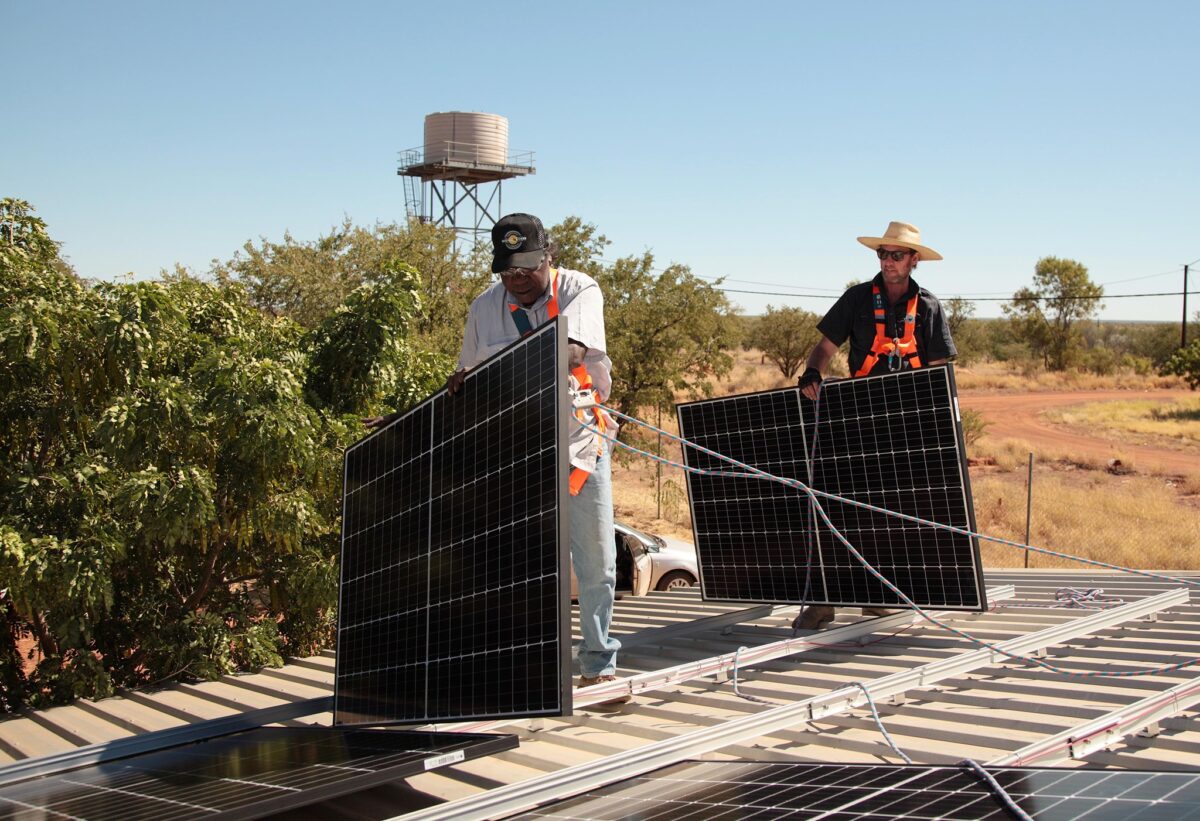





Yorke Peninsula, South Australia (SA) First Nations people at Point Pearce Aboriginal Community have negotiated with gentailer AGL Energy to have rooftop solar installed on every home in the community from early 2026, to assist with keeping costs down, avoiding power outages and keep the lights on.
Located 180 kilometres by road northwest of Adelaide, the Community has successfully negotiated a clean energy solution for all its 40 households.
Lead by First Nations Clean Energy Network PowerMaker Narungga man Eddie Newchurch said the deal came about after a conversation with a contact at AGL, Jo Maddin, about the 360 MW Barn Hill Wind Farm and 270 MW Battery Project 140 kilometres northwest of Point Pearce.
“Jo rang me and said AGL is doing a project up at Barn Hill. I said alright, let’s have a yarn about solar,” Newchurch said.
Part of AGL’s proposal is to install 6 to 7 kW of solar on each of the 40 Point Pearce Aboriginal Community households, requiring 440 systems, and a 10 kWh solar battery to support energy generation and usage.
AGL Head of Corporate Finance Jason Layatt said on a typical South Australian household this will translate to approximately $1,000 to $2,000 a year in electricity cost savings.
First Nations Clean Energy Network SA Coordinator Glen Wingfield said the renewable energy solution is a good example of community leading in negotiations with local energy providers.
“At the Network, we talk to industry and government a lot about ensuring energy security for mob. Everyone says they want to do the right thing, make energy reliable and affordable, and ensure no one is left behind in South Australia’s energy transition, but sometimes they don’t know where to start,” Wingfield said.
AGL has worked with the community to identify their energy needs, and in partnership designed a workable affordable solution that meets community needs.
“With over 4 millions homes in Australia enjoying rooftop solar and battery solutions and clean reliable affordable energy, it’s great that First Nations in Point Pearce will also enjoy the same benefits,” Wingfield said.
“It will mean Point Pearce residents’ energy costs will be more affordable, allowing community members to direct their attention towards the aspirations of local members, such as housing energy efficiency so that houses stay cool in the heat and warm in the cold, good healthy food for families, and local activities ensuring the health and wellbeing of mob.”
Wingfield encourages all First Nations groups to contact their local utilities and negotiate solar on every household around Australia.
“Point Pearce and AGL have created the template for how it can be done,” Wingfield said.
Another First Nations community, 575 kilometres northeast of Point Pearce and 615 north of Adelaide, the Nipapanha and surrounding communities near Leigh Creek are in early stage planning of clean energy solutions to alleviate power outages, which is especially difficult for children, the elderly and keeping food and medication usable, when refrigerators switch off.
Members of the community travelled to Marlinja Aboriginal Community in the Northern Territory to learn about the benefits of that community’s microgrid installed in 2024, in partnership with Original Power.
This content is protected by copyright and may not be reused. If you want to cooperate with us and would like to reuse some of our content, please contact: editors@pv-magazine.com.


How can that be considered acceptable? The systems are clearly undersized, and the battery capacity is only half of what’s required. AGL should know better—running air conditioning throughout the night is not feasible with a 10 kW battery.