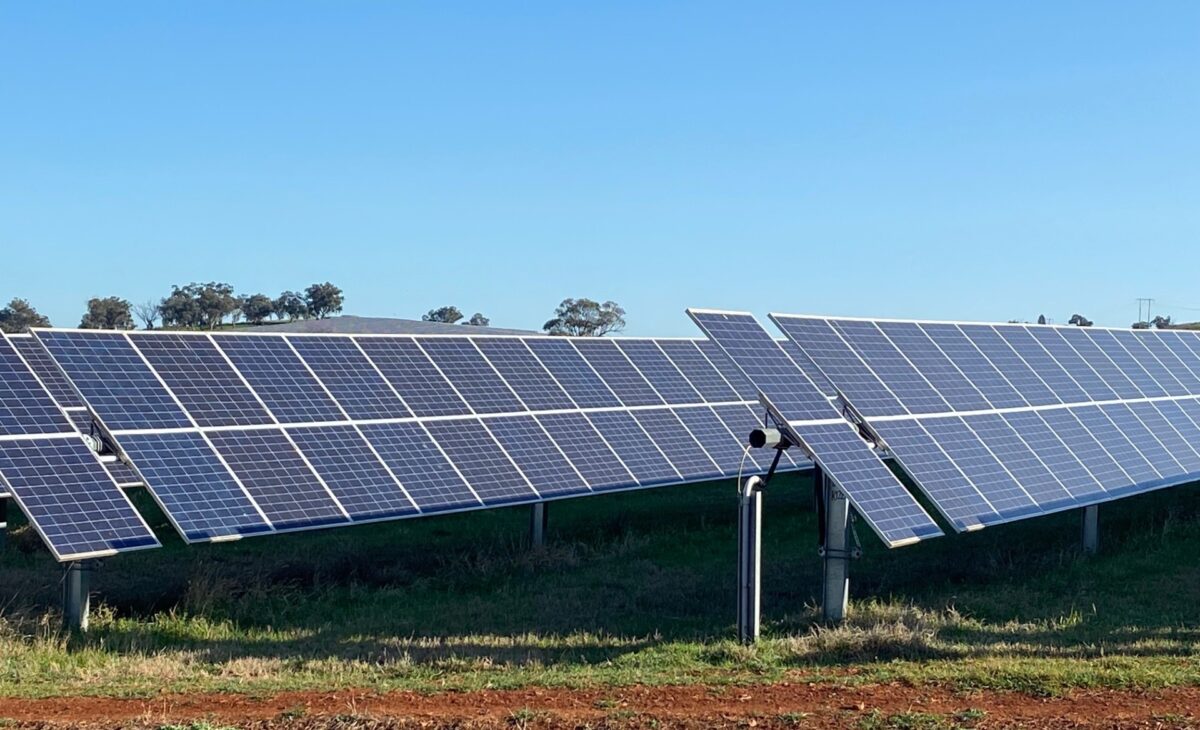





The federal government says Australia’s clean energy transition is on track with new data revealing that renewables supplied almost half of all power across the National Electricity Market (NEM) in the final quarter of 2025 and exceeded 50% in Western Australia for the first time.
Open Electricity data shows that in the December quarter solar, wind, and other renewable energy sources accounted for 49.9% of electricity generated across the NEM, which covers South Australia, Victoria, Tasmania, New South Wales, the Australian Capital Territory and Queensland. Renewables supplied a record 42.9% of NEM generation across the full calendar year.
In Western Australia’s South West Interconnected System (SWIS), the largest standalone grid in the world, renewables provided an average 50.7% of electricity generation in the final quarter of 2025.
In addition to the generation milestones, the Clean Energy Regulator (CER) estimates close to 7 GW of utility scale and smaller-scale renewable generation was added to Australia’s main grid in 2025. That comes after a record 7.5 GW was added in 2024.
Bowen said the figures show Australia is on target to achieve its goal of 82% renewable electricity generation in the grid by the end of the decade, adding the federal government is “making great strides toward our goal of becoming a renewable energy superpower.”
“We are on track to bring down energy bills and meet our climate targets if we stay the course and continue to lift our efforts,” he said.
“2025 was a good year for renewables but we must keep going. [There’s] a lot done, a lot more to do.”
While conceding achieving the target is not without its challenges, Bowen said the renewable energy transition had gathered pace in 2025, with a record number of projects given the green light.
The federal government approved 54 large-scale projects across all states and territories in the last year while the Australian Energy Market Operator’s latest Connections Scorecard shows the development pipeline for the NEM has expanded to 275 projects, representing a total of 56.6 GW in generation and storage capacity. In addition, a total of 23.2 GW of earlier-stage projects are finalising contracts or under construction, up 43% from the same time last year.
Bowen said the success of the federal government’s expanded Capacity Investment Scheme (CIS) and its recently overhauled Cheaper Home Batteries Program had been key drivers for the surge in renewables.
“Four tenders worth 6.6 GW of generation and 18.4 GWh of dispatchable capacity opened through the CIS,” he said. “And 40 successful projects for three more CIS tenders were announced.”
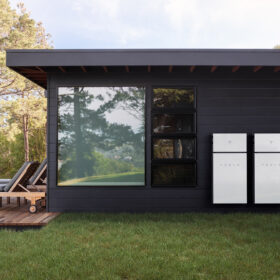
At the household and community level, Bowen said more than 185,000 batteries with a combined 4.27 GWh of storage capacity were installed through the Cheaper Home Batteries program in the six months to 31 December and more than 140,000 new rooftop solar systems were installed from 1 January to 30 November.
This content is protected by copyright and may not be reused. If you want to cooperate with us and would like to reuse some of our content, please contact: editors@pv-magazine.com.


1 comment
By submitting this form you agree to pv magazine using your data for the purposes of publishing your comment.
Your personal data will only be disclosed or otherwise transmitted to third parties for the purposes of spam filtering or if this is necessary for technical maintenance of the website. Any other transfer to third parties will not take place unless this is justified on the basis of applicable data protection regulations or if pv magazine is legally obliged to do so.
You may revoke this consent at any time with effect for the future, in which case your personal data will be deleted immediately. Otherwise, your data will be deleted if pv magazine has processed your request or the purpose of data storage is fulfilled.
Further information on data privacy can be found in our Data Protection Policy.