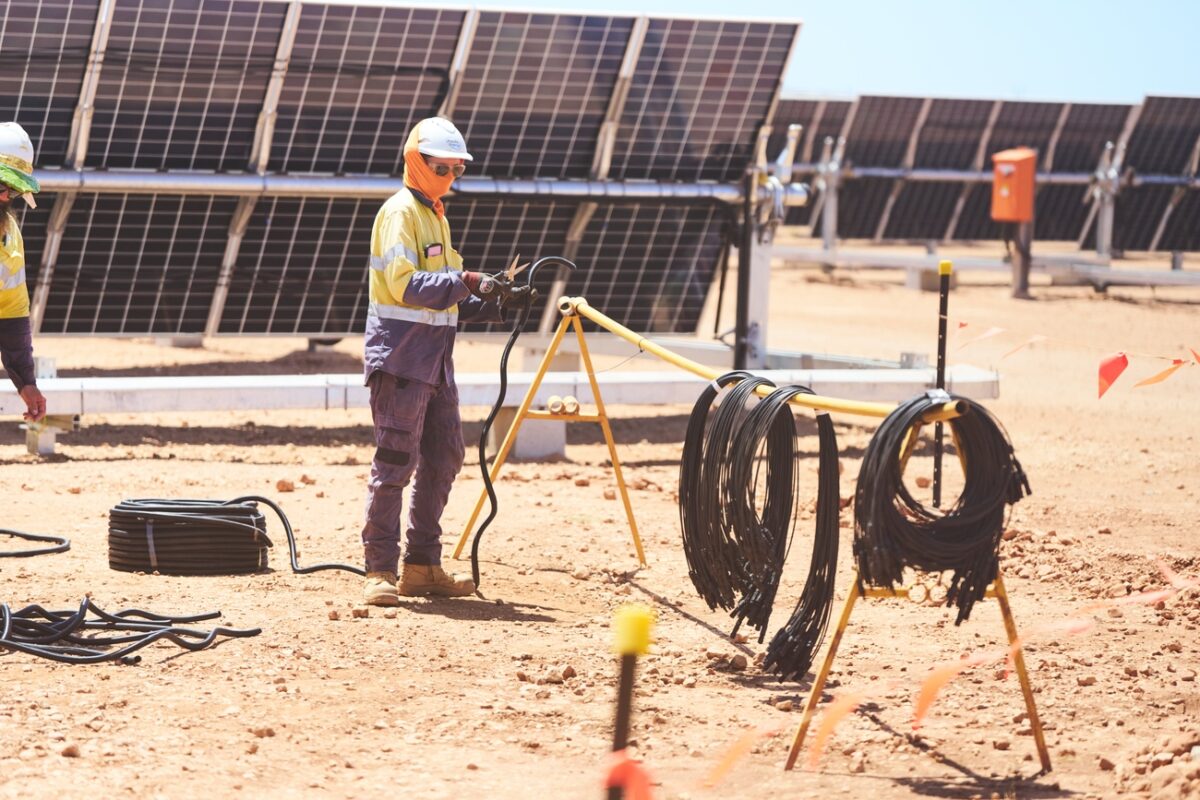





Western Australia’s state-owned regional energy provider Horizon Power has submitted a solar-plus-storage project planned for Broome in the state’s Kimberley region to the Environment Protection and Biodiversity Conservation (EPBC) Act queue for assessment.
The EPBC process, administrated by the federal government, is intended to protect nationally threatened species and ecological communities. Referred projects must secure approval before advancing to development.
State-owned energy provider Horizon Power said the Broome energy system is to feature up to 90 MW of solar generation capacity plus a battery energy storage system with up to 42 MW / 239 MWh capacity. The plans also include up to 16 kilometres of electricity transmission cabling for the town, and a new 32 MW gas-fuelled power station.
The project, which has already been waved through by WA’s Environmental Protection Authority, is proposed for a 270-hectare site about 10 km north of Broome.
It is designed to replace Broome’s current energy system that relies mainly on gas and diesel generation, with only about 10% of the town’s energy needs met by renewables, primarily rooftop solar and three community batteries.
Horizon said the new renewables-based system will ensure security of energy supply to Broome after the expiry of the existing power purchase agreement and will be cheaper and cleaner than the existing system.
Construction of the new solar and battery system is expected to commence in 2028 with operations to begin in 2030.
Horizon’s tender documents indicate the selected developer would receive a 20-year power purchase agreement with two options for a further five years each, at the utility’s discretion.
Broome is one of five towns targeted by Horizon as part of its Kimberley Future Energy System (FES) project that aims to also deliver long-term electricity supply solutions to meet the requirements of its customers in the towns of Halls Creek, Fitzroy Crossing, Looma-Camballin and Derby.
All of these systems must meet minimum annual renewable energy requirements, with contractors fined if their installed system doesn’t meet the agreed percentage in any given year.
For Broome and Derby, the biggest markets, the requirement is for at least 80% renewable energy. The minimum renewable energy generation supply for the smallest of the towns, Looma-Camballin, is 44%, while Fitzroy Crossing must have access to at least 45% renewables, and Halls Creek 55%.
Horizon is also rolling out utility solar and battery storage systems across other regional sites
The request for renewables for the five Kimberley towns is the latest in Horizon’s mission to decarbonise power supplies and enhance power quality for customers in the regional and remote areas of Western Australia.
Horizon is responsible for delivering energy solutions across a service area covering 2.3 million square kilometres. It operates the North West Interconnected System (NWIS) in the Pilbara region, the smaller Esperance network, as well as 34 microgrids in regional towns and remote communities.
This content is protected by copyright and may not be reused. If you want to cooperate with us and would like to reuse some of our content, please contact: editors@pv-magazine.com.




By submitting this form you agree to pv magazine using your data for the purposes of publishing your comment.
Your personal data will only be disclosed or otherwise transmitted to third parties for the purposes of spam filtering or if this is necessary for technical maintenance of the website. Any other transfer to third parties will not take place unless this is justified on the basis of applicable data protection regulations or if pv magazine is legally obliged to do so.
You may revoke this consent at any time with effect for the future, in which case your personal data will be deleted immediately. Otherwise, your data will be deleted if pv magazine has processed your request or the purpose of data storage is fulfilled.
Further information on data privacy can be found in our Data Protection Policy.