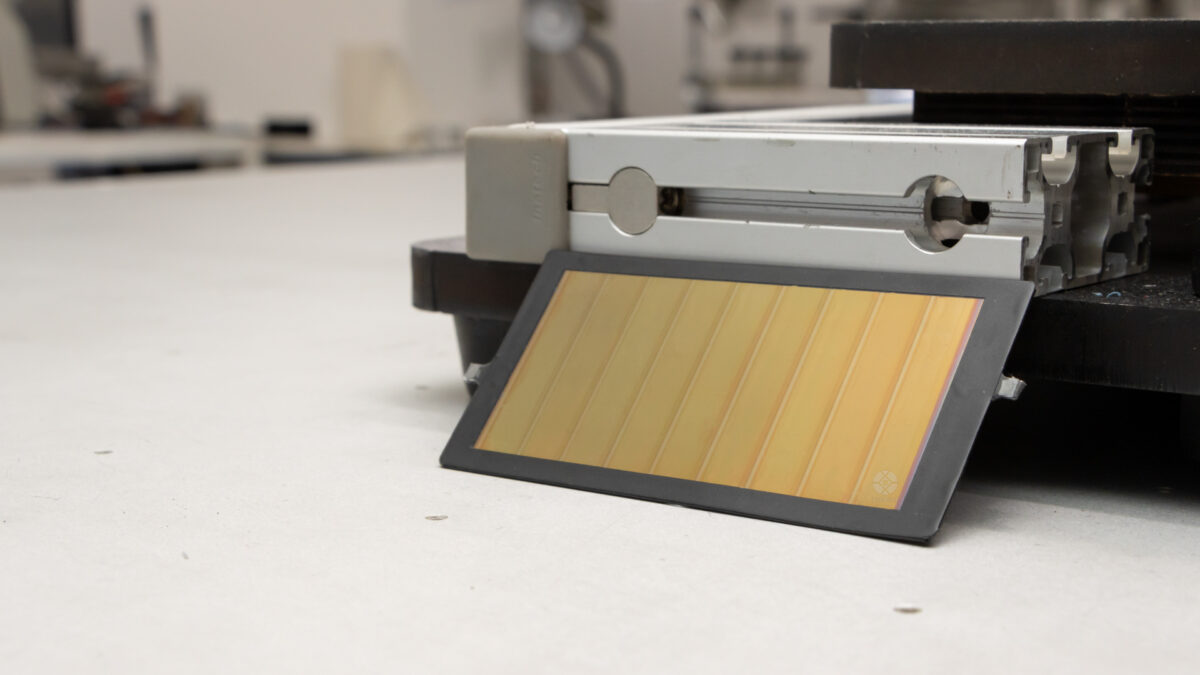





Next-generation solar innovator Halocell Energy is set to benefit from the development of a sovereign supply chain for high-purity precursors to perovskite after signing a memorandum of understanding (MOU) with Queensland advanced materials company Lava Blue.
Lava Blue and New South Wales (NSW)-headquartered Halocell Energy will collaborate to develop scalable, Australian-made specialty chemicals used in printing perovskite solar modules.
The MOU builds on Lava Blue’s work under an Australian Research Council (ARC)-funded project, where it is refining high-purity materials from mine waste for use in downstream clean technologies.
Its proprietary process for producing High Purity Alumina (HPA), used in batteries, semiconductors, optics and light emitting diodes (LEDs), enables production from unconventional sources including kaolin, red mud and industrial tailings.
It operates the Centre for Predictive Research into Specialty Materials (PRiSM) in Brisbane, which is a demonstration-scale processing line capable of delivering Four-Nines (4N) and Five-Nines (5N) HPA, with a purity level of up to 99.999%.
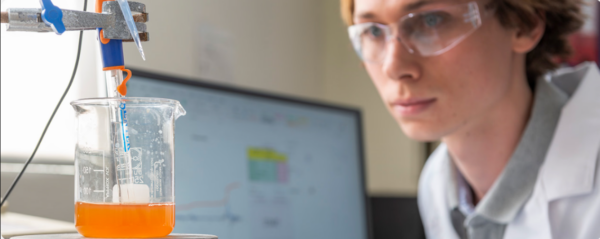
Image: Lave Blue
Drive down material costs
Lava Blue Managing Director Michael McCann said the partnership signals Australia’s ability to be more than a raw materials exporter.
“We can be a source of specialised, value-added inputs essential to the energy systems of the future. With this MOU, the goal is to drive down material costs and enable Halocell to scale, which makes the perovskite proposition viable beyond the lab and in the market,” McCann said.
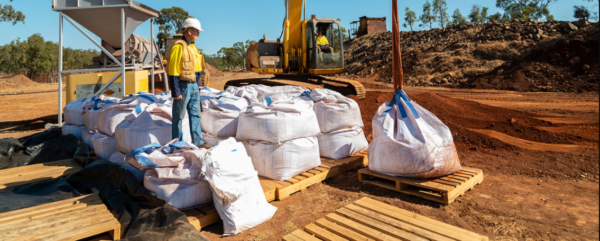
Image: Lave Blue
Halocell will potentially deliver cost-effective commercialisation of its products, which have applications for aerial drones, space-based systems and satellites and low-light energy harvesting for indoor home electronic devices.
Halocell Energy Chief Executive Officer Paul Moonie said Halocell is creating the next generation of solar solutions, that are lightweight, printable and tuned for real-world conditions.
“To gain scale, we need access to fit-for-purpose materials at the right cost. That’s why this partnership with Lava Blue is so important,” Moonie said.
Lava Blue says global HPA demand is forecast to exceed 240,000 tonnes per annum by 2030, and with 75% of current supply concentrated in China, international interest is ramping up in low-carbon, geographically diverse alternative sources of the critical material.
This content is protected by copyright and may not be reused. If you want to cooperate with us and would like to reuse some of our content, please contact: editors@pv-magazine.com.


1 comment
By submitting this form you agree to pv magazine using your data for the purposes of publishing your comment.
Your personal data will only be disclosed or otherwise transmitted to third parties for the purposes of spam filtering or if this is necessary for technical maintenance of the website. Any other transfer to third parties will not take place unless this is justified on the basis of applicable data protection regulations or if pv magazine is legally obliged to do so.
You may revoke this consent at any time with effect for the future, in which case your personal data will be deleted immediately. Otherwise, your data will be deleted if pv magazine has processed your request or the purpose of data storage is fulfilled.
Further information on data privacy can be found in our Data Protection Policy.