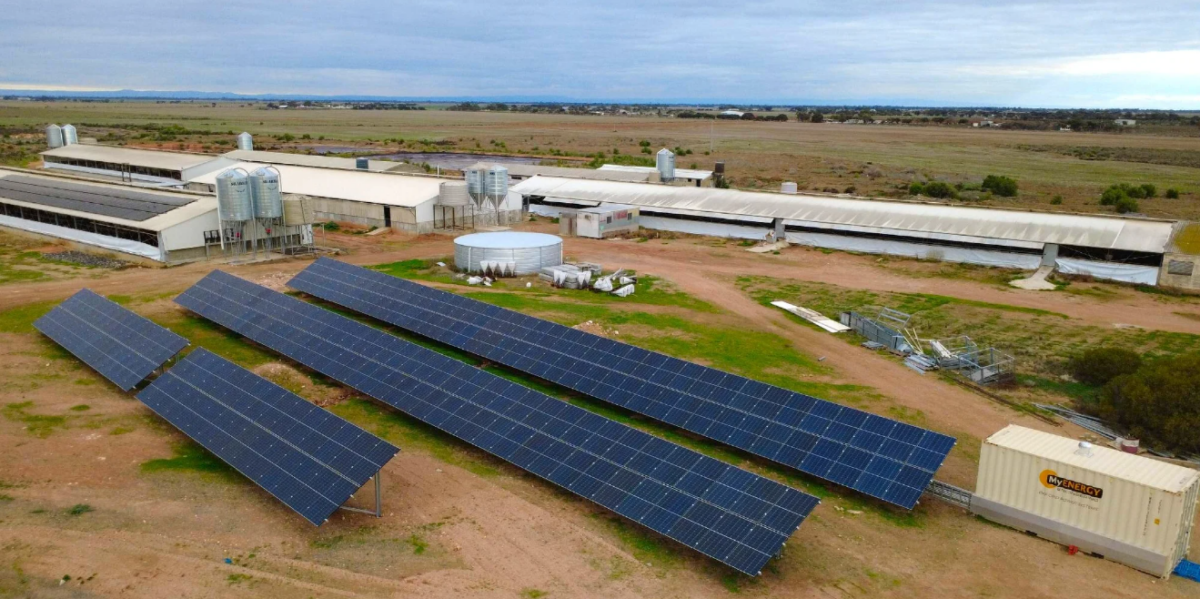





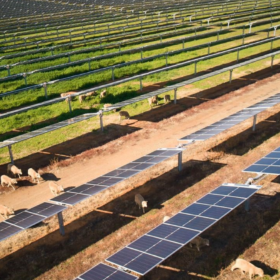
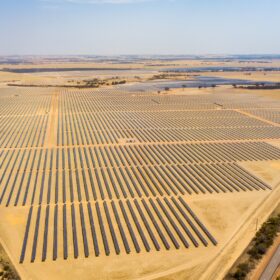
South Australian (SA) remote and off grid clean energy specialist MyEnergy Engineering has completed an off grid 100 kW solar and 256 kWh battery energy storage system for a large-scale piggery 40 kilometres north of Adelaide.
Requiring integration with an existing Fronius AC infrastructure and a large backup diesel generator, the project faced several engineering and technical barriers.
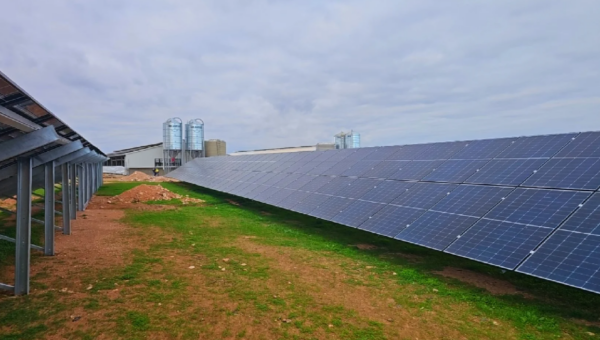
Image: MyEnergy Engineering
MyEnergy Engineering Chief Executive Officer Ciaram Granger said the site’s feed mill introduced extreme surge demands, with loads jumping from 5 kW to over 70 kW within seconds, creating significant phase imbalance and voltage stability challenges.
“Combined with the broader piggery’s ventilation, lighting, and irrigation systems, the setup demanded precise control to maintain supply stability and ensure reliable transitions between PV, battery, and generator power,” Granger said.
“A key challenge was integrating generator functionality without disrupting the site’s existing automation, while keeping the system serviceable, modular, and future-expandable.”
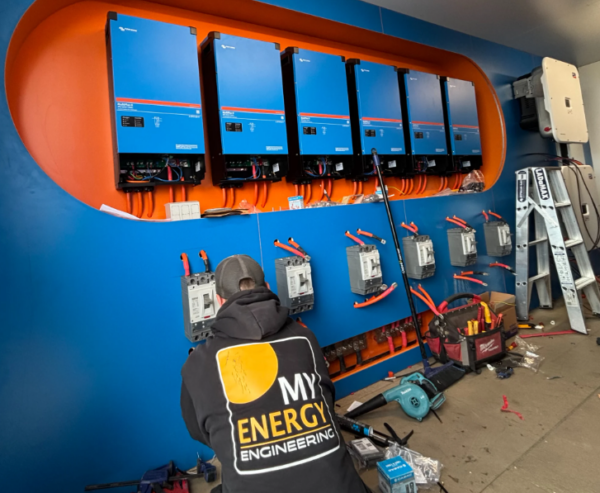
To address the issues, MyEnergy designed and delivered a fully containerised, climate-controlled power station, built off-site for accuracy and quality control, then trucked to site for rapid installation.
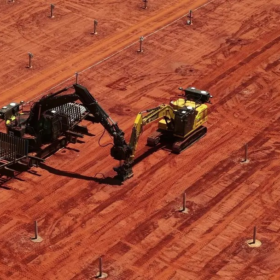
Key design features include 99.44 kW JA Solar panels using an S-Rack ground mount system installed with GAYK pile-driver to secure foundations through rocky ground, nine Victron inverters, 256 kWh Zyc Simpo lithium batteries, four Victron SmartSolar charge controllers, and two SMA Sunny Tripower X (25 kW) AC coupled inverters.
Three-phase Victron Quattro 48/15000 system configured for advanced interphase control, enable balanced delivery during high-inrush and variable inductive loads from the feed mill.
A custom Node-RED automation managing generator auto-start, manual fail-safe sequencing, and condition-based fault recovery allows autonomous operation even during network loss.
Real-time monitoring and control through Victron’s Venus OS, with all inverter and battery parameters exposed via Modbus TCP provides detailed performance analysis and diagnostics.
Lastly, a fully modular cabinet design allows a seamless addition of extra inverters or batteries without rewiring or operational downtime.
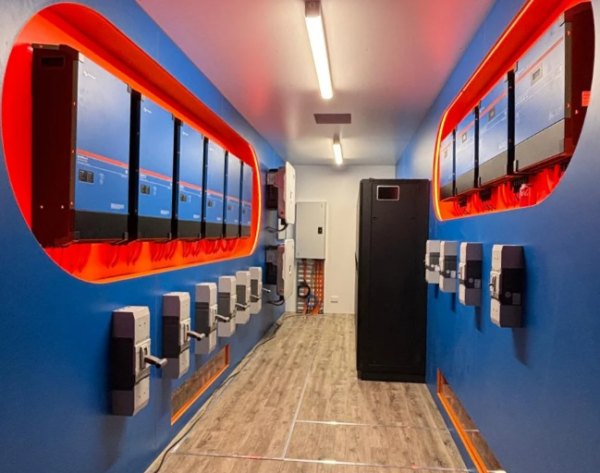
Image: MyEnergy Engineering
Updated 2.17pm, 23/1/26, to include links.
This content is protected by copyright and may not be reused. If you want to cooperate with us and would like to reuse some of our content, please contact: editors@pv-magazine.com.





I give them 5 years before bankruptcy