




From pv magazine Global
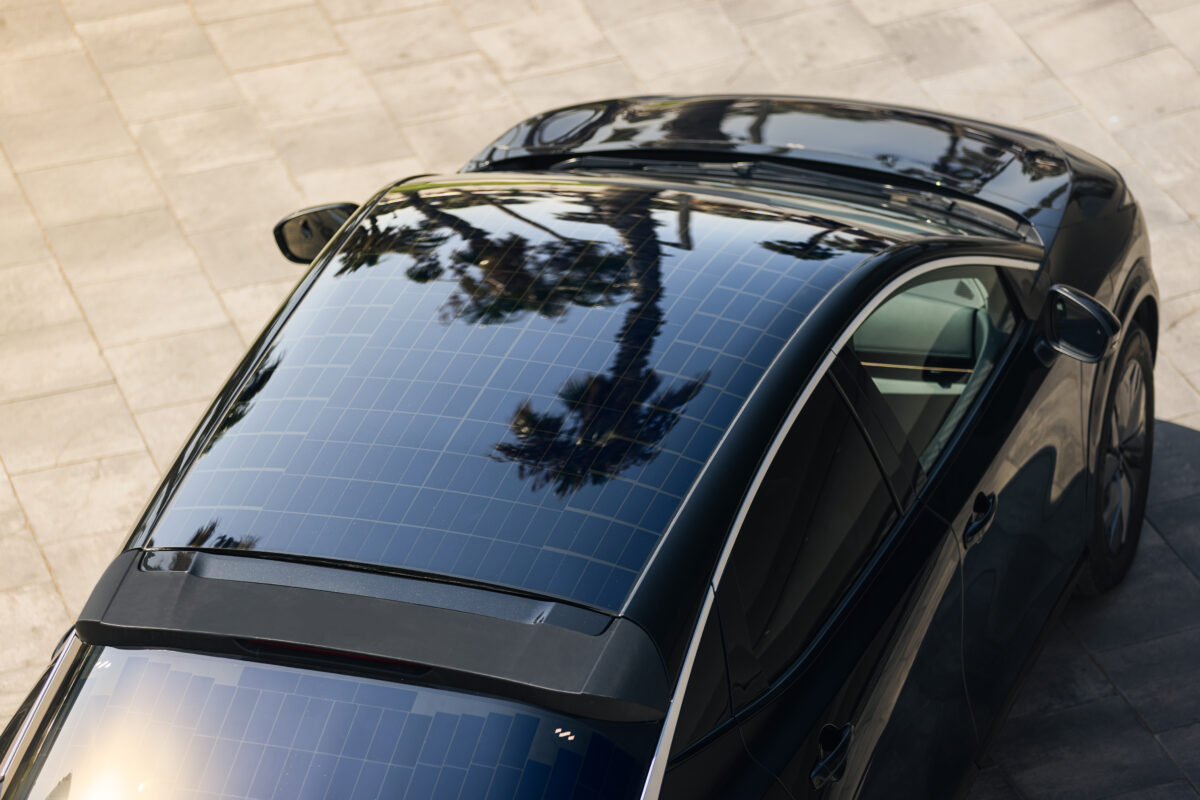
To mark the UN’s Clean Energy Day on 26 January 2026, Nissan unveiled its solar‑powered Ariya concept developed by engineers from Nissan’s Advanced Product Planning team in Dubai and Powertrain Planning team in Barcelona.
The concept features 3.8m² of high‑efficiency solar panels integrated into polymer-based hood, roof and glass-based tailgate that convert sunlight into DC power, managed through an advanced controller designed to optimise energy use and reduce reliance on external charging infrastructure.
Engaging Dutch startup Lightyear, which has been developing and refining its solar-powered car charging technology, working with a number of vehicle manufacturers to demonstrate its system, initial long-distance testing showed the solar integration could cut annual charging visits for a 6,000 kilometre per year commuter from 23 to 8.
Lightyear’s Chief Executive Officer Bonna Newman told pv magazine, aesthetics was a huge factor to be considered when developing solar-powered vehicles of any type.
Lightyear previously attempted to commercialise a car with solar panels integrated in the body of the vehicle, but this ultimately did not scale and the company went bankrupt.
Since its return in 2023 under new leadership, Lightyear has mostly focused on solar charging technology. It produces vehicle-integrated solar panels for certain applications at its Dutch base, however.
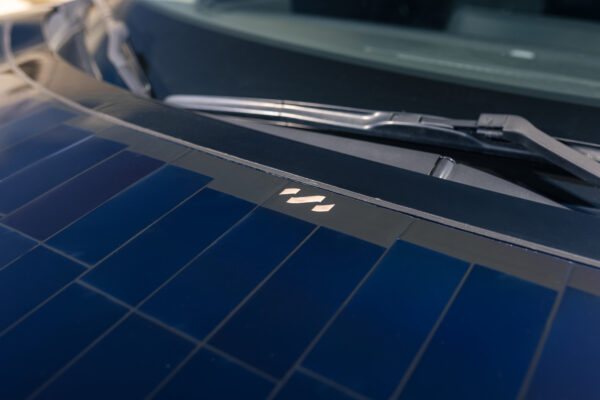
Image: Nissan Motor Corporation
The vehicle’s integrated solar panels, provided by Lightyear, use high efficiency photovoltaic cells that convert sunlight directly into DC electric power. This energy is managed through an optimised power controller, increasing overall energy availability and reducing dependency on external charging.
Testing showed that the Ariya car could generate 0.5 kWh of solar energy during a 2‑hour, 80 kilometre trip, delivering up to 3 kilometres of range at no extra cost or charging time.
In clear, sunny conditions, the solar panels can generate enough clean energy to power up to 23 kilometres in additional range. Over the course of a year, this could mean an average additional range per day of 10.2 kilometres in London, 18.9 kilometres in New Delhi and 21.2 kilometres in Dubai.
Following the Ariya announcement, Newman said, “Working with the global car industry proves that our technology brings measurable benefits to electric vehicle (EV) drivers and owners; moving them beyond the grid and dependence on the plug.’’
“Our ambition has always been to make solar a meaningful and scalable part of electric mobility,” she added.
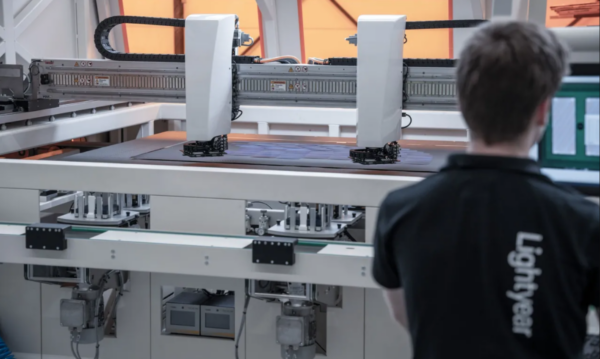
Image: Lightyear
Tests carried out on the demonstration vehicles showed a 35–65% reduction in charging frequency depending on usage patterns and conditions.
The system is not intended as a replacement for plug-in charging but it can potentially reduce charging frequency, with data showing annual charging visits can be reduced from approximately 23 to 8 charging sessions per year for drivers covering around 6,000 kilometres annually, and around 50% more time between charges for commuters driving approximately 12,000 kilometres per year.
The system can also generate energy while the vehicle is being driven or parked.
The company’s chief financial officer said the demonstration showed that Lightyear’s vehicle-integrated solar is ready to go to market. “We’ve moved past the proof-of-concept stage,” said Herman van Barneveld.
“As the world changes and technology develops, it is important to see forms of energy such as solar as a potential paradigm shift, bringing a new layer of convenience and innovation to the driving journey,” said Jorge Paganetto, from Nissan’s Product Planning team in Dubai, adding that the concept pushes the boundaries of possibility.
Nissan AMIEO Vice President ePowertrain & Internal Combustion Engine Powertrain (ICE), Technology Research & Advanced Engineering & Chief Powertrain Engineer Shunsuke Shigmoto said the solar‑powered Ariya concept embodies Nissan’s belief that innovation and sustainability must move forward hand‑in‑hand.
“By exploring how vehicles can generate their own renewable energy, we are opening the door to new opportunities for customers—greater freedom, reduced charging dependency, and a cleaner future,” Shigmoto said.
“This concept is not just a technical milestone; it’s a vision of how Nissan intends to lead the next phase of electric mobility.”
This content is protected by copyright and may not be reused. If you want to cooperate with us and would like to reuse some of our content, please contact: editors@pv-magazine.com.







By submitting this form you agree to pv magazine using your data for the purposes of publishing your comment.
Your personal data will only be disclosed or otherwise transmitted to third parties for the purposes of spam filtering or if this is necessary for technical maintenance of the website. Any other transfer to third parties will not take place unless this is justified on the basis of applicable data protection regulations or if pv magazine is legally obliged to do so.
You may revoke this consent at any time with effect for the future, in which case your personal data will be deleted immediately. Otherwise, your data will be deleted if pv magazine has processed your request or the purpose of data storage is fulfilled.
Further information on data privacy can be found in our Data Protection Policy.