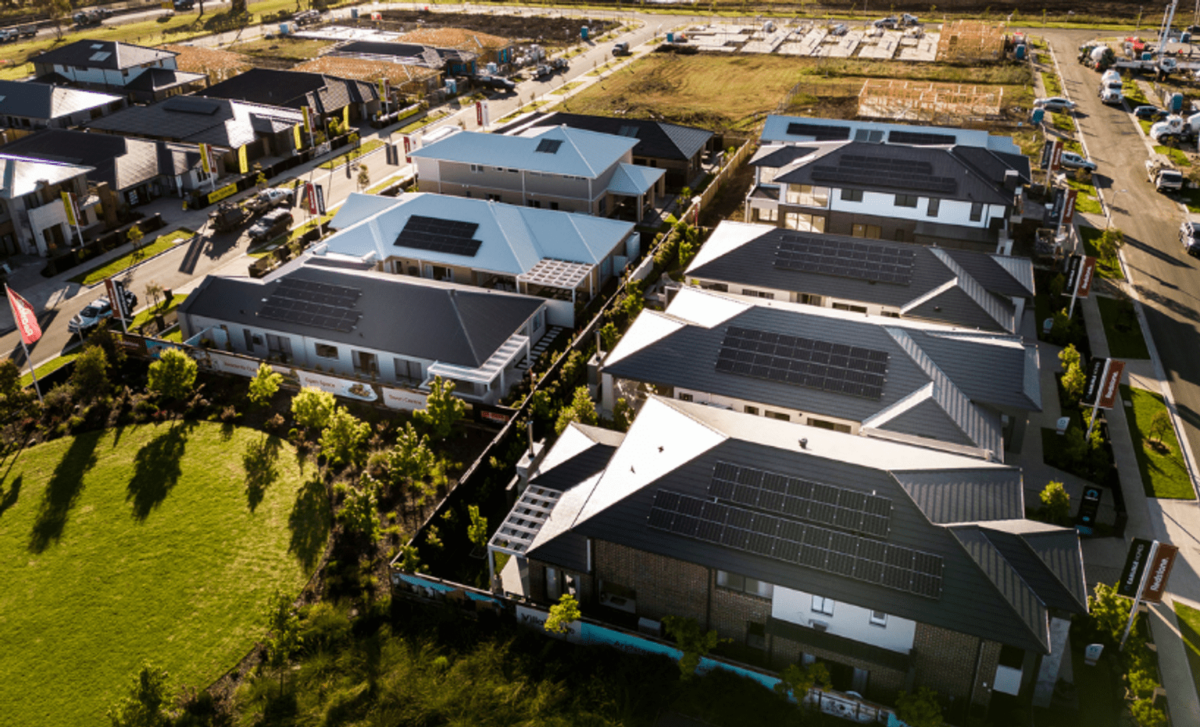





Solar energy has supplied 16% of Victoria’s 2025 renewable energy target (40%), which the state says has also been “smashed” to achieve 44.6% of its electricity being generated by renewables.
The solar energy output has generated by 54 grid-scale solar farms and widespread rooftop solar, which at the end of 2025 was reported by the Clean Energy Regulator (CER) as amounting to over 848,000 small-scale solar systems under 100 kW.
Victoria now has nearly 100 large-scale renewable energy projects operational, with capacity to grow, and five additional renewable energy projects under construction.
Wind farms generated approximately 24% of Victoria’s electricity, making wind the single largest contributor to the state’s renewable generation.
Victoria is now chasing its 2030 renewable energy target of 65% electricity generation to come from renewable sources.
Legislated in March 2024, the 65% generation target includes a storage target of 2.6 GW of capacity, 2 GW of offshore wind generation capacity, and 95% renewable energy generation, followed a decade later by a net zero emissions target in 2045.
To accelerate further delivery, the Victorian Government’s Development Facilitation Program (VGDFP) is fast-tracking priority renewable projects and has unlocked almost $9 billion (USD 6.4 billion) in investment across 25 projects.
Once completed, the projects will generate enough electricity to power over 700,000 households each year, with battery storage capable of meeting evening peak demand for up to 2 million homes, the government said.
The Australian Energy Market Operator’s (AEMOs) latest Quarterly Energy Dynamics report Q4 2025 also shows distributed solar output in Victoria increased slightly by 14 MW to an average output of 956 MW, setting a record for Victoria.
It also states cumulative consumer energy resources (CER) solar capacity and installations have grown steadily across the National Electricity Market (NEM) since 2020, with Victoria growing from 2.6 GW to 5.6 GW.
Victoria set a new record for its half-hourly renewable generation contribution in the Q4 2025 quarter, achieving a peak contribution of 82.5% in the half-hour ending 2 pm on 16 October 2025, exceeding the previous record from 2 December 2024 by 4.5 percentage points.
This content is protected by copyright and may not be reused. If you want to cooperate with us and would like to reuse some of our content, please contact: editors@pv-magazine.com.


By submitting this form you agree to pv magazine using your data for the purposes of publishing your comment.
Your personal data will only be disclosed or otherwise transmitted to third parties for the purposes of spam filtering or if this is necessary for technical maintenance of the website. Any other transfer to third parties will not take place unless this is justified on the basis of applicable data protection regulations or if pv magazine is legally obliged to do so.
You may revoke this consent at any time with effect for the future, in which case your personal data will be deleted immediately. Otherwise, your data will be deleted if pv magazine has processed your request or the purpose of data storage is fulfilled.
Further information on data privacy can be found in our Data Protection Policy.