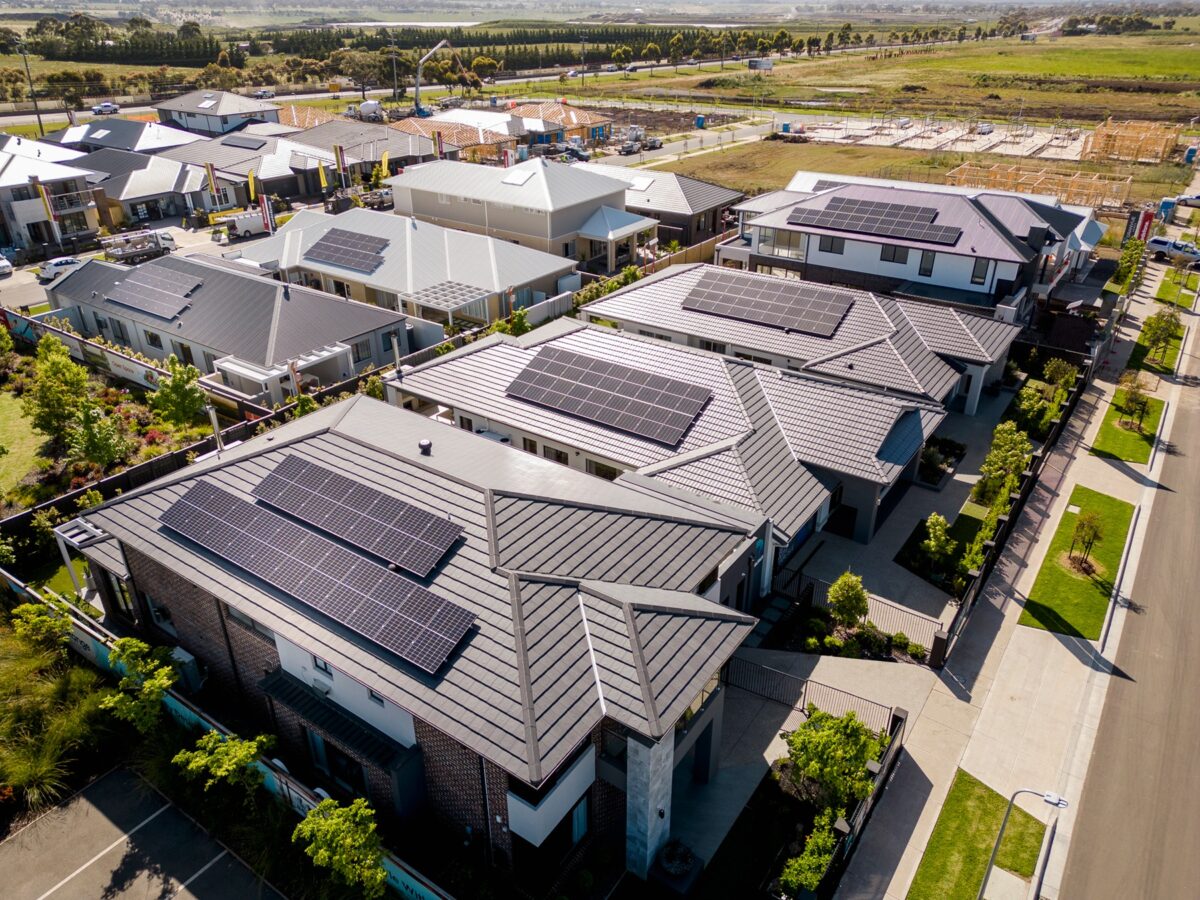





The regional Victorian city of Bendigo has outpaced the state’s capital Melbourne for its uptake of residential batteries under the federal government’s Cheaper Home Batteries (CHB) program.
Located 153 kilometres northwest of Melbourne in the proposed Central North Renewable Energy Zone (REZ), Bendigo’s home battery installations have been at six times the rate of Melbourne, despite the city of Bendigo having a population of just 2% of the capital.
Over 1,070 Bendigo residents have plugged into the 30%-off-a-home-battery program.
Federal Minister for Climate Change and Energy Chris Bowen said 42% of the more than 235,000 CHB have been installed in regional homes, since 1 July, 2026.
“Bendigo knows that batteries in their homes means more cheaper, cleaner energy in their homes, night or day when and where they need it,” Bowen said.
Councils and community facilities are also being offered federal assistance through energy efficiency upgrades with $1.4 million (USD 990,000) going to projects in the region.
The Bendigo Library $1.2 million electrification project aims to reduce carbon emissions in line with a citywide climate goal to achieve net-zero emissions for both council operations and the wider community by 2030.
It will be the first major public building in Bendigo to transition from gas infrastructure to fully electric heating and cooling systems.
Approximately 38 kilometres south of Bendigo, the Mount Alexander Shire Council is also utilising a $248,000 federal grant to electrify the Castlemaine Town Hall.
“From powering story time at the library, to bedtime stories at home, our investment in renewable energy is delivering cheaper, cleaner energy for everyone in Bendigo,” said Bowen.
Federal Member for Bendigo Lisa Chesters said households across the Bendigo electorate are already leading the way with rooftop solar.
“Cheaper Home Batteries are now helping store their power, cut their bills for good, and take control of their energy use,” Chesters said.
“Every local household or small business that installs roof top solar and batteries are also helping to take pressure off the grid.”
On 13 December 2025, the federal government announced it would expand the CHB Program from original estimates of $2.3 billion to an estimated $7.2 billion over the next 4 years.
This is expected to see more than 2 million Australians install a battery by 2030, delivering around 40 GWh of additional storage capacity.
This content is protected by copyright and may not be reused. If you want to cooperate with us and would like to reuse some of our content, please contact: editors@pv-magazine.com.


By submitting this form you agree to pv magazine using your data for the purposes of publishing your comment.
Your personal data will only be disclosed or otherwise transmitted to third parties for the purposes of spam filtering or if this is necessary for technical maintenance of the website. Any other transfer to third parties will not take place unless this is justified on the basis of applicable data protection regulations or if pv magazine is legally obliged to do so.
You may revoke this consent at any time with effect for the future, in which case your personal data will be deleted immediately. Otherwise, your data will be deleted if pv magazine has processed your request or the purpose of data storage is fulfilled.
Further information on data privacy can be found in our Data Protection Policy.