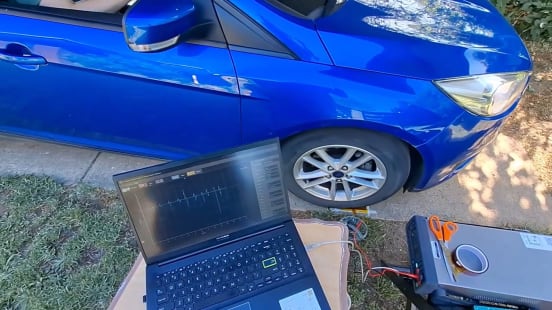





Researchers from RMIT University have demonstrated a device made from flexible nylon-film material, which they altered using high-frequency sound vibrations, to generate piezoelectricity by compressing it under the wheel of a car.
The team tested the device by repeatedly running over and compressing it with a car after first altering the nylon using sound vibrations and electrical fields to reengineer the material at a molecular level.
As a result, the tough industrial nylon generates a piezoelectrical charge becoming a resilient power-generating film suited to wearables, infrastructure, and smart surfaces.
RMIT School of Engineering Distinguished Professor and co-lead on the project Leslie Yeo said the method could power next-generation devices that need to survive real-world stresses.
“Whether that’s wearable tech, sensors or smart surfaces,” Yoe said.
First author and RMIT PhD researcher Robert Komljenovic said the thin-film devices are so robust, it can be folded, stretched, and run over, while making power.
“This could mean new ways to charge small devices using compression from the movement of people, machines or vehicles,” Komljenovic said.
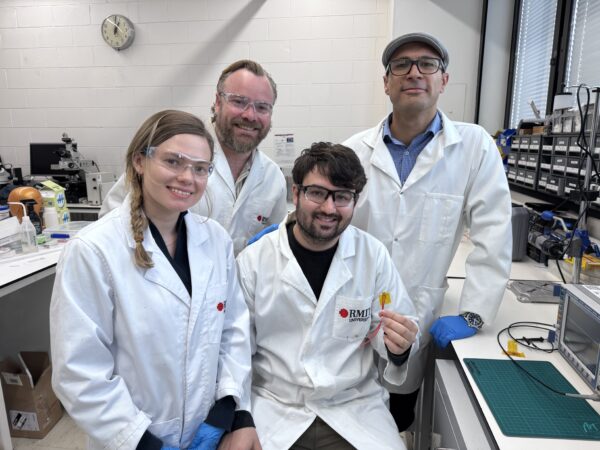
Image: Will Wright, RMIT University
The researchers plan to scale up the technology for larger applications and explore partnerships with industry to bring the innovation to market, and can be contacted on research.partnerships@rmit.edu.au.
Co-lead Dr Amgad Rezk said the process offered significant advantages for industry, with an energy-efficient and scalable approach.
“We’re excited to see where prospective industry partners could take this technology, from flexible electronics to sports equipment.”
The researchers have published their findings in Nature Communications, titled ‘Electroacoustic alignment of robust and highly piezoelectric nylon-11 films’.
This content is protected by copyright and may not be reused. If you want to cooperate with us and would like to reuse some of our content, please contact: editors@pv-magazine.com.








By submitting this form you agree to pv magazine using your data for the purposes of publishing your comment.
Your personal data will only be disclosed or otherwise transmitted to third parties for the purposes of spam filtering or if this is necessary for technical maintenance of the website. Any other transfer to third parties will not take place unless this is justified on the basis of applicable data protection regulations or if pv magazine is legally obliged to do so.
You may revoke this consent at any time with effect for the future, in which case your personal data will be deleted immediately. Otherwise, your data will be deleted if pv magazine has processed your request or the purpose of data storage is fulfilled.
Further information on data privacy can be found in our Data Protection Policy.