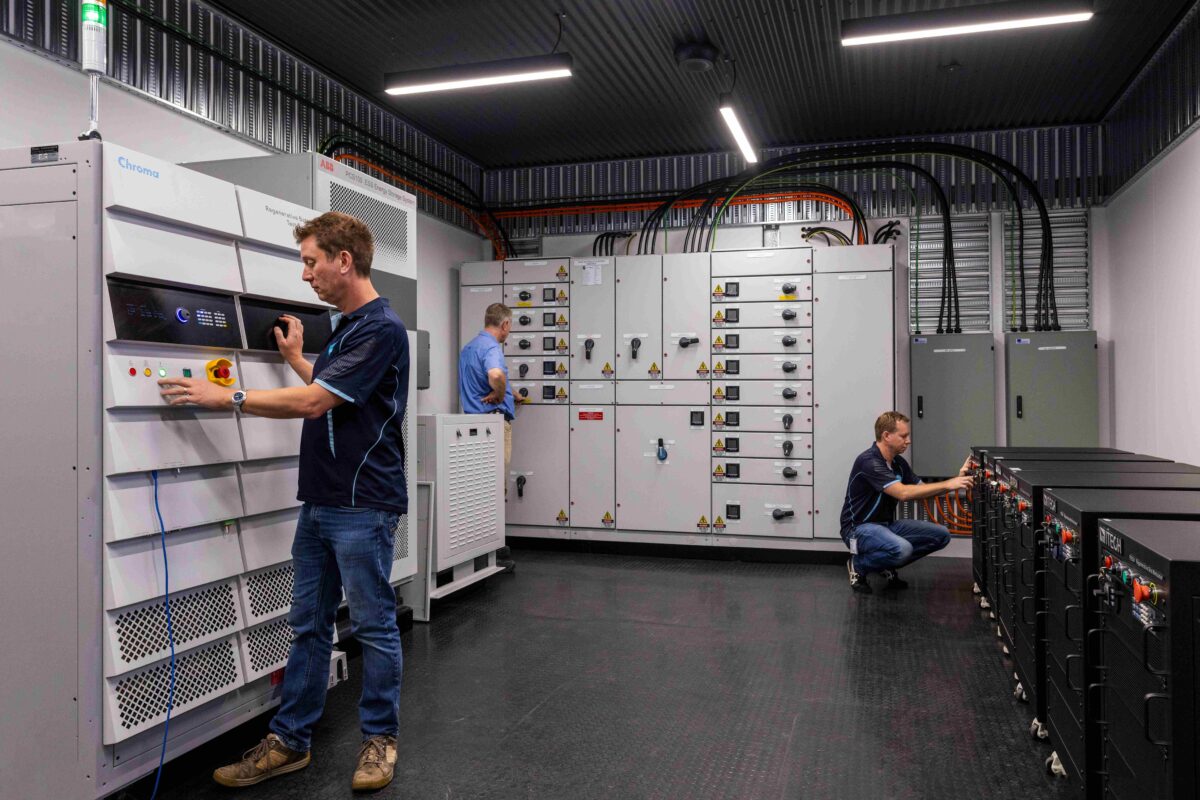





The Commonwealth Scientific and Industrial Research Organisation (CSIRO) has launched a $3 million (USD 2.12 million) upgrade of its Renewable Energy Integration Facility (REIF) in Newcastle to ensure researchers and industry can explore the challenges presented by Australia’s energy transition.
The REIF, located at CSIRO’s Energy Centre on the New South Wales Central Coast, is one of the largest renewable and grid-integration testing laboratories in the southern hemisphere.
Research at the facility focuses on renewable generation and storage integration, inverter control and grid stability solutions, electric vehicle (EV) charging and vehicle-to-grid (V2G) technology.
The facility can simulate microgrids, grid faults, household and commercial energy systems and interactions between solar, batteries, EV and a diverse mix of generators under real-world conditions.
CSIRO Chief Executive Dr Doug Hilton said the upgrade will significantly expand Australia’s capability to test, validate and commercialise technologies needed for a more sustainable, reliable, and secure electricity system.
“As Australia transitions to a cleaner, more electrified economy, we need the confidence that new energy technologies can operate safely and reliably across the system,” he said. “This upgraded facility strengthens Australia’s capability to test exactly that.”
Hilton said the upgraded facility will “support more efficient use of electrical infrastructure, ultimately helping improve energy affordability for Australian homes and businesses.”
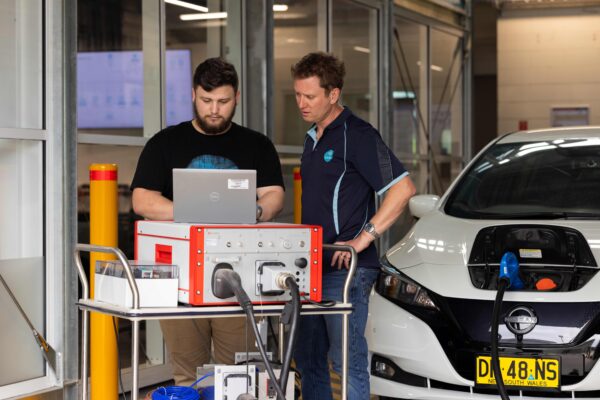
Image: CSIRO
The $3 million upgrade is set to more than double the facility’s power testing capacity, introduce improved high-resolution data capture and add load and grid simulation tools and the ability to run complex real-world experiments combining solar, batteries and electric vehicles at scale.
CSIRO Energy Systems Research Program Director Dr John Ward said the new laboratory will help Australia tackle both local and global challenges in the energy transition.
“The Renewable Energy Integration Facility allows us to simulate and stress test real-world grid conditions, giving us deeper insight into how inverter-based technologies like solar and batteries perform as their share grows across the electricity system,” he said.
Ward also noted the facility, that is open to external industry and research organisations for collaboration and commercialisation projects, provides the opportunity to “work side-by-side with industry and market bodies to design innovative solutions, while providing a rigorous, independent environment to evaluate new technologies before they’re deployed.”
This content is protected by copyright and may not be reused. If you want to cooperate with us and would like to reuse some of our content, please contact: editors@pv-magazine.com.




By submitting this form you agree to pv magazine using your data for the purposes of publishing your comment.
Your personal data will only be disclosed or otherwise transmitted to third parties for the purposes of spam filtering or if this is necessary for technical maintenance of the website. Any other transfer to third parties will not take place unless this is justified on the basis of applicable data protection regulations or if pv magazine is legally obliged to do so.
You may revoke this consent at any time with effect for the future, in which case your personal data will be deleted immediately. Otherwise, your data will be deleted if pv magazine has processed your request or the purpose of data storage is fulfilled.
Further information on data privacy can be found in our Data Protection Policy.