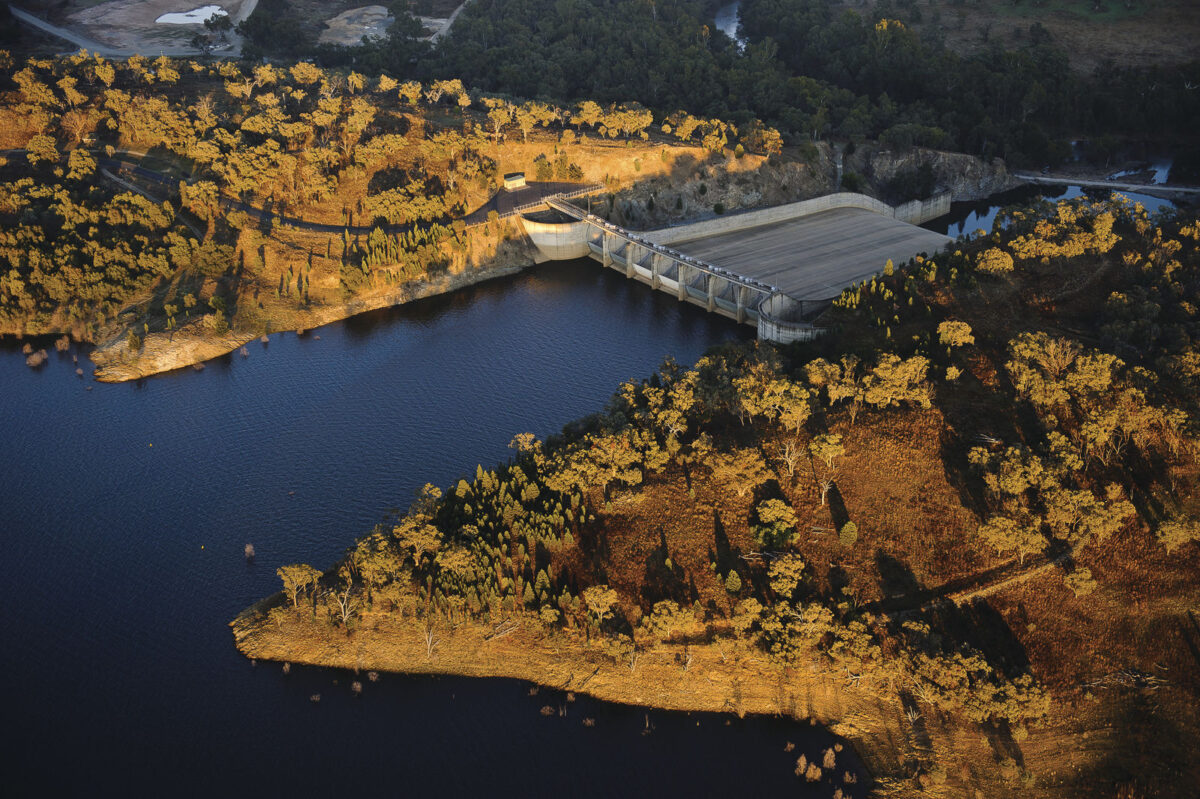





The New South Wales (NSW) government earlier this month granted priority planning status to two pumped hydro projects, totalling 1.8 GW, aiming to accelerate assessment of the proposals to strengthen grid reliability and support the transition toward renewable electricity.
Zen Energy’s $3.5 billion (USD 2.47 billion) Western Sydney Pumped Hydro project at Lake Burragorang and the $3.6 billion Phoenix Pumped Hydro project being developed by Acen Australia near Mudgee in central west NSW have been declared Critical State Significant Infrastructure (CSSI).
While both projects remain in the early planning stages and will undergo further assessment and community consultation, NSW Energy Minister Penny Sharpe said the declaration highlights their strategic importance to the state.
“These projects will help stabilise the grid, support energy reliability during peak demand periods and underpin the transition away from coal‑fired power,” she said.
Batteries have emerged as the long-duration energy storage technology of choice in Australia’s energy transition with pumped hydro struggling to compete on upfront capital expenditure as well as construction complexity and timelines.
Australia’s flagship pumped hydro project, the huge Snowy 2.0 project in NSW, has been beleaguered by cost blowouts and construction delays since the outset.
The project, a 2.2 GW expansion of the existing Snowy pumped hydro scheme first announced in 2017, was originally due to be operational by 2021 and cost about $2 billion (USD 1.41 billion). The cost of the project is now expected to exceed $12 billion and construction is scheduled to be complete in December 2028.
While the travails associated with the Snowy project have drawn criticism from some, Sharpe said “long‑duration storage like pumped hydro is essential to building a modern energy system that works for households, businesses and industry across NSW.”
Acen Australia Managing Director David Pollington said the projects being designated critical state infrastructure is a big step forward for pumped hydro energy storage as a technology and reflects the role the projects are designed to play within the National Electricity Market (NEM).
“Phoenix offers the kind of bankable, critical infrastructure that gives shape to an evolving energy system, backing in new renewable generation, flattening wholesale energy market price volatility and unlocking opportunity right across the grid,” he said.
Acen’s project, the first pumped hydro project to secure a Long-Term Energy Service Agreement under the NSW Energy Roadmap, is proposed at 800 MW of energy generation capacity and up to 15 hours of storage.
“It will provide firming at a scale capable of supporting renewable energy zones and managing prolonged periods of low wind or solar output,” the developer said.
The Western Sydney project being developed by Zen is proposed at 1 GW of energy generation capacity and up to 16 hours of storage.
NSW Planning Minister Paul Scully said projects represents a critical step in delivering firm, long-duration storage for NSW’s evolving energy system. are the type of infrastructure that underpins a secure, low-emissions future.
“These two pumped hydro projects could play a vital role in supporting our energy security together able to generate enough energy to power every home in Greater Perth during peak demand,” he said.
Scully said securing CSSI status provides clear momentum to streamline approvals and accelerate progress but did not remove the need for scrutiny with the projects to undergo comprehensive assessment, including public exhibition and an opportunity for submissions from the community.
Zen has previously said if all approvals and a social licence are secured, construction could begin at the site in 2027 with the asset to be operational by 2031.
Acen said it expects the Environmental Impact Statement for the Phoenix project will be lodged with the NSW government later this year. Construction is expected to commence in 2028 with completion marked for 2032.
NSW is targeting 16 GW of new renewable energy generation by 2030 and 42 GWh of new long-duration storage infrastructure by 2034.
This content is protected by copyright and may not be reused. If you want to cooperate with us and would like to reuse some of our content, please contact: editors@pv-magazine.com.


By submitting this form you agree to pv magazine using your data for the purposes of publishing your comment.
Your personal data will only be disclosed or otherwise transmitted to third parties for the purposes of spam filtering or if this is necessary for technical maintenance of the website. Any other transfer to third parties will not take place unless this is justified on the basis of applicable data protection regulations or if pv magazine is legally obliged to do so.
You may revoke this consent at any time with effect for the future, in which case your personal data will be deleted immediately. Otherwise, your data will be deleted if pv magazine has processed your request or the purpose of data storage is fulfilled.
Further information on data privacy can be found in our Data Protection Policy.