




The volunteer-run, not-for-profit Australian Electric Vehicle Association (AEVA) has responded to the impact of conflict in the Persian Gulf and Levant regions on fuel prices, by saying independence from liquid fossil fuels is an energy security priority.
The AEVA says governments at all levels “should not waver on their commitments to electrification across all sectors, including transport, and affordable, clean electricity.”
AEVA National President James Pickering said electric vehicles (EV) have always been about fuel security.
“Fifty-three years ago, AEVA was formed by a team of scientists, engineers, energy and transport professionals, and ordinary Australians; all with the collective goal of advancing electric alternatives to liquid fossil fuels. Our objectives today remain unchanged, and the circumstances motivating us are sadly unchanged, too,” Pickering said.
“Australia now has over 120 different makes and models of EV, and many more light commercial vehicles to come. We have some of the world’s cheapest new EVs, and a growing second-hand market.”
In light of petrol price rises driven by conflict affecting the Gulf States, the Electric Vehicle Council (EVC) is also calling on federal and state governments to strengthen support for EVs and protect the Electric Car Discount (ECD).
Chief Executive Officer Julie Delvecchio said EVs cut transport costs for households by up to $3,000 (USD 2,122) per year and the ECD has helped more than 114,000 vehicle owners switch to EVs.
Delvecchio said electric EVs are cheaper to run and don’t face the same exposure to global oil shocks.
“Their fuel is electricity – often cheaper off-peak and free for households with rooftop solar. Add lower servicing costs and EVs protect families from the rollercoaster of global petrol prices,” Delvecchio said.
EV car owners are shielded from oil price volatility by more stable electricity prices powered increasingly by Australian-made renewable energy, the EVC says.
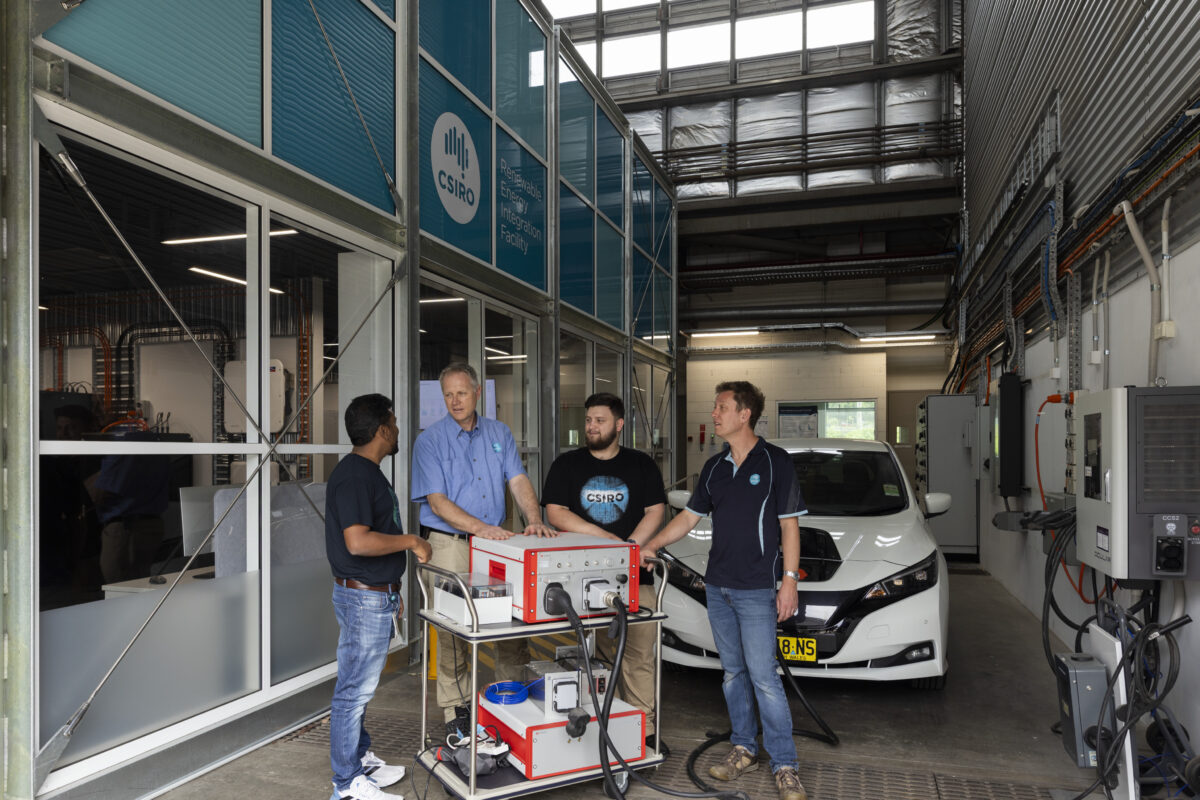
Australia’s lead scientific body, the CSIRO, recently launched a $3 million upgrade to its renewable energy facility at CSIRO’s Newcastle Energy Centre, which includes the ability to run large-scale experiments combining solar, batteries and EVs.
One of its demonstrations is vehicle-to-grid technology (V2G), which uses EVs as flexible batteries to store excess solar energy and return power to the grid during peak periods.
This content is protected by copyright and may not be reused. If you want to cooperate with us and would like to reuse some of our content, please contact: editors@pv-magazine.com.


By submitting this form you agree to pv magazine using your data for the purposes of publishing your comment.
Your personal data will only be disclosed or otherwise transmitted to third parties for the purposes of spam filtering or if this is necessary for technical maintenance of the website. Any other transfer to third parties will not take place unless this is justified on the basis of applicable data protection regulations or if pv magazine is legally obliged to do so.
You may revoke this consent at any time with effect for the future, in which case your personal data will be deleted immediately. Otherwise, your data will be deleted if pv magazine has processed your request or the purpose of data storage is fulfilled.
Further information on data privacy can be found in our Data Protection Policy.