




The latest monthly update from solar and energy storage market analyst SunWiz shows the national small-scale PV market (0-100 kW) rocketed to a record monthly high with 341 MW of new capacity installed across Australia in March 2026, an almost 20% increase on the previous month.
SunWiz Managing Director Warwick Johnston said the result puts the market 16% ahead of the same point in 2025 and suggests that 2026 could be a standout year for Australia’s Small-scale Technology Certificates (STC) sector.
“Up until now, we have never had to report on PV volumes as high as 341 MW,” he said, adding that “as of now, 2026 is ahead of previous years and is looking even stronger than 2021, which also performed well up to the third month of that year.”
Johnston pointed to the success of the federal government’s $7.2 billion (USD 5.1 billion) Cheaper Home Batteries Program (CHBP) as a key driver for the record rooftop solar monthly volume.
In the nine months since the launch of the program, which provides rebates for energy storage systems (ESS) installed alongside new or existing rooftop solar systems, it has helped deliver 300,000 batteries.
“By turbocharging battery uptake, it’s pulling larger solar systems along with it, since bigger batteries demand bigger panels, sending average system sizes and total registered capacity to all-time highs,” Johnston said.
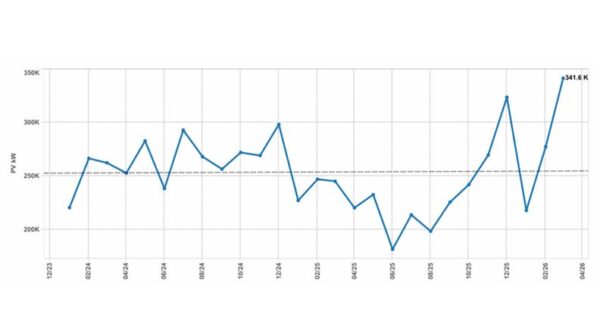
Image: SunWiz
The surge in small-scale solar was spread across the country with volumes growing substantially in all states. Northern Territory led the charge with a month-on-month growth rate of 43% while New South Wales (NSW) delivered a 32% increase.
Almost all market segments increased over the past month with those up to 50 kW posting growth of more than 20%. Segments in the 50–75 kW range increased by 8% while the 75–100 kW bracket was the sole outlier, contracting by about 6%.
While small-scale solar registrations surged, so too did Australia’s small-scale battery market as consumers raced to take full advantage of the CHBP ahead of confirmed changes to the program.
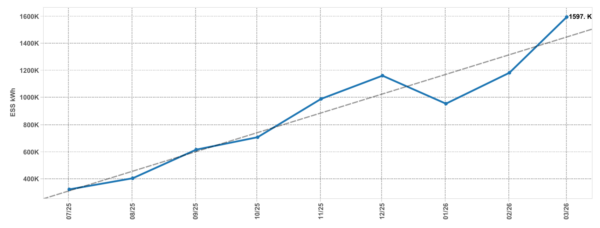
Image: SunWiz
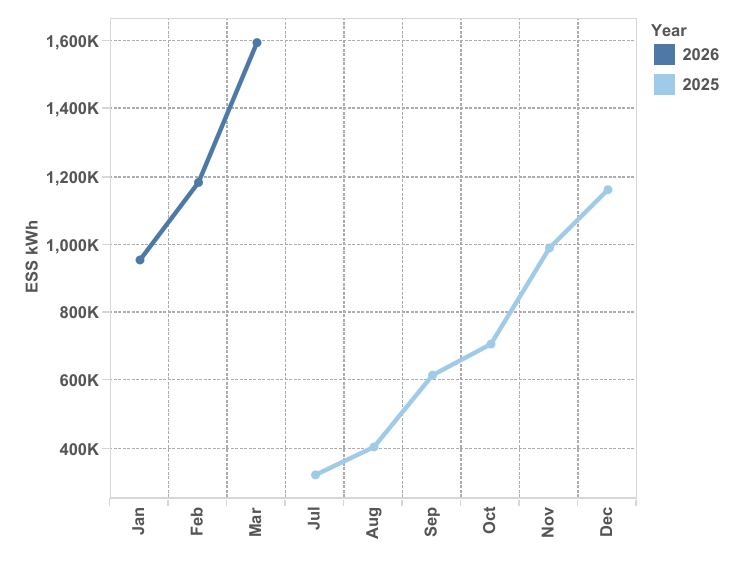
SunWiz data shows almost 1.6 GWh of small-scale energy storage capacity was installed across the country in March 2026, a 35% increase on the previous month and a record high for monthly capacity registered.
“There were months when we thought we might have reached the limit on battery volume registration, but it seems this is not the case,” Johnston said.
“The race to beat the 1 May CBHP subsidy cut sent the market into a frenzy. Installers and homeowners alike scrambled to lock in maximum value.”
Changes to the CHBP are set to take effect from 1 May 2026 with the rebate to switch from a flat ‘per kWh’ discount to a tiered rate system according to battery size. The federal government says this will maintain a discount of about 30% across small, medium and large batteries.
Johnston said the urgency to make the most of the rebate program was obvious with average battery size hitting a record 40 kWh, as “buyers went big while the going was good.”
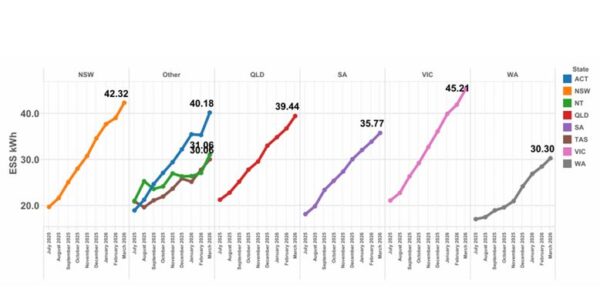
Image: SunWiz
“There has been a continuous increase in battery size approaching the 50 kWh upper limit registered under the STC battery scheme,” Johnston said, pointing out that the skew towards bigger systems intensified further in March.”
“Most batteries are still being registered at the top end of the range, between 40 and 50 kWh, making for a top-heavy field,” he said. “From the 40–50 kWh segment downward, it’s a staircase descent in both share and growth.”
Every state posted capacity gains, with NSW the standout with more than 600 MWh of battery volume registered in March, a 44% surge of the previous month and a new state-level record.
This content is protected by copyright and may not be reused. If you want to cooperate with us and would like to reuse some of our content, please contact: editors@pv-magazine.com.





By submitting this form you agree to pv magazine using your data for the purposes of publishing your comment.
Your personal data will only be disclosed or otherwise transmitted to third parties for the purposes of spam filtering or if this is necessary for technical maintenance of the website. Any other transfer to third parties will not take place unless this is justified on the basis of applicable data protection regulations or if pv magazine is legally obliged to do so.
You may revoke this consent at any time with effect for the future, in which case your personal data will be deleted immediately. Otherwise, your data will be deleted if pv magazine has processed your request or the purpose of data storage is fulfilled.
Further information on data privacy can be found in our Data Protection Policy.