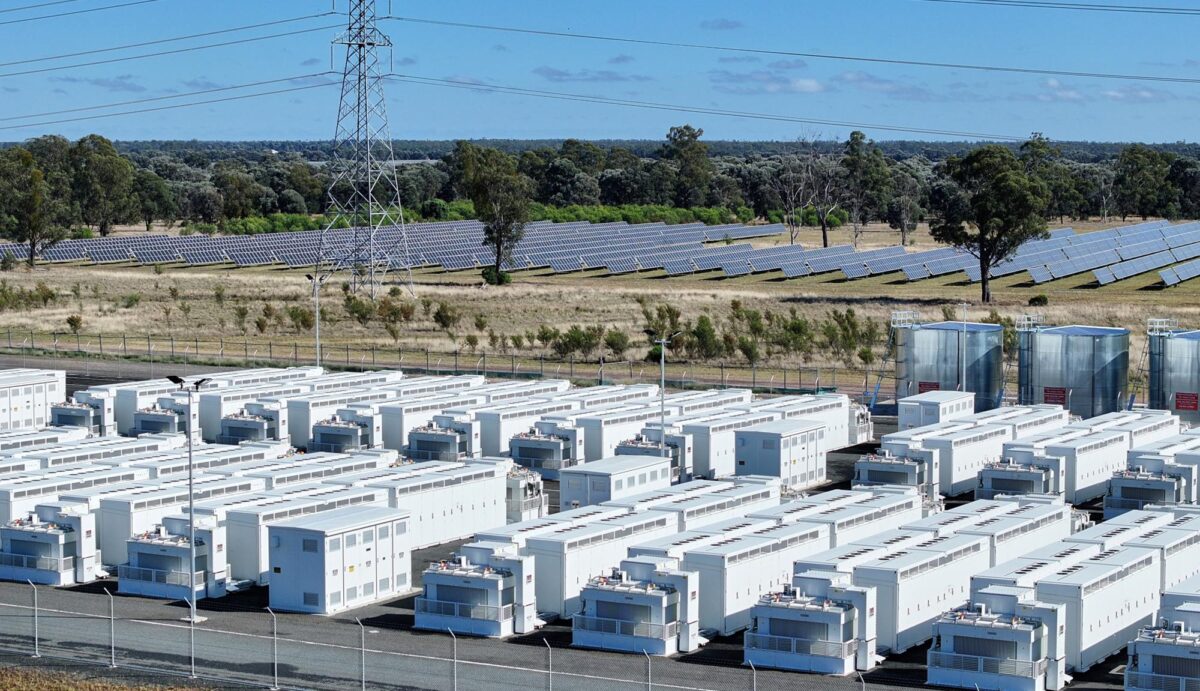





Grid-forming technology represents not merely an incremental improvement in inverter design, but rather a fundamental shift in how distributed energy resources interact with electrical grids, particularly in weak-grid scenarios.
The technology represents a fundamental departure from conventional grid-following inverter designs. Rather than depending on an existing grid voltage reference to synchronise their output, grid-forming inverters create a voltage reference autonomously at their connection point. In essence, grid-forming inverters act like miniature power stations, providing voltage and frequency stability to the grid through their control algorithms rather than relying on passive injection of current. Conversely, a grid-following inverter measures the grid voltage, locks a phase-locked loop (PLL) to this voltage, and then injects current that is proportional to the solar irradiance or charging command it receives. This approach is inherently dependent on the grid voltage, meaning that if the grid voltage becomes unstable, distorted, or weak, the PLL may struggle to maintain synchronisation, potentially causing the inverter to trip offline.
By contrast, a grid-forming inverter implements a voltage source controller that actively maintains a voltage reference at its terminals, regardless of what the grid voltage is doing. The inverter injects reactive power based on the voltage magnitude and frequency deviations it senses, creating a self-stabilising system where the inverter’s control loop automatically corrects voltage sags and frequency deviations without delay. Grid-forming inverters operate with an autonomous voltage reference through sophisticated control loops that emulate the behaviour of synchronous generators, including virtual inertia emulation, frequency droop, and reactive power compensation. As a result, the technology offers important capabilities for power systems that are rapidly increasing the penetration of inverter-based renewable generation.
Addressing the NEM’s system strengths challenge
One of the main advantages of grid-forming technology is its ability to provide system strength, that is the grid’s ability to maintain stable voltages during disturbances. In traditional power systems, synchronous generators provide system strength through their inherent physical properties: their rotating mass and electromagnetic coupling to the grid create short-circuit current during faults, which enables protection relays to operate reliably and limits voltage deviations. As synchronous generators retire and are replaced by inverter-based resources, system strength declines. Grid-forming inverters address this through their voltage source controller, which can inject reactive current proportional to voltage deviations, stabilising weak grid regions and enabling protection relay coordination. This capability is particularly critical in regions where synchronous generator retirements have created areas with short-circuit ratios below the minimum recommended by system operators.
Synthetic inertia, black start and the new stability services enabled by GFM inverters
Grid-forming technology also provides synthetic inertia and frequency response. In traditional grids, when a large generator trips, the kinetic energy stored in its rotating mass continues to be delivered to the grid, initially slowing the rate of frequency decline and giving operators time to bring other resources online. As inverter-based resources increase and synchronous generation declines, this inertia disappears, resulting in rapid frequency deviations that can trigger cascading trips and blackouts. Grid-forming inverters address this through virtual inertia emulation, where the control algorithm senses frequency deviations and responds by injecting or absorbing power proportionally to the rate of frequency change. This response occurs within a few hundreds of milliseconds and significantly reduces the severity of frequency events.
In addition, grid-forming systems improve overall grid stability and operational flexibility. Their autonomous voltage regulation reduces the need for external reactive power support and decreases operational complexity. Critically, grid-forming systems can operate autonomously and even black-start de-energised network sections without requiring an external voltage reference, a capability that becomes increasingly valuable as higher renewable penetration leaves fewer synchronous generators available for restoration. At the same time, grid-forming systems can transition seamlessly between grid-connected and island modes and qualify for a full spectrum of frequency control ancillary services (FCAS) products, enabling operators to optimise deployment for multiple revenue streams including energy arbitrage, system strength services, inertia provision, and contingency reserve.
Australia’s adoption of this technology has accelerated rapidly. As of December 2025, 10 grid-forming battery energy storage systems (BESS) were operational across the NEM, collectively providing approximately 1,070 MW of grid-forming capable capacity. More significantly, the Australian Energy Market Operator identified a pipeline of 94 grid-forming BESS projects comprising 78 standalone battery facilities and 16 co-located hybrid systems combining battery with solar or wind generation. Major developers have announced ambitious deployment plans, and several technology providers are competing to supply grid-forming systems to this expanding market.
Efficiency trade-offs, thermal impact and costs convergence
Despite these advantages, the adoption of grid-forming technology also involves certain technical trade-offs. The complex control algorithms required for grid-forming operation impose a small efficiency penalty compared to grid-following control. This efficiency loss may arise from continuous current control calculations, virtual machine emulation, and adaptive control adjustments designed to accommodate weak-grid conditions. Each of these functions requires additional semiconductor switching and computational overhead within the digital signal processor managing inverter operation. However, the efficiency trade-offs are generally considered negligible when compared to the value generated through improved grid stability, higher energy capture in hybrid configurations, and reduced system strength costs.
Another consideration relates to inverter lifespan and thermal degradation. Because grid-forming units must respond actively to grid disturbances, unlike grid-following inverters, they may experience higher thermal cycling in their power electronics. Nevertheless, the true long-term impact on inverter lifespan is not yet fully understood, as most available insights come from simulations rather than long-term operational data.
Importantly, one of the most significant changes in the grid-forming market between 2023 and 2026 has been the disappearance of the hardware cost premium historically associated with the technology. As of 2026, the cost difference between grid-forming and grid-following systems has converged to negligible levels for new utility-scale battery projects. This convergence has been driven by the scaling of production volumes, the transition of grid-forming functionality from specialised hardware to software-configurable features on standard power conversion platforms, and increased competition among manufacturers.
From a system perspective, the increasing importance of grid-forming technology is closely linked to what has been described as a system strength crisis in modern power systems. System strength in electrical grids is measured by the short-circuit ratio (SCR), defined as the ratio of short-circuit capacity at a connection point to the nominal generating capacity. When system strength is insufficient, protection relays may fail to operate correctly, voltage regulation becomes unstable, and grid-following inverters may struggle to maintain synchronisation. In extreme cases, these dynamics can lead to cascading outages. Grid-forming inverters address this challenge through autonomous voltage stabilisation, sustained fault current contribution during disturbances, and synthetic inertia responses that mimic the behaviour of synchronous generators.
Finally, the economic case for grid-forming deployment is reinforced by regulatory mechanisms within the NEM. Under the Efficient Management of System Strength framework, new generators connecting to weak-grid locations must either pay system strength charges to the network service provider or self-remediate by installing solutions such as synchronous condensers or grid-forming inverters. Consequently, grid-forming deployment generates direct economic benefits through the avoidance of these charges and by enabling projects to connect in locations that would otherwise face significant grid stability constraints.
Australia’s rapid shift toward high-renewable operation has made grid-forming inverters a foundational technology for future system security. With operational projects already exceeding one gigawatt and a substantial development pipeline across the NEM, grid-forming capability is moving from demonstration to mainstream deployment. The technology provides autonomous voltage and frequency control, synthetic inertia, and system strength support—capabilities that are essential as synchronous generators retire. Economically and technically, grid-forming systems are increasingly recognised as a practical and future-proof solution that strengthens grid reliability while enabling the continued expansion of renewable energy.
Author: Carlos Carrillo, Consultancy Manager for Australia and New Zealand, Enertis Applus+
The views and opinions expressed in this article are the author’s own, and do not necessarily reflect those held by pv magazine.
This content is protected by copyright and may not be reused. If you want to cooperate with us and would like to reuse some of our content, please contact: editors@pv-magazine.com.

By submitting this form you agree to pv magazine using your data for the purposes of publishing your comment.
Your personal data will only be disclosed or otherwise transmitted to third parties for the purposes of spam filtering or if this is necessary for technical maintenance of the website. Any other transfer to third parties will not take place unless this is justified on the basis of applicable data protection regulations or if pv magazine is legally obliged to do so.
You may revoke this consent at any time with effect for the future, in which case your personal data will be deleted immediately. Otherwise, your data will be deleted if pv magazine has processed your request or the purpose of data storage is fulfilled.
Further information on data privacy can be found in our Data Protection Policy.