Emiliano Bellini

New solar tracking strategies aim to maximise crop yield in agrivoltaics
Swedish researchers developed two novel single-axis solar tracking strategies that dynamically adjust panel tilt based on crop light requirements, balancing photosynthesis and energy production. One strategy prioritises daily light integral targets before shifting to energy capture, while the other uses the light-response curve to optimise photosynthesis, offering improved dual-use efficiency compared with conventional tracking methods.
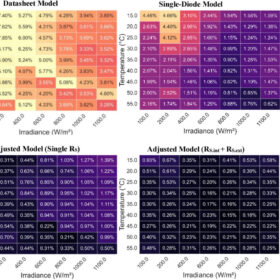
New single-diode model tackles recombination losses in solar cells
UNSW researchers have developed an intrinsic-adjusted single-diode model that explicitly accounts for radiative and Auger recombination, improving I–V curve accuracy and reducing root mean square error by up to a factor of three. The model is claimed to better predict performance near open-circuit voltage and maximum power point.
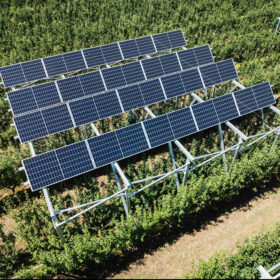
Victorian orchard project points out long-term trade-offs of agrivoltaics
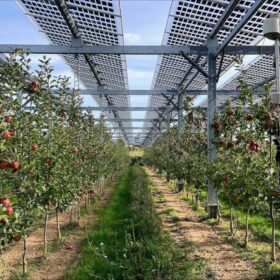
A four-year study found that overhead solar panels in a Victorian pear orchard reduced sun and hail damage but decreased fruit yield and blush colouration. While energy production and tree stress resilience improved, the findings highlight trade-offs for agrivoltaic systems, with potential applicability to other fruit crops like apples and cherries.
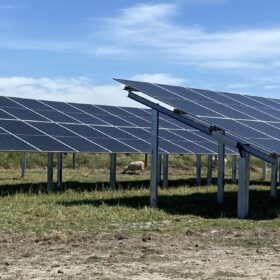
Research reveals impact of agrivoltaics on soil properties
New research shows how agrivoltaic systems can reshape soil by altering moisture, temperature, and microbial activity, creating heterogeneous zones under and between panels. Proper design and management can boost soil health and crop resilience, especially in degraded or arid regions, though long-term effects remain uncertain.
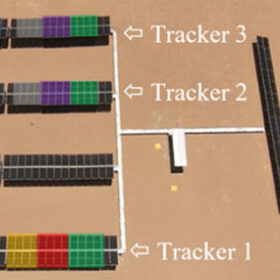
New algorithm reduces solar module temperature during clipping, curtailment
UNSW researchers have developed a thermal-aware tracking algorithm that reduces solar module temperatures and UV exposure during inverter clipping and curtailment, slowing degradation without lowering AC output. Tested in Chile’s Atacama Desert, the strategy was found to lower module temperatures by up to 7.7 C.
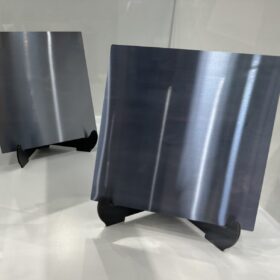
Longi builds 27.25%-efficient back-contact solar cells with high-resistivity wafers
High-resistivity silicon wafers offer superior efficiency potential but are highly sensitive to edge recombination and mechanical damage, limiting their commercial use compared to more robust standard wafers. Researchers from Longi and Sun Yat-sen University demonstrated that integrating in-situ edge passivation unlocks this potential, significantly boosting back-contact solar cell fill factor and efficiency.
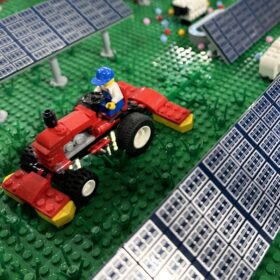
How to combine mechanised farming with agrivoltaics
An international study finds that successful agrivoltaic projects require farm-specific, holistic co-design that integrates solar layout with agricultural mechanisation from the earliest planning stages. Without proper alignment between machinery, crops, and solar systems, agrivoltaics risk major land loss, lower field efficiency, and higher operating costs, undermining farm profitability.
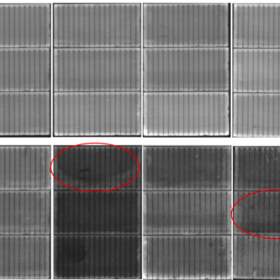
NREL researchers quantify UV-induced degradation levels in TOPCon solar cells
Researchers at NREL found that UV exposure can cause significant, partly non-recoverable degradation in TOPCon solar cells, with strong cell-to-cell and intra-cell variability linked to passivation and processing inconsistencies. While some UV-related losses recover quickly under light and are unlikely to affect field performance, the findings highlight gaps in current qualification tests and the need for improved UV aging standards.
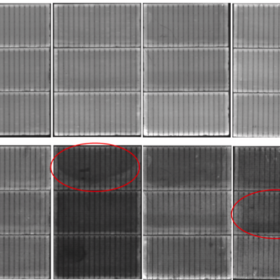
UNSW researchers identify new damp heat-induced failure mechanism in TOPCon solar modules
UNSW researchers identified a new damp-heat degradation mechanism in TOPCon modules with laser-fired contacts, driven primarily by rear-side recombination and open-circuit voltage loss rather than series-resistance increase. The study highlights that magnesium in white EVA encapsulants accelerates degradation, guiding improved encapsulant and backsheet selection for more reliable modules in humid environments.
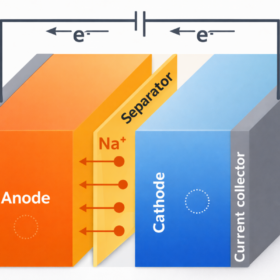
Scientists design low-cost sodium-ion battery with cheap electrode materials
Conceived for stationary energy storage, the proposed sodium-ion battery configuration relies on an P2-type cathode material and an hard carbon anode material that reportedly ensure full-cell performance. Electrochemical testing revealed initial capacities of 200 mAh/g for the cathode and 360 mAh/g for the anode with capacity retentions of 42% and 67.4% after 100 cycles.